

What if the slammed door and the heavy silence at the dinner table aren’t just typical teenage behaviour, but a quiet plea for help? As a parent, you’ve likely spent nights wondering where your child went, replaced by a stranger who seems perpetually out of reach. It’s incredibly difficult to know if you’re witnessing the standard growing pains of adolescence or the specific signs my teenager needs therapy uk. You want to respect their independence; however, the fear that you’re missing something vital keeps you awake at night.
It’s exhausting to constantly second-guess your instincts whilst trying to maintain a connection. You aren’t alone in feeling this way. This guide will help you bridge that gap, offering the clarity you need to distinguish between hormonal shifts and deeper emotional distress. We’ll explore twelve key indicators of mental health struggles and walk through the practicalities of the UK’s therapeutic landscape. You’ll learn how to navigate the differences between NHS pathways and private support, giving you the tools to start a meaningful conversation and find the right professional for your family’s needs.
Key Takeaways
- Learn to distinguish between typical adolescent brain development and deeper emotional distress by applying the ‘duration, intensity, and interference’ framework.
- Identify the twelve specific signs my teenager needs therapy uk, ranging from subtle shifts in sleep patterns to a sudden loss of interest in their favourite activities.
- Recognise the critical red flags that require immediate professional intervention, such as severe social withdrawal or any mention of self-harm.
- Master the art of opening a supportive dialogue using ‘I’ statements in low-pressure environments to ensure your child feels heard rather than judged.
- Navigate the UK mental health system with confidence by understanding the differences between NHS CAMHS pathways and the specialised focus of private therapy.
Normal Adolescence vs. Mental Health Concerns: Drawing the Line
Adolescence is often described as a second birth. It is a period of profound neurological renovation where the brain is literally being rewired for adulthood. During this transition, the emotional centre of the brain, the amygdala, often takes the lead whilst the prefrontal cortex, responsible for logic and impulse control, is still under construction. This biological reality explains why your teenager might be a ray of sunshine one moment and a storm cloud the next. However, for many parents, the challenge lies in knowing when these shifts cross the line from developmental growing pains into something more serious.
Understanding the broader landscape of mental health in the United Kingdom helps us see that these struggles are part of a wider societal conversation. You are the expert on your child. You know their “baseline” behaviour, that unique rhythm of their personality that exists when things are going well. When that rhythm falters, it’s natural to feel a sense of loss or fear. Recognising the signs my teenager needs therapy uk begins with observing three specific metrics: duration, intensity, and interference.
What is ‘Normal’ Teenage Behaviour?
Privacy is a developmental milestone. It’s perfectly typical for a teenager to retreat to their room or prioritise the opinions of their peers over yours. They are testing the boundaries of their own identity, which often involves a temporary withdrawal from the family unit. You might notice fluctuating self-esteem or an acute sensitivity to social feedback. These behaviours, whilst occasionally frustrating, are usually transient. They come and go, often influenced by a bad day at school or a minor falling out with a friend, rather than becoming a permanent fixture of their personality.
When Moodiness Becomes a Mental Health Concern
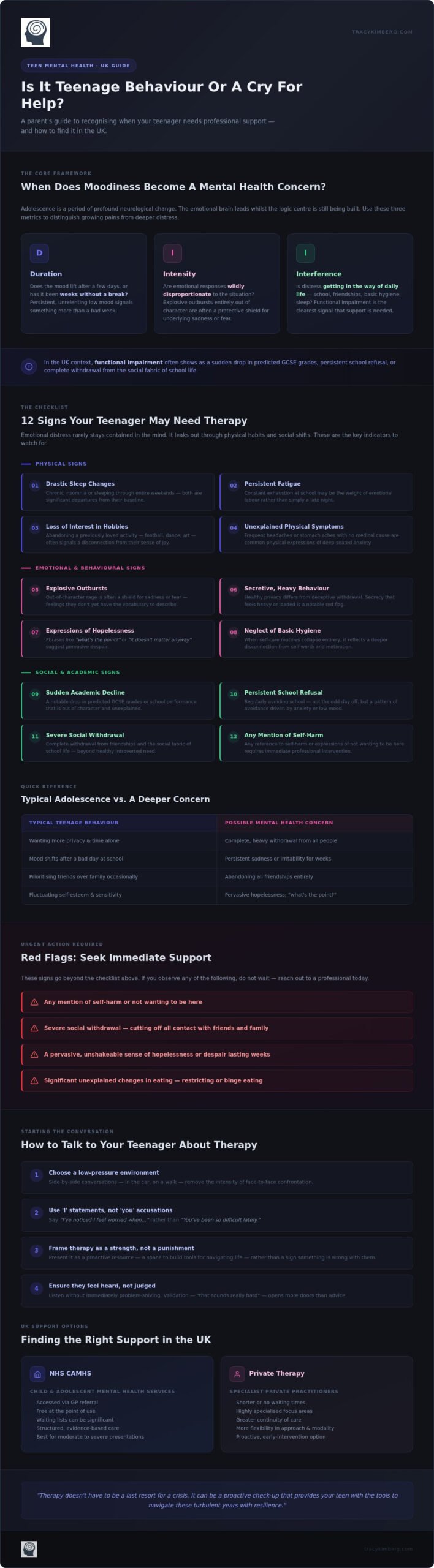
The distinction becomes clearer when emotional states become “stuck.” If a teenager’s sadness or irritability is pervasive and lasts for weeks without a break, it suggests a deeper struggle. We look for functional impairment, which is a clinical way of saying that their distress is getting in the way of their life. In the context of the UK education system, functional impairment often manifests as a sudden drop in predicted GCSE grades, persistent school refusal, or a complete withdrawal from the social fabric of the common room. When their emotional state starts to interfere with basic hygiene, sleep, or their ability to maintain friendships, it is time to consider professional support. Therapy doesn’t have to be a last resort for a crisis; it can be a proactive check-up that provides your teen with the tools to navigate these turbulent years with resilience.
The 12 Signs Your Teenager Needs Therapy: A Checklist
When our children hurt, we feel it in our own bones. This checklist isn’t intended to be a cold clinical diagnosis; rather, think of it as a map to help you navigate your teenager’s internal landscape. Identifying the signs my teenager needs therapy uk often starts with observing how their body speaks when words fail them. Emotional distress rarely stays contained in the mind. It leaks out through physical habits and social shifts.
- Drastic changes in sleeping patterns: This might look like chronic insomnia or, conversely, sleeping through the entire weekend.
- Persistent fatigue: If they are constantly exhausted whilst at school, it may be the weight of emotional labour rather than just a late night.
- Loss of interest: A sudden abandonment of a previously favourite hobby, such as football or dance, often signals a loss of connection to their sense of joy.
- Somatic symptoms: Frequent, unexplained headaches or stomach aches are common physical expressions of deep-seated anxiety.
Emotional and Behavioural Indicators
Adolescent anger is often a secondary emotion, a protective shield for underlying sadness or fear. If you notice explosive outbursts that feel entirely out of character, your teen might be struggling to process feelings they don’t yet have the vocabulary to describe. This differs from healthy privacy. Whilst every teen needs a “closed door” policy occasionally, secretive behaviour that feels heavy or deceptive can be a red flag. Pay close attention to expressions of hopelessness. Phrases like “what’s the point?” or “it doesn’t matter anyway” suggest a pervasive despair that requires a compassionate, expert ear. The NHS advice for parents emphasises that these shifts in mood are often the first visible indicators of a deeper struggle.
Academic and Social Red Flags
The social world is a teenager’s primary mirror. When they begin moving away from long-term friends toward total isolation, they lose the vital reflections that help them grow. You might also see this reflected in their education. A sudden drop in grades or persistent school refusal is rarely about academic ability. It is often a form of anxiety-based avoidance. Other signs include:
- Changes in appetite: Sudden weight loss, gain, or an obsessive focus on body image.
- Risky behaviours: Engaging in substance use or dangerous activities as a way to self-medicate or feel “something” amidst a sense of numbness.
If these patterns feel familiar, providing a safe, non-judgemental space through professional therapy for teenagers can be the first step toward their transformational healing.
Red Flags: When to Seek Immediate Professional Support
There are moments in parenting when the ‘wait and see’ approach is no longer safe. Whilst we’ve explored the subtle shifts in personality, certain signs my teenager needs therapy uk require an immediate move from observation to intervention. This isn’t about being an overprotective parent. It’s about recognising when the emotional load your child is carrying has exceeded their capacity to cope. Acute panic attacks that paralyse their ability to attend school, or evidence of disordered eating that poses a physical risk, are not phases. They are urgent calls for a professional safety net.
If your teen has withdrawn so severely that they haven’t left their room for days, the silence is speaking volumes. It suggests a level of despair that requires more than just a chat over dinner. In these instances, your role as a parent shifts from a witness to a protector. If you find yourself in the midst of this panic, reaching out for YoungMinds parent support can provide immediate guidance whilst you navigate the next steps.
Identifying Self-Harm and Suicidal Ideation
The discovery of self-harm is often a trauma for the parent as much as the child. You might notice subtle indicators like your teen wearing long sleeves in the height of summer or finding unexplained sharp objects in their room. It’s vital to dispel the myth that asking about suicidal thoughts will plant the idea in their head. Research consistently shows that asking directly, with compassion, provides a vital release valve for their distress. If you are faced with an immediate crisis, don’t hesitate to contact your local CAMHS crisis team, call 111, or attend A&E. These services are the front line of signs my teenager needs therapy uk when safety is at stake.
Substance Use and Risky Behaviours
We often mistake substance use for simple rebellion or experimentation. However, from a trauma-informed perspective, it’s frequently a form of escapism. If a teenager is using alcohol or drugs to numb an undiagnosed anxiety, they aren’t looking for a party; they’re looking for relief. A non-punitive response is essential here. When we lead with curiosity rather than criticism, we create the safety they need to open up about the pain they’re trying to drown out. Understanding the ‘why’ behind the behaviour is the first step toward transformational healing.
For parents who are concerned about their child’s relationship with substances, you can learn more about Addiction Centre to find information and referral services that support families through these challenges.
How to Talk to Your Teenager About Starting Therapy
The conversation about therapy is often more daunting for the parent than the child. It feels like an admission of failure, but it’s actually an act of deep attunement. When you’ve identified the signs my teenager needs therapy uk, the next step is invitation, not interrogation. Approaching this with a sense of calm optimism can demystify the process and lower their natural defences. You aren’t sending them away to be fixed; you’re offering them a scaffold for their emotional growth.
Face-to-face intensity can trigger a ‘fight or flight’ response in the adolescent brain. Try talking whilst driving to football practice or walking the dog. Side-by-side communication reduces the pressure of direct eye contact, making the space feel safer. Use ‘I’ statements to express your heart: “I’ve noticed you’ve been quieter lately, and I feel worried because I want you to feel supported.” This avoids the “you” accusations that lead to slammed doors. Reframe therapy as a “tool for their kit,” much like a sports coach or a music tutor, rather than a solution for a problem.
Handling Resistance and Defensiveness
Resistance is usually a form of protection. If your teen says “I’m not crazy” or “I don’t need help,” reassure them that therapy is for the brave, not the broken. It’s a space for high-functioning people to stay that way. Offer them agency in the decision. Let them choose the format, such as online therapy for comfort or face-to-face sessions for a physical break from the house. Suggest a “one-session trial” where they are the ones interviewing the therapist. This shifts the power dynamic, giving them the final say on who they trust with their story.
The Parent’s Role in the Therapeutic Process
Healing doesn’t happen in a vacuum. Often, the dynamics between parent and child are a vital part of the journey. Collaborative therapy for UK families involves a partnership where the therapist, teenager, and parents work together whilst respecting the teen’s growing need for autonomy and private emotional space. Respecting their confidentiality is non-negotiable. They must know their sessions aren’t being reported back to the “head office” of the dinner table. Your role is to provide the safe harbour they return to after doing the hard work of self-discovery.
If you’re ready to offer your child that safe, non-judgemental space, explore how therapy for teenagers can facilitate a new chapter of connection for your family.
Finding the Right Support: Therapy for Teenagers in the UK
Finding the right therapeutic partner is a delicate process of intuition and due diligence. Once you’ve identified the signs my teenager needs therapy uk, the search for a practitioner begins. It can feel like a maze; you’re balancing urgency with the need for a perfect fit. You aren’t just looking for a clinical expert. You’re looking for a Wise Guide who can speak your teenager’s language whilst holding a safe space for your own parental anxieties.
NHS vs. Private Therapy: Making the Choice
In 2026, the choice between public and private care often comes down to the speed of intervention. The NHS pathway via Child and Adolescent Mental Health Services (CAMHS) is a vital resource, but the threshold for care remains high. Data from March 2026 indicates that only 1 in 9 children in England with a suspected diagnosis received their first appointment within the recommended 13 weeks. This reality often leaves families in a difficult ‘wait and see’ period. Private therapy offers an immediate start. It provides a consistent practitioner and a tailored approach that isn’t bound by rigid institutional criteria. When checking credentials, ensure your therapist is registered with a recognised body such as the BACP or UKCP to guarantee professional accountability.
Online therapy has become a favourite for many busy UK families. For a teenager, their bedroom is their sanctuary. Meeting a therapist from that safe space can lower their heart rate and make the initial sessions feel less like a clinical appointment and more like a meaningful conversation. It removes the friction of travel and fits seamlessly into the rhythm of their school week.
The Tracy Kimberg Approach to Teen Therapy
My approach is rooted in the belief that a teenager’s struggle is a signal from the wider family system. By drawing on research-based methods influenced by the work of John Gottman and Esther Perel, I focus on transformational healing that involves the parents whilst protecting the teen’s growing need for autonomy. We create a non-judgemental environment where they can finally feel heard. This holistic method ensures that the progress made in sessions translates into long-term emotional health at home. If you’re ready to take that next step, you can book an initial consultation to support your teenager’s journey and begin the process of reconnecting as a family.
A New Chapter of Connection for Your Family
Adolescence is a storm, but it’s also a profound opportunity for growth. By learning to identify the specific signs my teenager needs therapy uk, you’ve already taken the most courageous step in parenting: looking deeper. You now understand that whilst mood swings are a part of the teenage brain’s rewiring, persistent withdrawal or academic decline are calls for a different kind of support. Therapy isn’t a sign that you’ve failed; it’s a testament to your commitment to your child’s long-term emotional health.
As a BACP/UKCP registered professional specialising in anxiety, I use a research-based approach inspired by the insights of Gottman and Perel. We focus on transforming family dynamics and creating a non-judgemental space where your teen can truly open up. Whether you choose online therapy for its comfort or face-to-face sessions, the goal remains the same: a stronger, more resilient connection. I invite you to schedule a discovery call with Tracy Kimberg to discuss support for your teenager. Healing is a manageable process, and with the right guide, this difficult phase can become a proactive adventure toward a brighter future.
Frequently Asked Questions
How long does teenager therapy usually last in the UK?
The length of therapy depends entirely on your child’s unique needs and the complexity of their situation. Whilst some teens find relief in a short-term block of 6 to 12 sessions, others benefit from ongoing support that lasts for several months or even a year. The goal is always to move toward a point where they feel equipped to navigate their world independently. We monitor progress regularly to ensure the process remains an active and evolving experience.
Can I force my teenager to go to therapy if they refuse?
You cannot effectively force a teenager into the therapeutic process because it relies heavily on their personal engagement and trust. If a child feels coerced, they are likely to remain silent or defensive, which stalls any potential for healing. Instead, try offering them agency by letting them choose between online or face-to-face sessions. Framing the first meeting as a trial rather than a permanent commitment often lowers their resistance and opens the door to connection.
What is the difference between a counsellor and a psychologist for teens?
The primary difference lies in the level of clinical training and the focus of their work. Counsellors typically provide talk therapy to help teens navigate emotional challenges and life transitions. Psychologists have doctoral-level training and are often more focused on diagnosing complex mental health conditions or providing specialised clinical interventions. Both can be effective; however, your choice should depend on whether your child needs general emotional support or a more clinical diagnostic approach.
Will the therapist tell me everything my teenager says in their sessions?
No, a therapist will not share every detail of the sessions because confidentiality is the foundation of the therapeutic relationship. If a teenager feels their words will be reported back to their parents, they won’t feel safe enough to be honest. You will receive general updates on their progress and the themes being explored. However, if the therapist believes your child is at immediate risk of harm, they are ethically bound to break confidentiality to ensure safety.
How much does private teen therapy cost in the UK in 2026?
In 2026, the cost of private therapy in the UK varies based on location and the practitioner’s level of specialisation. On average, you can expect to pay between £50 and £120 for a 50-minute session. In London, these rates often sit between £70 and £110. Specialist clinical psychologists may charge higher fees, ranging from £100 to £250. It’s helpful to consider these costs as a vital investment in your child’s long-term emotional well-being and development.
Is online therapy as effective as face-to-face for anxious teenagers?
Online therapy is often just as effective as face-to-face sessions, particularly for teenagers who feel more comfortable in their own digital environments. For an anxious teen, the ability to engage from the safety of their bedroom can significantly reduce the pressure of the initial encounter. It removes the stress of travel and clinical waiting rooms, allowing them to focus entirely on the conversation. Many young people find it easier to open up when they feel physically secure.
What should I do if my teen is on a long CAMHS waiting list?
How do I know if the therapist is a good fit for my child?
The best way to determine if a therapist is a good fit is to observe the therapeutic alliance after the first few sessions. Your teenager should feel heard, respected, and safe enough to share their thoughts without judgement. A good fit often feels like a natural connection where the therapist’s style matches your child’s personality. Don’t be afraid to ask your teen for their honest feedback; their comfort is the most important factor in the success of the journey.

Article by
Tracy Kimberg
Tracy Kimberg is a Relationship Expert, Couples Therapist and Coach with a dedicated focus on helping couples and individuals rebuild connection, trust and emotional safety in their relationships. Drawing on the research of John and Julie Gottman, the relational insights of Esther Perel, and years of hands-on therapeutic experience, Tracy offers a warm, non-judgemental and deeply compassionate approach to modern relationships.
Based in Dorset, Tracy works with couples navigating communication breakdowns, betrayal, intimacy challenges, separation, family dynamics and life transitions. Known for creating a safe and grounded therapeutic space, she combines practical tools with emotional depth to help clients move beyond survival patterns and towards meaningful, lasting change.
With a reputation for empathy, professionalism and dedication to her clients’ growth, Tracy is passionate about helping people feel seen, understood and empowered — both within their relationships and within themselves.
Disclaimer
Disclaimer:
The information shared in this article is intended for educational and informational purposes only and should not be considered a substitute for professional therapeutic, psychological, medical or legal advice. Every individual and relationship is unique, and the perspectives offered are based on general therapeutic principles, research and professional experience.
Reading this article does not establish a therapist-client relationship with Tracy Kimberg. If you are experiencing significant emotional distress, relationship crisis, trauma, or mental health concerns, it is important to seek support from a qualified professional appropriate to your individual circumstances.
All content remains the intellectual property of Tracy Kimberg and may not be reproduced or distributed without permission.