

To learn how to discuss finances with your partner, begin by asking how comfortable you both feel talking openly about money. Make room for each person’s experiences and concerns before turning to decisions about spending, saving or shared priorities. The aim isn’t to agree on everything straight away; it’s to understand what money means to each of you and make choices together.
It’s understandable if these conversations feel vulnerable. Money can touch on trust, security, independence and the hopes you hold for your life together. A thoughtful approach can build emotional intimacy while supporting clearer financial decisions. This article explores how to start gently, share information while respecting personal boundaries, and discuss short- and long-term goals in a way that works for both of you.
Key Takeaways
- Notice what money brings up emotionally, so conversations can deepen understanding rather than become a source of blame.
- Agree what financial information to share and how you’ll make decisions together, while respecting each other’s privacy.
- Make room for both near-term priorities and longer-range hopes, and revisit your plan when circumstances change.
- Before marriage or moving in together, talk through debts, spending habits, shared costs and expectations around saving.
1. Building emotional intimacy through money conversations
Money habits often carry stories about safety, freedom and family. One partner may save to feel secure, while the other spends on shared experiences to feel connected. Begin with curiosity: ask, “What did money mean in your home growing up?” Listening can reveal the need behind a habit without labelling it responsible or careless.
Choose a calm moment rather than raising concerns during a purchase or argument. Set aside time when neither of you is rushing, and agree one subject, such as everyday spending or saving. In the United States, 27% of partners say they’re often frustrated by a partner’s money habits but let it go to keep the peace. Naming one concern gently can prevent silence from becoming resentment.
How should partners discuss debt, credit scores and financial obligations? Share relevant details plainly, including current debts, payment commitments and credit-score concerns, then ask what support or boundaries each person needs. Treat disclosure as information for shared decisions, not an invitation to shame or control.
A useful first step in learning how to discuss finances with your partner is asking, “How comfortable do you feel talking openly about money?” Each person can name what feels easy, uncomfortable or private. Agree on what information you’ll share and what can remain individual; openness doesn’t require merging every asset or reviewing every card statement.
When raising a concern, describe the behaviour and its effect, then make a specific request. For example: “When we decide on a large purchase without talking, I feel excluded. Could we discuss it together first?” Your partner can explain their perspective before you agree on a next step. This keeps the conversation focused on the pattern, its emotional meaning and a practical change you can revisit together.
2. Couples’ communication and financial decision-making
Nearly 9 in 10 couples in the United States say they communicate well about finances. Yet more than 1 in 4 say money is their greatest relationship challenge. These figures can coexist: couples may talk often, but still struggle to make decisions that feel fair to both.
Agree on a process before discussing a specific purchase. Decide which choices need both partners’ input, what each person can spend independently, and when you’ll review shared bills. Both partners should have an equal say and participate, rather than one person controlling everything while the other opts out. Clear visibility into decisions can support trust and offer a practical safeguard.
How should couples combine finances or keep separate accounts? Choose an arrangement that suits your shared responsibilities and personal preferences. You might use joint funds for agreed household costs while keeping some accounts or spending private. Transparency doesn’t require merging every asset or checking each other’s card statements.
How can couples divide bills fairly based on income? Compare each partner’s income with shared expenses, then agree whether to split costs equally or contribute in proportion to earnings. Revisit the arrangement if income or responsibilities change, and make sure both partners have a meaningful voice.
How should couples handle disagreements about spending and saving? Name the concern, explain what the choice means to you, and look for a plan that protects both security and enjoyment. A budget that directs every available resource towards debt repayment might make mathematical sense but leave one partner feeling deprived. An unsustainable plan can fuel secrecy, including hidden debt, so adjust it before resentment grows.
Try a low-pressure thought experiment: ask how you’d each use a $10,000 gift. Differences can reveal priorities, not simply incompatible values. Agree on a plan, then revisit it when circumstances change or it stops working. If money talks repeatedly become conflict, support with relationship conversations can help you explore the pattern together.
3. Discussing short- and long-term goals
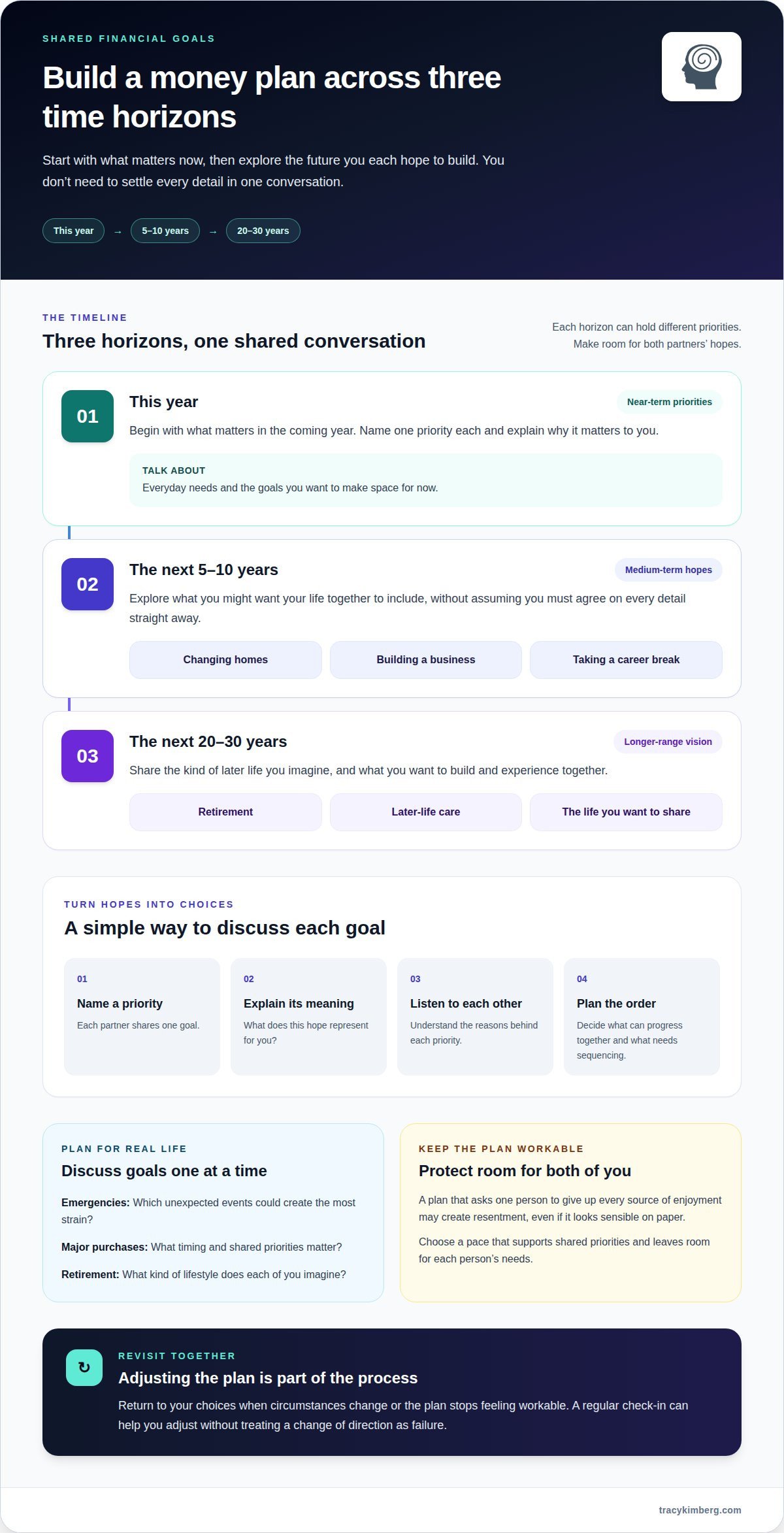
Start by separating goals by timeframe: what matters this year, and what belongs further ahead. Discuss hopes for the next five to 10 years, such as changing homes, building a business or taking a career break. Then imagine the next 20 to 30 years: retirement, later-life care or the kind of life you want to share. You don’t need to settle every detail today. Begin by understanding what each future means to you.
Turn hopes into choices you can discuss together. Each partner can name one priority, explain why it matters, then listen to the other’s reasons. If one person wants to save for a home while the other values travel, compare what each goal represents: security, adventure, belonging or independence. Decide which goals can progress together and which need to be sequenced. This turns a spending disagreement into a conversation about what you’re building as a couple.
How can couples plan for emergencies, major purchases and retirement together? Discuss each goal separately, agree on what you’re working towards, and decide how it fits alongside everyday needs. For an emergency plan, talk about which unexpected events would create the most strain. For a major purchase, consider timing and shared priorities. For retirement, explore the lifestyle each of you imagines. These conversations clarify the purpose behind saving, rather than treating every contribution as an isolated decision.
Make the plan sustainable for both partners over the long term. A goal that requires one person to give up every source of enjoyment may create resentment, even if it looks sensible on paper. Agree on a pace that supports shared priorities and leaves room for each person’s needs. Revisit your choices when circumstances change or the plan stops feeling workable. A regular check-in can help you adjust without treating a change of direction as failure.
4. What financial topics should couples discuss before marriage or moving in together?
Before sharing a home or making a lifelong commitment, compare your everyday financial expectations. Talk through income, regular bills, existing debts and financial obligations, including support for relatives. Then list the costs you expect to share, such as rent or mortgage payments, utilities, groceries, transport and household repairs. For example, decide whether groceries will come from a joint account or be paid for separately. Specific examples bring assumptions to light before they become recurring sources of tension.
Discuss how you’ll divide those costs and manage practical responsibilities. If one partner earns more, you might agree on contributions that reflect your respective incomes rather than splitting everything equally. Consider who tracks payment dates and what happens if someone’s income changes. The arrangement should feel fair to both, not simply convenient for the person who handles the accounts.
Talk about spending boundaries before purchases become shared commitments. Agree which expenses need a conversation first and what each person can decide independently. You might choose to discuss furniture, holidays or home improvements together, while keeping everyday personal purchases private. Clear expectations protect autonomy and reduce the chance that one partner feels monitored or excluded.
Explore what financial support and security mean to each of you. One person may expect to help a parent, while the other may prioritise saving for a home. Discuss how you’d approach parental leave, caring responsibilities or a period when one partner cannot work. These topics reveal how practical choices connect with values, family history and a sense of mutual support.
Before moving in, write down the arrangements you’ve agreed and set a date to revisit them. Before marriage, make space for the same conversation about shared goals, individual independence and changing circumstances. If these discussions keep turning into conflict, explore support for couples’ conversations and work towards clearer agreements together.
Tracy Kimberg: Relationship Counselling and Coaching for Couples
Tracy Kimberg’s Relationship Counselling and Coaching for Couples can help partners address the emotional patterns beneath recurring money disagreements. If conversations about spending, saving or shared responsibilities repeatedly become arguments, counselling offers space to understand each other’s perspectives and practise more constructive communication. It can also support couples facing financial tension alongside wider relationship difficulties, such as disconnection or a loss of trust.
You don’t need to wait until a disagreement feels overwhelming. Support may be helpful when you keep avoiding money conversations, feel unheard in decisions or struggle to find priorities that feel fair to both of you. Working together can help you approach these discussions with greater clarity and care, recognising that each partner brings their own experiences and needs.
If you’d like to explore support, visit Tracy Kimberg’s website.
Make your next conversation a shared step forward
Learning how to discuss finances with your partner is less about finding perfect words and more about staying curious when your perspectives differ. Start with one question you’ve been hesitant to ask, then listen for the need or worry beneath the answer. Small, honest exchanges can open the way to more mutual decisions.
If money conversations keep becoming painful or stuck, Tracy Kimberg offers Relationship Counselling and Coaching for Couples, as well as a 12-Week Relationship Recovery Process. Her practice also offers Therapy for Teenagers, supporting families where relationship wellbeing spans generations.
Contact Tracy Kimberg to talk about support for your relationship. You can take this next step at a pace that feels right for both of you.
Frequently Asked Questions
When is the best time to talk about finances with your partner?
Choose a calm time when neither of you is rushing, tired or already upset. A quiet weekend morning may work better than raising a concern just after an unexpected bill arrives. If a decision has a deadline, agree beforehand when to discuss it and what needs deciding. That gives both partners time to think instead of forcing an answer in the moment.
How can couples create a budget and set shared financial goals?
Begin with a clear picture of money coming in and regular commitments, then decide together how to allocate what remains. Label categories in plain language, such as household needs, personal spending and future plans. Choose one shared goal to start with and agree how you’ll track progress. A brief review alongside an existing routine, such as paying household bills, can make the plan easier to maintain.
What financial details should partners disclose to each other?
Share details that could affect joint choices or commitments, including income, debts, regular payments, savings set aside for shared plans and financial support given to others. Mention changes that could affect your ability to contribute, such as variable earnings or a new repayment commitment. You can agree on what remains private, too. The aim is informed consent for shared decisions, not unlimited access to each other’s accounts.
When should couples consider a financial counsellor or couples therapist?
Consider relationship support if money discussions repeatedly trigger blame, withdrawal or secrecy, or if you can’t reach decisions without damaging trust. A couples therapist can help you explore the emotional patterns affecting communication. A financial counsellor focuses on practical money-management questions. If both emotional conflict and budgeting difficulties are present, identify what feels most urgent and discuss that need first.

Article by
Tracy Kimberg
Tracy Kimberg is a Relationship Expert, Couples Therapist and Coach with a dedicated focus on helping couples and individuals rebuild connection, trust and emotional safety in their relationships. Drawing on the research of John and Julie Gottman, the relational insights of Esther Perel, and years of hands-on therapeutic experience, Tracy offers a warm, non-judgemental and deeply compassionate approach to modern relationships.
Based in Dorset, Tracy works with couples navigating communication breakdowns, betrayal, intimacy challenges, separation, family dynamics and life transitions. Known for creating a safe and grounded therapeutic space, she combines practical tools with emotional depth to help clients move beyond survival patterns and towards meaningful, lasting change.
With a reputation for empathy, professionalism and dedication to her clients’ growth, Tracy is passionate about helping people feel seen, understood and empowered — both within their relationships and within themselves.
Disclaimer
Disclaimer:
The information shared in this article is intended for educational and informational purposes only and should not be considered a substitute for professional therapeutic, psychological, medical or legal advice. Every individual and relationship is unique, and the perspectives offered are based on general therapeutic principles, research and professional experience.
Reading this article does not establish a therapist-client relationship with Tracy Kimberg. If you are experiencing significant emotional distress, relationship crisis, trauma, or mental health concerns, it is important to seek support from a qualified professional appropriate to your individual circumstances.
All content remains the intellectual property of Tracy Kimberg and may not be reproduced or distributed without permission.