

A relationship can survive without trust for a time, but it is unlikely to feel healthy or mutually satisfying if mistrust becomes its foundation. Whether it can survive depends on what caused the rupture and whether both partners are willing to take responsibility for repair. Love may still be present, even when emotional security and closeness feel out of reach.
If you’re questioning whether to stay, you may feel torn between hope for the relationship and the hurt that has made trust difficult. Both deserve to be taken seriously. This article will help you consider whether repair feels possible, talk about past hurts and insecurities, and recognise the steady actions that can help rebuild trust. It also explores how honest conversations, clear boundaries and patience can help you understand what each partner needs, and whether you’re both ready to work towards a more secure connection.
Key Takeaways
- Weigh whether both partners are willing to face the rupture and work towards repair, rather than relying on love alone.
- Explore how past hurt or insecurity may shape present reactions, while recognising the impact those reactions have on the relationship.
- Use open questions about what happened, what each person needs and which boundaries would help you feel safer.
- Look for accountability and small, consistent changes over time; couples counselling can support conversations when trust feels difficult to rebuild alone.
Should you stay in a relationship without trust?
A relationship can continue without trust, but love alone cannot make it healthy or mutually satisfying. Signs that trust has broken down include repeatedly questioning your partner’s intentions, feeling emotionally unsafe and struggling to reconnect after conflict.
The cycle of mistrust and detachment
Mistrust can become a cycle: doubt prompts repeated checking, which may push partners further apart. For example, one person questions a delayed reply while the other withdraws to avoid another argument. That withdrawal can then seem like further evidence of secrecy. When considering whether you can rebuild closeness, notice this pattern, not just the latest disagreement.
Loss of emotional security
Emotional security means being able to speak honestly and be vulnerable without fearing betrayal or dismissal. When trust is damaged, a partner may feel on edge even during ordinary moments, such as a change of plans or a quiet evening. This matters because intimacy depends on feeling safe enough to share needs, affection and uncertainty. Ask whether both of you can speak openly without fear.
Emotional distance and isolation
Emotional distance is a gradual retreat from sharing thoughts, comfort and everyday experiences. A couple might still eat dinner together yet avoid discussing disappointment or asking for support after a difficult day. Over time, one or both partners may feel alone in the relationship. Consider whether you still turn to each other with a worry, or handle it privately to avoid tension.
Signs that trust is broken
Broken trust often shows up as persistent suspicion, guarded conversations and difficulty relying on a partner’s words. You might repeatedly revisit an explanation, expect a promise to be broken or feel unable to relax when plans change. These signs matter when deciding whether to stay because they show how the relationship affects your emotional wellbeing. Ask whether both partners recognise the damage and want to address it.
Addressing past trauma and insecurities
Mistrust can follow infidelity, lies, broken promises or the sharing of private information. Repeatedly neglecting the relationship’s needs can also leave someone feeling unimportant. Past experiences matter too: if a previous partner betrayed you, a late reply in your current relationship may stir fear, even without evidence of wrongdoing. Naming the present event separately from an older hurt can help you discuss what is happening now.
Both partners have a part to play in understanding this pattern. The person who caused harm needs to acknowledge its impact without minimising it or demanding quick forgiveness. The partner carrying insecurity can explain what gets triggered and take responsibility for how fear shapes their responses. For example, “I feel anxious when plans change because of what happened before” invites conversation more than an accusation. Understanding the context does not erase accountability.
Repair takes curiosity from both people. Listen to what an event meant to your partner, even if you experienced it differently. Ask what would help them feel heard, then share your own needs without dismissing theirs. Forgiveness may be part of healing, but it cannot be demanded as proof of love. Trust often takes time, and pressure to return to normal can deepen hurt rather than resolve it.
Small, specific agreements can make emotional needs easier to understand. If a broken promise involved plans, agree how you’ll communicate changes and follow through. If past trauma makes reassurance important, discuss what feels supportive without creating constant monitoring. Notice whether both partners keep those agreements and revisit them when they don’t help. If these conversations repeatedly turn into blame or withdrawal, relationship counselling for couples can help you explore the hurt and its effects together.
Questions for discussing trust
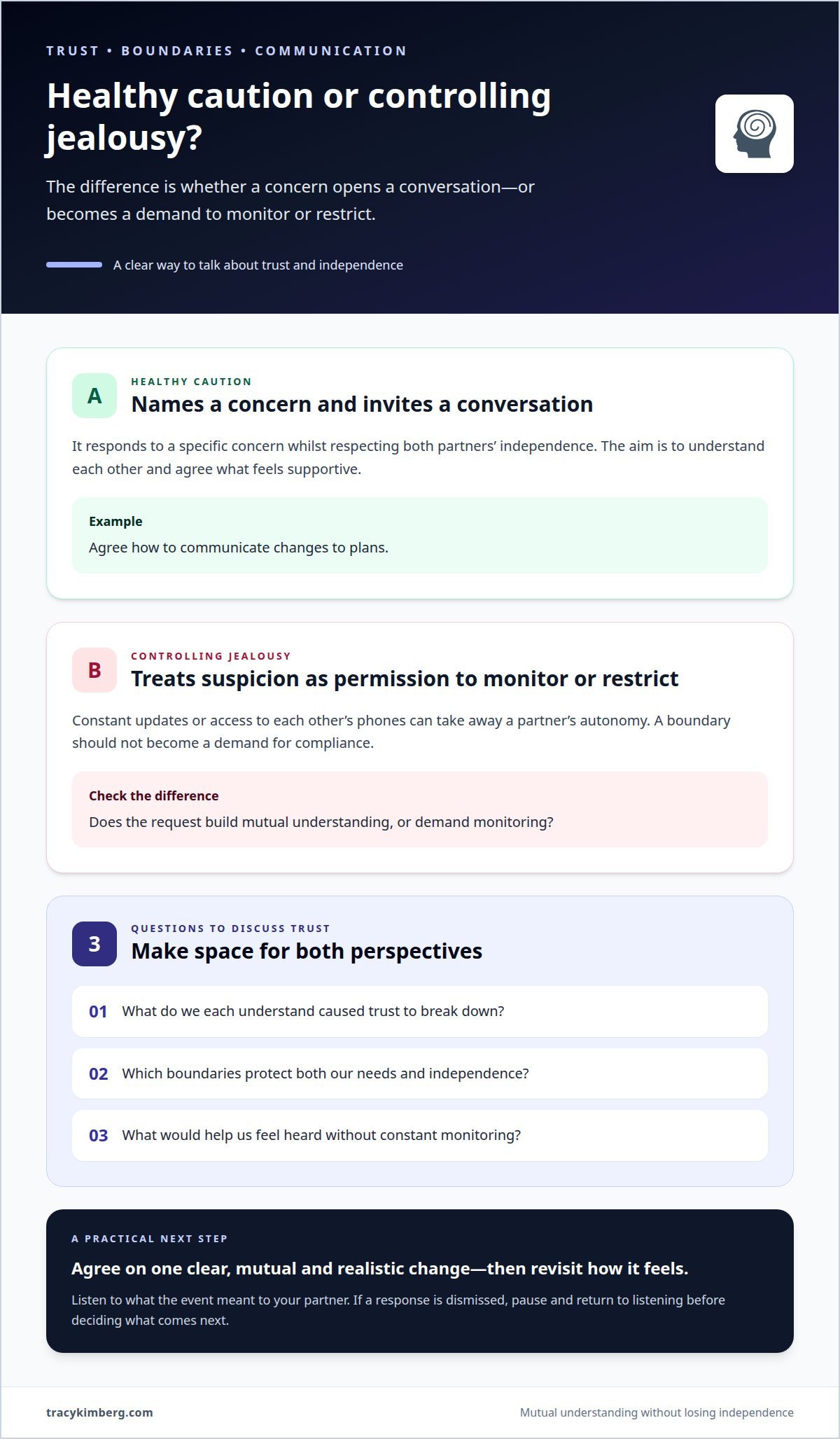
Healthy caution responds to a specific concern and respects both partners’ independence. Controlling jealousy, by contrast, demands monitoring or restricts contact. Honest, respectful communication helps rebuild trust by making the rupture, each person’s perspective and mutually agreed boundaries easier to discuss.
Healthy caution and controlling jealousy
Healthy caution names a concern and invites a conversation, while controlling jealousy treats suspicion as permission to monitor or restrict a partner. This distinction matters because boundaries should respect both people’s needs without taking away either person’s autonomy. For example, agreeing how to share changes to plans is different from expecting constant updates or access to each other’s phones. Ask whether a request builds mutual understanding or demands compliance.
Honesty and communication in rebuilding trust
Honest communication means speaking clearly about what happened, listening to its impact and responding without dismissing the other person’s experience. Trust cannot grow around evasions or one-sided explanations. If your partner says they feel hurt, reflect back what you heard before explaining your own perspective. You do not have to agree on every detail; this creates space to understand the rupture together.
Choose a calm moment and ask questions that uncover needs rather than assign blame. For example, ask whether you can care for each other without keeping score and what would help each person feel respected. Listen for the need behind the answer, such as reassurance, privacy or more reliable communication.
- What do we each understand caused trust to break down?
- Which boundaries protect both our needs and independence?
- What would help us feel heard without constant monitoring?
Then agree on one practical change and revisit how it feels. A boundary should be clear, mutual and realistic, not a rule that isolates one partner. If either person’s response is dismissed, pause and return to listening before deciding what comes next.
Rebuilding trust through consistent actions
Trust grows through repeated experiences that match what partners say they will do. A heartfelt apology may matter, but it cannot replace everyday honesty, reliability and respect. If someone broke a promise about coming home, rebuilding trust begins with acknowledging the impact and communicating clearly about future plans. The hurt partner also needs room to respond without being rushed towards forgiveness or a return to normal.
How long does it take to rebuild trust in a relationship? There is no fixed timetable: progress depends on the harm, whether it stops and how consistently both people participate in repair. One reassuring conversation may help, but repeated actions over time are what make new expectations feel credible.
Make change visible in ordinary moments. If you’ve agreed to discuss a difficult subject, return to it rather than avoiding it. If you’re the partner who caused harm, listen without defending yourself, answer questions honestly and accept that your partner may need time. If you’re rebuilding trust together, notice whether each person follows through and whether conflict becomes easier to repair.
Couples can also make openness feel safer. Share concerns directly instead of searching through a partner’s phone or questioning them suspiciously. After a disagreement, try to reconnect through a thoughtful conversation or an activity you both enjoy. Journalling can help each person name their feelings before discussing them, especially when words are difficult in the moment.
Progress isn’t measured by never feeling doubt again. Look for a pattern: accountability after harm, respectful communication during tension, and actions that align with agreements. If you’re both willing to work but keep getting caught in the same painful exchanges, explore relationship counselling and coaching for couples to work through the rupture together.
Tracy Kimberg: Relationship Counselling and Coaching for Couples
Tracy Kimberg offers Relationship Counselling and Coaching for Couples to help partners explore ruptures in trust and decide how to move forward. If conversations keep returning to blame, silence or uncertainty, counselling can offer a supportive space to understand each person’s experience and consider what repair would involve.
For couples seeking a more structured path, the 12-Week Relationship Recovery Process offers a focused way to work on relationship dynamics. The right next step depends on whether both partners are willing to engage honestly, take responsibility and consider each other’s needs. Support can help you examine those questions without assuming that staying together is the only answer.
You can contact Tracy Kimberg to discuss relationship support.
Choose a next step that honours what you need
Whether a relationship can survive without trust is not answered by history or promises alone. Look at what is happening now: can you express a need without fear, and do both of you make room for change? You do not have to decide in a single conversation. Give yourself space to notice whether the relationship is moving towards greater honesty and respect, or asking you to set aside your values to keep it intact. Staying is not the only measure of courage; choosing a different path can also be an act of care for yourself. Notice how each choice affects your sense of connection, not only your fear of losing the relationship.
If you’d like support exploring what comes next, contact Tracy Kimberg to discuss trust. You can use that conversation to clarify what you hope to repair and what you need to feel grounded in your decision. Whatever you decide, you deserve to approach it with self-respect and a clearer sense of your own needs.
Frequently Asked Questions
Can a person love without trust?
Yes, love and trust are related but distinct: affection can remain even when confidence in a partner’s honesty has weakened. You may still care deeply about someone while feeling unable to rely on their promises. The important question is whether love is accompanied by enough respect, openness and emotional steadiness for both people to feel well in the relationship.
Can a marriage survive without trust?
A marriage may continue without trust, but staying together does not mean both partners feel connected or fulfilled. Consider what daily life looks like: can you make decisions together, share concerns and rely on each other’s word? If the relationship is maintained through fear, pressure or silence, that deserves attention alongside any wish to preserve the marriage.
Can a relationship survive without trust?
A relationship can survive without trust for a time, but becoming healthy again depends on both partners’ willingness to face what has happened. Ask whether staying aligns with your values, not only your attachment or fear of change. If one person refuses accountability or the other no longer wants to participate, that matters when deciding what comes next.
Can trust be rebuilt after betrayal or lying?
Trust can be rebuilt after betrayal or lying when the behaviour stops and the person responsible takes ownership without shifting blame. An apology, for example, carries more meaning when it clearly acknowledges the specific harm. The hurt partner also needs the freedom to decide what repair means for them; forgiveness or reconciliation cannot be demanded as proof of commitment.
What steps help rebuild trust between partners?
Start with one unresolved incident rather than trying to settle every past disagreement at once. Each partner can describe what they remember, how they felt and what they need understood. Then agree on one observable change, such as discussing a concern before it becomes an argument. Review whether the change helps, and adjust the agreement together if it does not.
Can couples therapy help restore trust, and how does it work?
Couples therapy can give partners a more structured way to discuss painful events and understand how their reactions affect each other. Through Relationship Counselling and Coaching for Couples, Tracy Kimberg supports couples facing relational breakdown, infidelity and emotional disconnect. Sessions can help partners clarify what they want from the relationship and whether they are both prepared to work towards repair, without assuming they must reach the same decision.

Article by
Tracy Kimberg
Tracy Kimberg is a Relationship Expert, Couples Therapist and Coach with a dedicated focus on helping couples and individuals rebuild connection, trust and emotional safety in their relationships. Drawing on the research of John and Julie Gottman, the relational insights of Esther Perel, and years of hands-on therapeutic experience, Tracy offers a warm, non-judgemental and deeply compassionate approach to modern relationships.
Based in Dorset, Tracy works with couples navigating communication breakdowns, betrayal, intimacy challenges, separation, family dynamics and life transitions. Known for creating a safe and grounded therapeutic space, she combines practical tools with emotional depth to help clients move beyond survival patterns and towards meaningful, lasting change.
With a reputation for empathy, professionalism and dedication to her clients’ growth, Tracy is passionate about helping people feel seen, understood and empowered — both within their relationships and within themselves.
Disclaimer
Disclaimer:
The information shared in this article is intended for educational and informational purposes only and should not be considered a substitute for professional therapeutic, psychological, medical or legal advice. Every individual and relationship is unique, and the perspectives offered are based on general therapeutic principles, research and professional experience.
Reading this article does not establish a therapist-client relationship with Tracy Kimberg. If you are experiencing significant emotional distress, relationship crisis, trauma, or mental health concerns, it is important to seek support from a qualified professional appropriate to your individual circumstances.
All content remains the intellectual property of Tracy Kimberg and may not be reproduced or distributed without permission.