

Staying close is less about grand gestures than the small ways you keep choosing one another. A relationship maintenance plan for couples is a set of intentional habits and shared activities that help you nurture connection, communicate openly and make space for each other as life changes. It’s not a test of whether your relationship is thriving; it’s a way to care for it before distance becomes the norm.
You may know that time together matters, yet busy routines can turn conversations into logistics and affection into an afterthought. Reconnection doesn’t have to begin with a dramatic change. A familiar ritual, a new experience or an honest conversation can offer a manageable place to start.
In this guide, you’ll learn what relationship maintenance means and how connection rituals, novel dates, romantic films and positive psychology activities can support your bond. You’ll also see how gratitude, shared reflection and small changes can help you notice what’s working and talk about what you’d like to strengthen together.
Key Takeaways
- Build small, repeatable rituals that make everyday communication and support feel more intentional.
- Use a fresh, slightly challenging date to bring curiosity and shared discovery into your time together.
- Let a romantic film create an easier opening for conversations about your relationship.
- Explore gratitude, strengths and positive shared experiences to find practical ways to nurture your bond.
What are rituals of connection?
Rituals of connection are repeated, intentional moments that signal attention, care and commitment. A genuine greeting at the door, a daily conversation that goes beyond logistics or a six-second kiss can make affection visible in ordinary routines.
To share household tasks and manage finances fairly, list recurring jobs and shared costs, then agree who is responsible for each and how you’ll make spending decisions. For example, one partner might plan meals while the other manages bills, with both reviewing the arrangement together.
Communication across distance
In a long-distance relationship, communication rituals are agreed ways to stay emotionally present while managing separate routines. The quality of your conversations may matter more for stability than how often you communicate, so focus on whether each exchange helps you feel heard. Share a meaningful update, offer reassurance or arrange an online activity together. These moments can support closeness without making either partner feel obliged to be constantly available.
Digital ways to connect
Digital communication uses messages, calls or video chats to create connection when you’re apart or busy. A thoughtful message about an important meeting, followed by a call where you listen to the answer, can feel more connecting than a stream of brief updates. Agree on what works for both of you, such as a goodnight message or a call after work. Clear expectations help prevent delayed replies from becoming assumptions about care or commitment.
Gratitude, support and shared time
Gratitude, practical support and time together are everyday ways to show your partner that you notice and value them. Name a specific contribution, such as handling a difficult errand, rather than offering a vague “thanks”. Set aside time for a shared walk or an unhurried conversation, and ask what support would help that day. Openness and reassurance can strengthen the sense that you’re facing life as a team.
Conflict rituals matter too: they help couples recognise a recurring cycle before disagreement takes over. Notice the sequence, such as one partner pursuing an answer while the other withdraws, then pause and describe what each of you is feeling. Make a clear request, such as, “Could we talk about the bills after dinner?” Constructive conflict management makes room for both perspectives, rather than treating disagreement as proof of weak commitment.
Planning novel and challenging dates
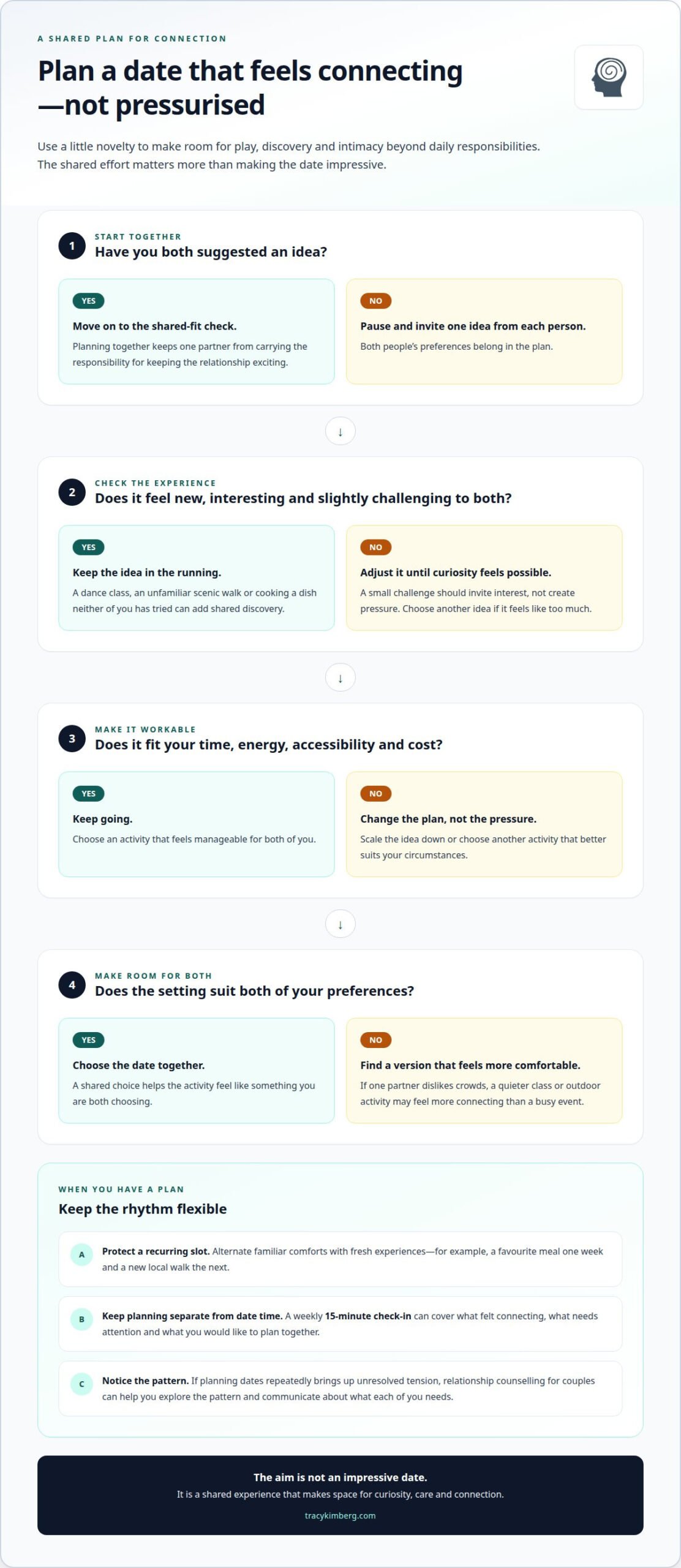
A date can maintain closeness by creating space for play, discovery and intimacy beyond daily responsibilities. If your usual evening follows the same routine, try an activity that gives you both something new to experience and discuss.
When couples feel bored, they may prefer growth-enhancing activities and add more novelty to their date plans. Trying something new, challenging and interesting together can help counter boredom and support passion, satisfaction and commitment. Choose an activity that stretches you slightly, such as a dance class, a scenic walk somewhere unfamiliar or cooking a dish neither of you has tried. The shared effort matters more than making the date impressive.
Plan together rather than making one partner responsible for keeping the marriage exciting. Each person can suggest an idea, then consider time, energy, accessibility and cost before choosing. A small challenge should invite curiosity, not create pressure. If one partner dislikes crowds, for example, a quieter class or outdoor activity may feel more connecting than a busy event. Choosing together shows that both people’s preferences matter.
Keep a weekly 15-minute check-in separate from date time. Use it to discuss what felt connecting, what needs attention and what you’d like to plan together. A short, predictable conversation can help prevent practical planning from taking over the date itself. It also gives you a regular moment to notice whether your shared routine still feels chosen or has become automatic.
Regular dates don’t need to be elaborate or identical each week. Protect a recurring slot, then alternate between familiar comforts and fresh experiences, such as a favourite meal one week and a new local walk the next. If planning dates repeatedly brings up unresolved tension, relationship counselling for couples can help you explore the pattern and communicate about what each of you needs.
Watching and discussing romantic films
A romantic film can give partners a shared story that makes difficult conversations feel less exposed. Rather than asking, “What’s wrong with us?”, you can start with a character’s choice, then notice what it brings up for each of you. A filmmaker may portray silence as protection, for example, while a viewer sees it as rejection. That difference can open a useful conversation about how each partner understands closeness.
In one study, couples watched romantic films and discussed how the stories related to their own relationship over one month. Separately, married couples who watched and discussed romantic comedies were less likely to have broken up three years later than couples who took part in an intensive relationship workshop. These findings make film discussion a promising activity to explore, not a guarantee of any particular outcome.
Make the conversation specific. Choose one scene, describe each character’s actions, then ask what felt familiar or different in your relationship. You might discuss how a character apologises, responds to jealousy or asks for affection. Let both partners speak without turning the film into evidence against one another. The aim is curiosity: “What did you notice?” invites more openness than “You always do that.”
Professional support may be useful if conflict repeatedly escalates or ends in withdrawal, you find trust difficult to discuss, or you feel unable to repair after hurt. If the same painful cycle continues despite attempts to change it, support can help you understand what’s happening between you.
If one partner feels hesitant about therapy, suggest a limited first step: a few sessions to explore one shared concern, rather than a decision about the relationship’s future. You could say, “Could we try talking with someone about how we handle arguments?” That invitation names a specific purpose and leaves room for both partners’ feelings.
After a film, each partner can name one moment that resonated and one small action they’d like to try. Keep the focus on understanding, not assigning roles such as villain or hero.
Relationship-maintenance activities based on positive psychology
Positive psychology turns attention towards what’s working without asking couples to ignore pain or unresolved conflict. In a four-week study of couples in healthy relationships, activities included sharing a positive account of the relationship, expressing gratitude, identifying each other’s strengths, planning a shared activity and discussing small changes that could improve happiness. These strategies make care visible through specific words and actions.
Try the activities as a shared conversation, not a performance review. Each partner can write a positive account separately, then read it aloud and listen for moments that feel meaningful. Name a strength you appreciate, such as patience during a stressful week, and link it to a real example. Specific recognition can help your partner feel seen, rather than praised in general terms.
- Share one memory that captures something you value about your relationship.
- Thank your partner for a particular action and explain why it mattered.
- Name a strength you see in each other, using a recent example.
- Choose one enjoyable activity and one small change to discuss together.
Complete relationship worksheets separately before comparing responses. Different answers about beliefs, communication or intimacy aren’t proof that one person is wrong. They offer a starting point: ask what shaped each response, then listen for the need behind it. Partners can also use different but complementary strategies during stress. One might offer reassurance while the other seeks support through social connections, allowing both people to contribute in their own way.
After a month of positive-psychology activities, participants reported more positive emotions, better relationship functioning and improved communication than couples on a waitlist. Their average relationship functioning also remained better than the comparison group one month after the intervention. These findings point to a practical purpose: regular effort can help couples notice strengths and make room for small, shared improvements. If you’d like support turning these ideas into a meaningful conversation, explore ways to strengthen your relationship.
Tracy Kimberg: Relationship Counselling and Coaching for Couples
Tracy Kimberg’s Relationship Counselling and Coaching for Couples can help when repeated conflict, emotional distance or broken trust makes reconnecting difficult. Sessions offer space to explore the patterns beneath everyday disagreements and consider how each partner can contribute to change. You don’t need to wait until the relationship feels beyond repair before seeking support.
For couples who want a more structured path, Tracy also offers a 12-Week Relationship Recovery Process. It may suit partners looking for focused support with relationship difficulties, rather than relying on connection activities alone. The right next step depends on what you’re facing and what you hope to work towards together.
If you’re ready to explore support for your relationship, contact Tracy Kimberg.
Choose the next step together
A relationship maintenance plan for couples can be more than a calendar of activities. Let it reflect the partnership you want to create, including how you hope to respond when life becomes stressful or your needs change. Each of you could name one quality you want to bring to the relationship, such as openness, patience or curiosity, then talk about what that would look like in daily life.
Keep the conversation collaborative. If your hopes differ, get curious about what each one means rather than rushing towards a compromise. You might discover that one partner wants more spontaneity while the other needs steadier routines. Understanding those needs can help you shape a shared direction without either person losing their voice.
If you’d value support in exploring those patterns, you can contact Tracy Kimberg. A thoughtful next step, taken together or individually, can create room for a more connected way forward.
Frequently Asked Questions
What is relationship maintenance, really?
Relationship maintenance means tending to a partnership so it can remain steady through change, rather than waiting for a rupture. It includes noticing what’s shifting, speaking honestly about needs and adapting shared expectations. For example, a new work schedule may call for different ways to share responsibilities. Maintenance isn’t about keeping everything unchanged; it’s about staying responsive to each other as circumstances evolve.
What does a couples therapist actually do with a couple that isn’t in crisis?
A couples therapist can help partners understand recurring friction and strengthen how they communicate before problems feel overwhelming. You might explore how a decision about work or family affects each person, then clarify what you want to handle differently. Relationship Counselling and Coaching for Couples can provide space to discuss these patterns together, even when you’re seeking greater understanding rather than urgent repair.
Why do couples wait too long, and what does it cost?
Couples may delay seeking help because they hope tension will pass, worry that therapy means failure, or struggle to agree on getting support. Research attributed to the Gottman Institute puts the average wait at six years after relationship problems begin. Delay can allow hurt and misunderstandings to become familiar patterns, making honest conversations harder. The cost can be emotional distance and less room to respond with curiosity.
What is a relationship maintenance plan for couples?
A relationship maintenance plan for couples is a shared, flexible agreement about how to keep tending the relationship. It can name what each person wants to protect, how you’ll raise concerns and how you’ll revisit arrangements when life changes. For example, partners taking on a new caring responsibility might agree to review how they share their time and energy, then adjust the plan together.
What weekly relationship check-in questions should couples ask?
Use questions that invite honest reflection rather than a scorecard. Each partner might ask: “Was there a moment you felt misunderstood this week?”, “Is there something you need more space for?” and “What would help us feel like a team next week?” Take turns answering without interruption. If a topic feels charged, agree to return to it when you can both listen attentively.
How often should couples schedule quality time and date nights?
Choose a rhythm you can sustain, based on your schedules, caring responsibilities, energy and whether you live together or apart. A regular shared slot matters more than copying another couple’s routine. Some weeks, quality time might mean a planned outing; during busier periods, a quiet meal without phones may feel more realistic. Talk together if the arrangement starts feeling like another obligation rather than time you’ve chosen.

Article by
Tracy Kimberg
Tracy Kimberg is a Relationship Expert, Couples Therapist and Coach with a dedicated focus on helping couples and individuals rebuild connection, trust and emotional safety in their relationships. Drawing on the research of John and Julie Gottman, the relational insights of Esther Perel, and years of hands-on therapeutic experience, Tracy offers a warm, non-judgemental and deeply compassionate approach to modern relationships.
Based in Dorset, Tracy works with couples navigating communication breakdowns, betrayal, intimacy challenges, separation, family dynamics and life transitions. Known for creating a safe and grounded therapeutic space, she combines practical tools with emotional depth to help clients move beyond survival patterns and towards meaningful, lasting change.
With a reputation for empathy, professionalism and dedication to her clients’ growth, Tracy is passionate about helping people feel seen, understood and empowered — both within their relationships and within themselves.
Disclaimer
Disclaimer:
The information shared in this article is intended for educational and informational purposes only and should not be considered a substitute for professional therapeutic, psychological, medical or legal advice. Every individual and relationship is unique, and the perspectives offered are based on general therapeutic principles, research and professional experience.
Reading this article does not establish a therapist-client relationship with Tracy Kimberg. If you are experiencing significant emotional distress, relationship crisis, trauma, or mental health concerns, it is important to seek support from a qualified professional appropriate to your individual circumstances.
All content remains the intellectual property of Tracy Kimberg and may not be reproduced or distributed without permission.