

Learning how to stop intrusive thoughts after being cheated on starts with recognising that they can follow betrayal, rather than mean you’re choosing to dwell on the affair. In the moment, grounding yourself and noticing a thought without treating it as fact may ease its intensity. Longer-term relief often involves understanding what the thoughts are telling you and addressing the uncertainty that keeps them going.
You may have forgiven your partner and still feel anger, fear or sudden mental images. That doesn’t mean your feelings are wrong or that you’ve failed to move on. When trust has been broken, your mind may keep searching for explanations and reassurance, especially if conversations feel incomplete or your partner seems emotionally distant.
This article explores why intrusive thoughts can follow infidelity, how the nervous system may respond to emotional overwhelm, and what can help when thoughts return. It also looks at how to seek meaningful explanations without pursuing details that may deepen the hurt, and how relationship therapy can support a more considered path towards repair or clarity.
Key Takeaways
- Intrusive thoughts can follow betrayal even when you want to repair the relationship; noticing them as thoughts, rather than facts, may help soften their grip.
- Emotional overwhelm can affect your body and your ability to think clearly. Recognising these responses can help you understand why a trigger feels so powerful.
- Questions about the affair’s meaning and its impact on your relationship may be more helpful than seeking graphic details.
- When distress or disconnection persists, individual or couples therapy can help you explore what is happening and find a way forward together.
What Are Intrusive Thoughts in Affair Recovery?
After infidelity, unwanted thoughts can return even as you try to understand what happened. They may focus on the affair, your partner’s honesty or what could happen next.
Emotional Hypervigilance and Flooding
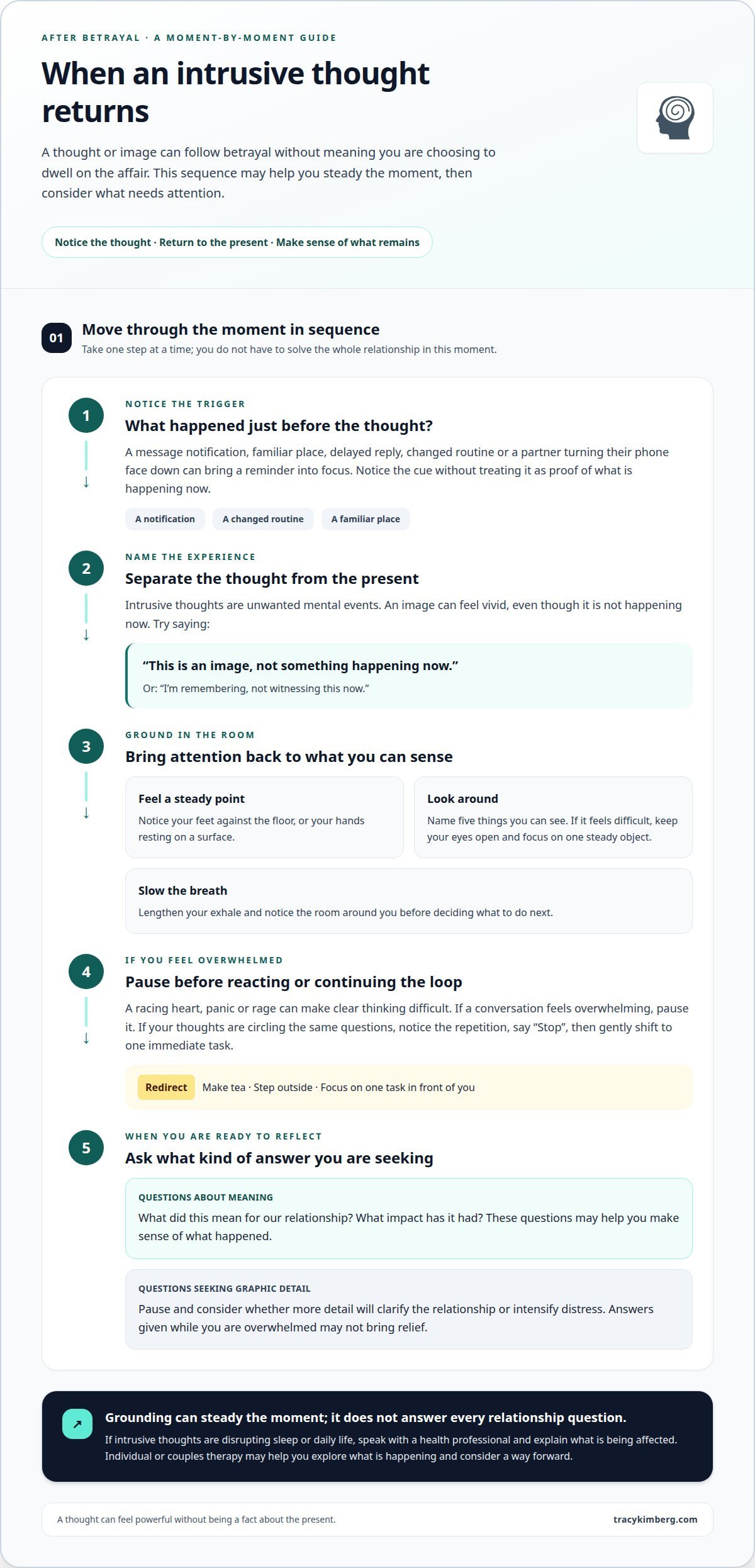
Emotional hypervigilance is heightened alertness to possible signs of danger, such as a partner guarding their phone or arriving home late. After trust is broken, even ordinary moments can feel threatening. Emotional flooding may follow: a racing heart, panic or rage can make clear thinking difficult. Pausing a conversation can help you avoid reacting while overwhelmed.
Intrusive Thoughts and Images
Intrusive thoughts are unwanted mental events; intrusive imagery can make scenes involving your partner and the affair partner feel vivid, even though they aren’t happening now. A message notification, familiar location or discovery can trigger them. Try naming the experience: “This is an image, not something happening now.” Then notice your feet on the floor. This helps separate the thought from the present moment.
Rumination After Infidelity
Rumination is repetitive thinking that circles questions such as, “Why did this happen?” or “What haven’t I been told?” Your mind may be seeking certainty, but replaying the same details can keep distress alive without bringing a new answer. Notice when the thinking becomes repetitive, then gently shift your attention to one immediate task, such as making tea or stepping outside.
Helpful coping techniques include grounding through physical sensations, observing a thought without treating it as fact, and interrupting a rumination loop with a deliberate “Stop” before redirecting your attention. These approaches may steady the moment, but they don’t resolve unanswered questions about the relationship.
Medication may be considered for distressing symptoms, but it cannot explain an affair or restore trust. A prescribing clinician can discuss whether it fits your situation and explain potential benefits and risks.
If intrusive thoughts are disrupting sleep or daily life, speak with a health professional and describe what is being affected. If you may harm yourself or feel in immediate danger, the US Suicide & Crisis Lifeline can be reached by calling or texting 988.
Betrayal trauma and nervous-system responses
Betrayal can unsettle your sense of safety in a relationship. A delayed reply or changed routine may become a trigger, even when you’re trying to focus on the present.
Betrayal Trauma Responses
Betrayal trauma describes emotional, psychological and physical harm that can follow a trusted person’s violation of trust. Your nervous system may respond as if danger is still close, preparing you to fight, flee or shut down. This matters because a strong reaction to a small reminder can reflect perceived threat, not a deliberate choice to overreact.
For example, seeing your partner turn their phone face down may bring a sudden rush of fear. Slow, deep breaths and noticing sensations, such as your feet against the floor, can help you reconnect with the room before taking action.
Possible PTSD Symptoms
PTSD-like symptoms can include intrusive memories, avoidance, heightened alertness and disrupted sleep. A 2019 study found that 45.2% of participants reported symptoms suggesting probable infidelity-related PTSD. This figure describes symptoms reported by participants; it doesn’t diagnose you or establish that infidelity always causes PTSD.
If reminders are affecting sleep, concentration or daily routines, that impact deserves attention. A therapist can help you explore the pattern and consider what support may fit, without reducing your experience to a label.
Trauma-Related Rumination and Questions
Trauma-related rumination is repeatedly reviewing the betrayal, often in search of an explanation that makes the relationship feel predictable again. You might replay a conversation, question what you knew or wonder whether another secret remains.
Questions can help you make sense of what happened, but answers given while you’re overwhelmed may not bring relief. Notice whether a question seeks meaning or graphic detail. Pausing can protect you from pursuing information that intensifies distress without clarifying the relationship.
Mindfulness and Grounding
Mindfulness and grounding can help reduce the intensity of an intrusive thought by bringing your attention back to the present. They may not erase the thought or resolve the betrayal, but noticing “I’m remembering, not witnessing this now” can create space before you respond.
Try naming five things you can see, then lengthen your exhale and feel your hands resting on a surface. If the practice feels difficult, keep your eyes open and focus on one steady object. Adapting the activity can make it feel safer.
Common thoughts after discovering an affair
After discovering an affair, thoughts may focus on what happened, what remains undisclosed or whether it could happen again. A message arriving late at night, for example, may prompt fears that your partner is still in contact with the affair partner. These questions can reflect a search for meaning and security, not a failure to heal. If you’re wondering how to stop intrusive thoughts after being cheated on, begin by noticing what tends to trigger them.
Comparisons can make the stress feel personal: you may wonder whether the affair partner was more attractive, exciting or valued. Notice when your mind turns the betrayal into a verdict on your worth. The affair reflects choices within the relationship; comparing your appearance or personality with someone else cannot explain those choices or predict your recovery.
Wanting details is understandable. You may hope a complete account will settle uncertainty, yet graphic descriptions of sexual encounters can intensify painful images rather than clarify the relationship. Before asking, consider what you need the answer to help you understand. Questions about the affair’s meaning, how it began and what your partner intends now can provide a more useful basis for conversation.
Healing may involve deciding together what information supports recovery and what details are likely to cause further harm. The partner who had the affair should not control which truths are disclosed, but openness need not mean a graphic account of every encounter. Inconsistent explanations, continuing secrets or emotional distance can keep uncertainty alive; patience and reassurance can help make difficult conversations safer.
Couples therapy can provide a structured setting to discuss the affair, recognise recurring interaction patterns and agree on what rebuilding trust requires. A therapist experienced in affair recovery can help both partners speak and listen without turning each session into a cross-examination. Individual therapy can also give the hurt partner space to process distress and develop ways to manage its physical and emotional effects.
Recovery is not simply a matter of waiting for thoughts to disappear. One part of how to stop intrusive thoughts after being cheated on is noticing whether a question seeks understanding or simply reopens distress. A structured process can help couples address questions, accountability and emotional connection in turn, rather than revisiting the same argument without progress. If conversations repeatedly become defensive or leave you feeling more alone, guided support can help clarify what each partner needs next.
Seeking explanations and relationship therapy
After betrayal, your thoughts may return to unanswered questions because certainty can feel essential to safety. Explanations can help, but the way you discuss them matters: a changing account or emotional distance may deepen uncertainty instead of easing it.
Useful conversations focus on what the affair meant, how it affected the relationship and what each partner needs now. For example, “What were you seeking in that connection?” may open a more meaningful discussion than graphic questions about sexual details. The partner who had the affair should respond with honesty, patience and genuine remorse, rather than deciding alone which truths the other partner can hear.
Repeated questions are not automatically a sign that someone is being difficult. The hurt partner may be seeking reassurance, connection or a coherent account. The partner who was unfaithful can listen, acknowledge the impact and take responsibility for what is true in the other person’s experience. A defensive reply can turn a request for understanding into another painful rupture.
Couples therapy offers a contained setting to explore difficult questions and notice patterns, such as one partner pursuing answers while the other withdraws. Emotionally Focused Therapy, for example, works to change problematic interaction patterns and foster more secure attachment bonds. Therapy can help couples slow the conversation, name the emotion beneath a question and consider what repair requires. Individual therapy can also support someone processing betrayal trauma.
Clarity does not require learning every detail. A useful distinction is whether an answer helps you understand the meaning, impact or current boundaries of the affair, or mainly adds distressing images. If you and your partner are caught in the same painful exchange, relationship counselling for couples can support a more focused conversation about accountability, trust and what comes next.
Tracy Kimberg
Tracy Kimberg offers support for people and couples working through the impact of infidelity. If repeated thoughts are straining communication or leaving you unsure how to move forward together, Relationship Counselling and Coaching for Couples can provide space to explore trust, accountability and what each partner needs. The 12-Week Relationship Recovery Process offers a structured path for couples seeking to work on their relationship after a rupture in trust.
If you need space to process your emotional responses, Therapy for Adults can support that work alongside decisions about the relationship. The right next step depends on whether you’re seeking individual support, a shared conversation or a structured recovery process. To explore support, contact Tracy Kimberg.
Choose a next step that feels possible
Healing doesn’t require you to have every answer before moving forward. Understanding how to stop intrusive thoughts after being cheated on can begin with noticing what intensifies them, then choosing support that fits your needs. You might want to work through difficult conversations with your partner, or first make space to understand your own feelings. A small next step can still matter.
Tracy Kimberg offers Relationship Counselling and Coaching for Couples, a 12-Week Relationship Recovery Process, and Therapy for Teenagers. These options support different needs, from working on the relationship together to seeking help for a young person affected by family strain. If you’re ready to explore support, contact Tracy Kimberg. There is room to move towards greater clarity and connection, at a pace that feels manageable.
Frequently Asked Questions
How Do I Stop Overthinking After Being Cheated On?
Give your thinking a clear task: separate what you know from what you fear, then identify one question that needs an answer. For example, write “I know the messages continued” beside “I’m afraid they still do”. Ask your partner about the specific uncertainty, rather than trying to settle every fear at once. If the discussion becomes circular, pause and return to it when you can both listen.
How Do I Stop Replaying the Affair in My Mind?
Rather than trying to force the memory away, notice what tends to come just before it. A particular time of day, a song or a quiet moment may set off the replay. You could note the trigger and what you need in that moment, such as company or a change of activity. This can help you recognise a pattern and respond to the present, not only the memory.
What Is Emotional Flooding After an Affair?
Emotional flooding is a surge of intense feeling that can make it hard to stay present in a conversation. You might notice a pounding heart, a raised voice or difficulty following what your partner is saying. Try agreeing on a simple phrase, such as “I need a pause”, so either person can stop the discussion without ending it. Return to the topic once you’re both ready to engage.
What Is Betrayal Trauma?
Betrayal trauma describes the distress that can follow a breach of trust by someone emotionally important to you. It can unsettle how safe closeness feels, so a partner’s ordinary silence may carry a different meaning after an affair. The term describes an experience, not a diagnosis. Your responses deserve attention in their own right, whether or not you use a clinical label for them.
What Prolongs the All-Consuming Questioning About the Affair?
Questioning can continue when answers shift, important information emerges gradually or your partner avoids the emotional impact. Each change may reopen uncertainty and prompt you to revisit earlier conversations. Questioning can also persist if discussions focus on defending intentions rather than acknowledging consequences. Agreeing on a time to talk and returning to meaningful unanswered questions can create more continuity than revisiting them during every disagreement.
Why Can’t I Stop Thinking About My Partner’s Affair?
Your mind may keep returning to the affair because it is trying to make sense of a painful contradiction: someone you trusted also hurt you. A reminder, a new unanswered question or a change in your partner’s behaviour can bring the subject back into focus. This doesn’t mean you want to remain stuck. It may show that the experience still needs understanding, care and space to be processed.

Article by
Tracy Kimberg
Tracy Kimberg is a Relationship Expert, Couples Therapist and Coach with a dedicated focus on helping couples and individuals rebuild connection, trust and emotional safety in their relationships. Drawing on the research of John and Julie Gottman, the relational insights of Esther Perel, and years of hands-on therapeutic experience, Tracy offers a warm, non-judgemental and deeply compassionate approach to modern relationships.
Based in Dorset, Tracy works with couples navigating communication breakdowns, betrayal, intimacy challenges, separation, family dynamics and life transitions. Known for creating a safe and grounded therapeutic space, she combines practical tools with emotional depth to help clients move beyond survival patterns and towards meaningful, lasting change.
With a reputation for empathy, professionalism and dedication to her clients’ growth, Tracy is passionate about helping people feel seen, understood and empowered — both within their relationships and within themselves.
Disclaimer
Disclaimer:
The information shared in this article is intended for educational and informational purposes only and should not be considered a substitute for professional therapeutic, psychological, medical or legal advice. Every individual and relationship is unique, and the perspectives offered are based on general therapeutic principles, research and professional experience.
Reading this article does not establish a therapist-client relationship with Tracy Kimberg. If you are experiencing significant emotional distress, relationship crisis, trauma, or mental health concerns, it is important to seek support from a qualified professional appropriate to your individual circumstances.
All content remains the intellectual property of Tracy Kimberg and may not be reproduced or distributed without permission.