

According to Sue Ryder, 80% of men in its survey said they felt alone in their grief. Men may respond with silence, practical activity, anger, sadness or changing waves of emotion, rather than speaking openly. Knowing how to support a grieving partner means offering steady presence and practical help without assuming you know what he needs.
You may want to find the right words or make the pain easier to bear. But grief can’t be fixed. Support often starts with listening, accepting what’s there and staying close without pressure.
This guide explores how men may grieve and how you can respond with understanding, everyday help and support at home. It also looks at why caring for yourself matters, so you can stay present without carrying everything alone.
Key Takeaways
- Listen without correcting, comparing or trying to make the loss feel smaller; let your partner guide how much they want to share.
- Offer specific, manageable help with daily tasks, and ask what would ease the pressure rather than taking over.
- Stay attentive to changing needs, making room for both quiet companionship and space when it’s wanted.
- Protect your own capacity to care by making time to rest and seeking support for your feelings, too.
1. Avoiding minimizing or comparing someone’s grief
If you’re wondering how to support a grieving partner, start by listening rather than searching for perfect words. Give them your attention when they speak about the person who died, then reflect what you hear: “You miss having her to call.” Acknowledge the depth of the loss: “This sounds incredibly painful.” Sitting quietly nearby can also bring comfort when conversation feels like too much.
Respect their need for space by asking, “Would you like company, or some time alone?” If they choose solitude, agree on a gentle way to reconnect, such as a message later. Their wishes may change: they might want to talk one evening and be quiet the next. Stay available without pursuing them or treating a request for space as rejection. Supporting a grieving partner also means letting them guide the pace of connection.
Avoid phrases such as “I know how you feel”, “at least” and “Everything happens for a reason”. Even when kindly meant, these can make a loss seem smaller. Don’t compare their experience with another bereavement or focus only on positive memories. Let them express anger, guilt, confusion or laughter without criticism, correction or unsolicited advice. For example, say, “You sound angry,” rather than telling them how they should feel.
Grief can change the rhythm of a relationship, including intimacy. Your partner may welcome a hand held in silence but not want conversation or physical closeness at another moment. Ask before offering touch, and don’t interpret reduced affection as a verdict on your bond. You could say, “I miss feeling close. What feels comfortable for you today?”
Consider professional support if your partner remains overwhelmed, can’t manage daily life, withdraws completely, or expresses hopelessness or despair. You might ask, “Would speaking with a grief counsellor feel helpful?” A counsellor, group, trusted friend or family member can offer another space to explore their feelings.
2. Offering practical help with everyday responsibilities
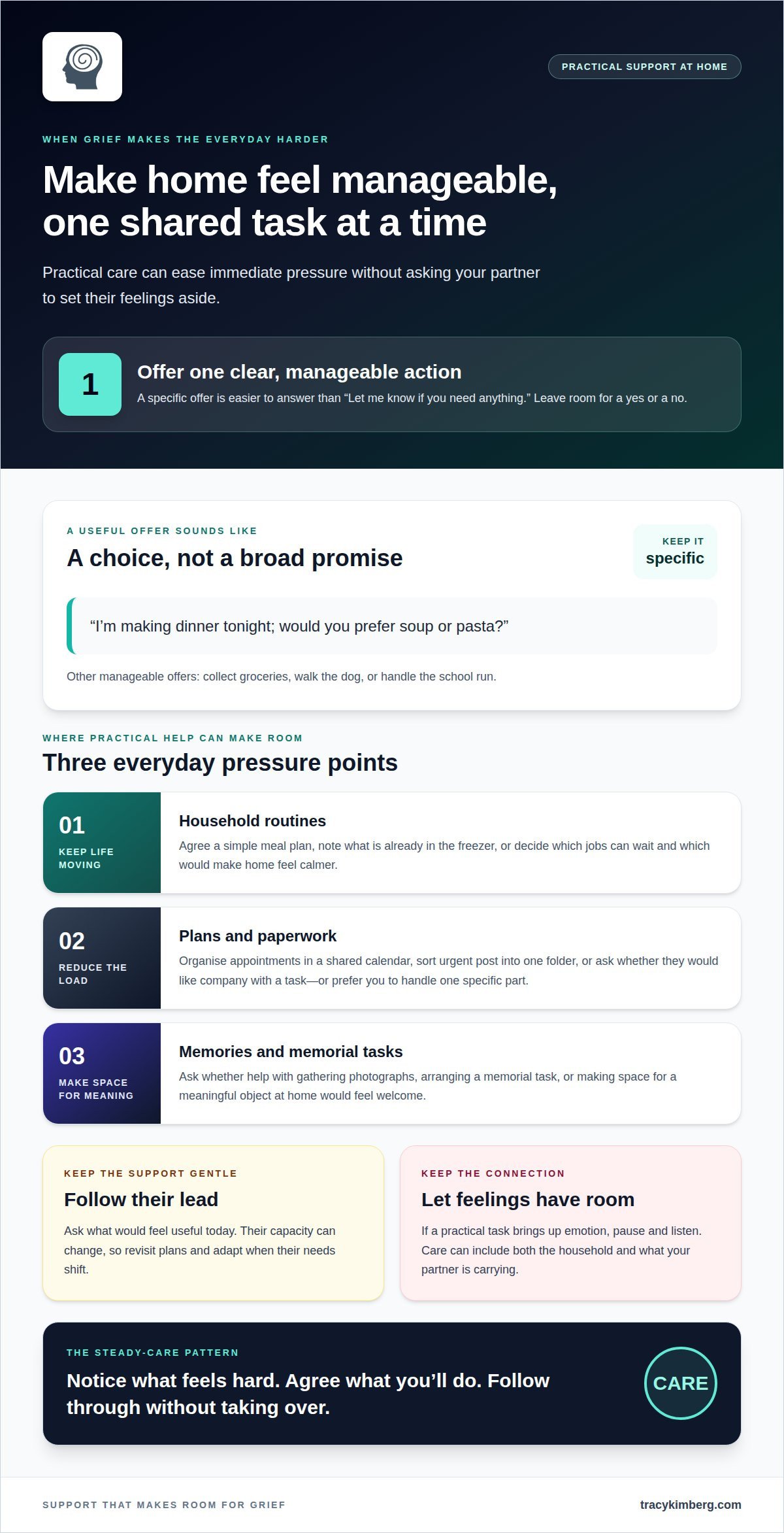
Grief can make familiar tasks feel demanding, so offer one clear, manageable action. Instead of saying, “Let me know if you need anything,” try, “I’m making dinner tonight; would you prefer soup or pasta?” You could also collect groceries, walk the dog or handle the school run. Specific offers make it easier to accept help, while leaving your partner free to say yes or no.
Keep your support steady with a brief message that doesn’t require a reply. For example: “Thinking of you. I can bring lunch or sit with you this afternoon.” A friend might send a similar message, but your presence as their partner can provide a familiar point of connection. If they don’t respond, don’t treat silence as a refusal of your care. Follow their lead and check in later.
Practical care also means noticing what has become harder without taking control. If paperwork is piling up, ask whether your partner wants company while they sort it or would rather you handle one specific task. Around a funeral, you might offer to drive, prepare food for visitors or take care of a household errand. Agree on what you’ll do, then follow through without expecting praise or giving constant updates.
Quiet presence can matter when words and plans feel overwhelming. Sit nearby whilst your partner rests, make tea, or watch a familiar programme together. In that moment, you don’t need to fill every pause. Ask what would feel useful today, since their capacity can change from one day to another. When communication about support becomes difficult, relationship counselling and coaching for couples can help partners talk through needs and feel understood.
Regular messages can show that your care continues over time. Help with cooking, cleaning, yardwork or childcare can also lighten everyday responsibilities when grief makes them harder.
3. Practical household and daily-life support
Grief can disrupt the routines that make home life feel manageable. Rather than promising, “Everything will be fine,” choose a useful action together. You could organise the week’s appointments in a shared calendar, sort urgent post into one folder or handle a household bill your partner usually manages. These practical steps ease immediate pressure without suggesting their feelings should disappear.
Consider the household routine as a whole, not just one task. If your partner is struggling to plan meals, agree on a simple plan for the week and note what’s already in the freezer. If laundry or cleaning is falling behind, decide which jobs can wait and which would make home feel calmer. A clear division of responsibilities can prevent practical help from becoming another decision for them to carry.
Household help can go hand in hand with emotional support. While organising the calendar, for instance, leave room for a quiet evening after a difficult appointment. If your partner starts talking, pause the task and listen to what this period has brought up. You might reflect, “It sounds as though sorting those belongings has stirred up a lot.” This connects the practical moment with their feelings without turning every conversation into problem-solving.
Some responsibilities are closely tied to remembering the person who died. Ask whether your partner would value help arranging a memorial task, gathering photographs or making space for a meaningful object at home. Let their wishes guide these gestures, not a timetable for moving through grief. Revisit the arrangement if their needs change. A shared plan can make daily life feel less chaotic, while your willingness to adapt shows that both the household and your partner’s feelings matter.
4. Self-care for the supporting partner
Supporting someone through bereavement can stir up your own feelings, especially if you knew the person who died. You may be grieving too while trying to keep routines steady or care for children. If your partner has lost a parent, for example, family memories may bring up your own experiences. Naming what feels difficult helps you recognise your needs without making your partner responsible for managing them.
Sue Ryder’s survey found that 33% of men feared friends would exclude them if they opened up. Its research also found that 30% said unhealthy coping mechanisms heightened their grief. These findings underline the value of finding a safe place for your own emotions. Choose a trusted friend or counsellor, and be honest about what you’re carrying. If you want to talk, make that conversation separate from your partner’s immediate need for support.
The Ring Theory offers a helpful way to think about where to turn: comfort people closer to the bereaved person, and share your own distress with someone further out. This doesn’t mean hiding your feelings or pretending you’re unaffected. It means choosing the right person and moment, so your partner isn’t asked to comfort you while overwhelmed. A sibling, friend or counsellor can make space for your grief and frustration.
Protect a few ordinary supports in your week. Arrange a walk with a friend, keep a meal for yourself, or take quiet time after a demanding family visit. These are not withdrawals from the relationship; they help you stay emotionally present without expecting yourself to be endlessly available. If you’re finding the strain hard to hold alone, take a step towards personal support. Caring for yourself is part of caring for the bond you share.
Tracy Kimberg
Tracy Kimberg offers Relationship Counselling and Coaching for Couples when grief affects communication, closeness or how you support one another. Talking together can help you notice how loss is shaping your relationship, express needs more clearly and find ways to stay connected without expecting either partner to grieve in a particular way. If you’re also carrying difficult feelings of your own, Therapy for Adults can offer space to explore them separately. Support doesn’t replace the care you give each other; it can help you approach that care with greater understanding and steadiness. If you’d like support with grief’s impact on you or your relationship, contact Tracy Kimberg to discuss a next step.
Let support grow with you
Grief can change how a couple understands closeness, responsibility and the future. You don’t need to find a perfect response today. Instead, keep making room for honest conversations about what each of you can give, what feels difficult and what may need to change. Supporting a grieving partner isn’t about carrying every feeling for them; it’s about building a relationship where neither person has to disappear.
If loss is making it harder to understand one another or feel connected, support can help you explore those changes together. Contact Tracy Kimberg for support and take a thoughtful next step at a pace that feels right for you. Small acts of understanding can help you find your way forward, together.
Frequently Asked Questions
What should I say to a partner who is grieving?
Say something honest and simple, such as, “I’m here with you, and I’m thinking of you.” If you’re unsure what would help, you can say, “I don’t have the right words, but I care about you.” Avoid promising how they’ll feel later. A sincere, present response is more comforting than trying to explain the loss.
How can I listen and offer emotional support to a grieving partner?
Let your partner choose the pace and subject of the conversation. Put away your phone, let them finish their thoughts, then ask whether they want you to listen or help think something through. If they share a memory, you might ask what they miss most about that person. This invites connection without directing their feelings or turning the moment into an interview.
What practical help can I offer a grieving partner day to day?
Offer help with a specific obstacle that day. You could take them to an appointment, collect a prescription or help them rearrange a work commitment, if they want your support. For recurring responsibilities, agree on a simple routine, such as preparing tomorrow’s lunch together. Small, predictable arrangements can ease decision-making when concentration feels difficult.
How do grief responses and timelines differ from person to person?
Grief varies according to the person, their relationship with the deceased and what the loss means to them. One partner might feel tearful while another focuses on practical matters; either response may change over time. Working through a close loss can take weeks, months or years. Anniversaries and significant dates may also bring renewed sadness, even after calmer periods.
How can I care for myself while supporting a grieving partner?
Make room for your own emotions without asking your partner to take care of them. You might arrange a regular walk with a friend, speak with a counsellor or set aside time for an activity that helps you decompress. Notice signs that you’re becoming depleted, such as irritability or difficulty resting, and adjust responsibilities where possible. Your wellbeing matters in this relationship, too.

Article by
Tracy Kimberg
Tracy Kimberg is a Relationship Expert, Couples Therapist and Coach with a dedicated focus on helping couples and individuals rebuild connection, trust and emotional safety in their relationships. Drawing on the research of John and Julie Gottman, the relational insights of Esther Perel, and years of hands-on therapeutic experience, Tracy offers a warm, non-judgemental and deeply compassionate approach to modern relationships.
Based in Dorset, Tracy works with couples navigating communication breakdowns, betrayal, intimacy challenges, separation, family dynamics and life transitions. Known for creating a safe and grounded therapeutic space, she combines practical tools with emotional depth to help clients move beyond survival patterns and towards meaningful, lasting change.
With a reputation for empathy, professionalism and dedication to her clients’ growth, Tracy is passionate about helping people feel seen, understood and empowered — both within their relationships and within themselves.
Disclaimer
Disclaimer:
The information shared in this article is intended for educational and informational purposes only and should not be considered a substitute for professional therapeutic, psychological, medical or legal advice. Every individual and relationship is unique, and the perspectives offered are based on general therapeutic principles, research and professional experience.
Reading this article does not establish a therapist-client relationship with Tracy Kimberg. If you are experiencing significant emotional distress, relationship crisis, trauma, or mental health concerns, it is important to seek support from a qualified professional appropriate to your individual circumstances.
All content remains the intellectual property of Tracy Kimberg and may not be reproduced or distributed without permission.