
What if you don’t have to decide the future of your relationship straight away? Learning how to survive a partner’s betrayal can begin with slowing down, recognising what you’re feeling and finding support, rather than forcing yourself to forgive or make a life-changing decision before you’re ready.
When trust has been broken, feeling hurt, angry, numb or on edge is understandable. Betrayal can shake your sense of safety and closeness, and affect how you remember events or respond to possible threats. These reactions aren’t a personal failing; they’re part of making sense of a painful rupture.
This article explores how betrayal may affect attachment, memory and your sense of threat, and offers practical first steps towards steadier ground. It also explains how individual therapy can support your healing, while couples therapy may help you face what happened together and consider whether you can rebuild the relationship.
Key Takeaways
- Notice how broken trust may shift closeness and security, and allow yourself time to make sense of your reactions.
- Recognise that reminders such as raised voices or a loud door can heighten a sense of threat and affect how you recall events.
- Consider individual therapy for personal support and couples therapy when both partners are willing to work on the relationship.
- Name what you’re feeling, lean on trusted people and give yourself space before deciding what comes next.
1. Betrayal trauma and attachment relationships
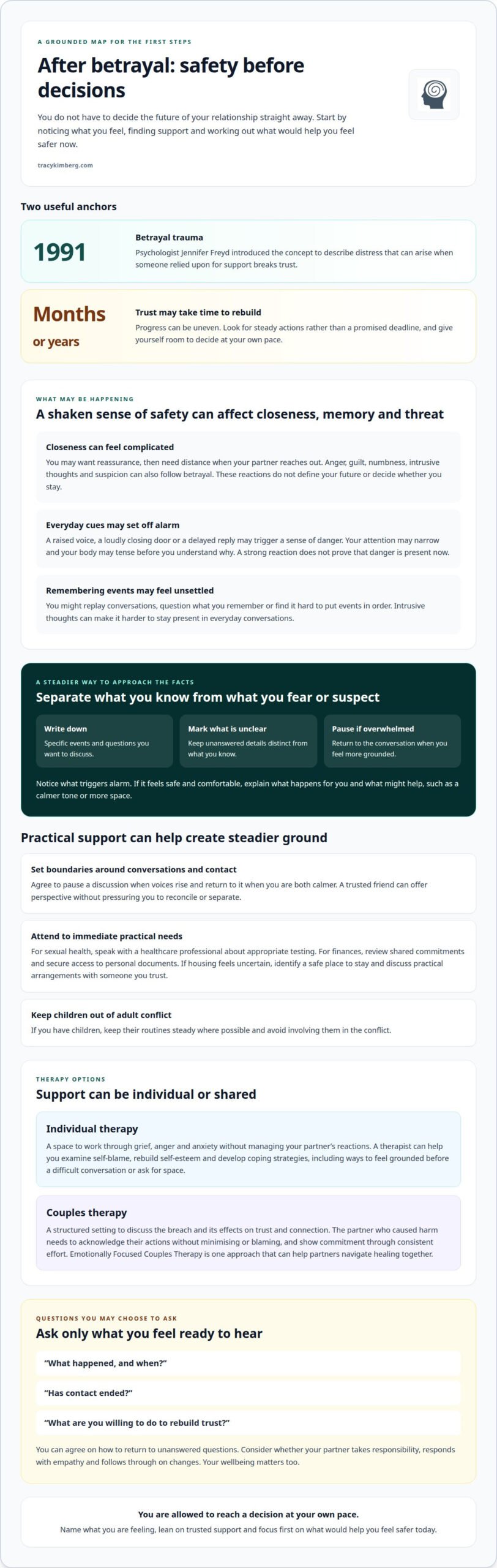
Psychologist Jennifer Freyd introduced the concept of betrayal trauma in 1991. It describes distress that can arise when someone relied upon for support breaks trust. A partner’s infidelity or financial secrecy can unsettle a relationship that once felt like a source of safety.
After a breach of trust, you may feel torn between wanting closeness and needing distance. You might seek reassurance one day, then withdraw when your partner reaches out. Anger, guilt, numbness, intrusive thoughts and suspicion can also follow infidelity. These reactions may resemble post-traumatic stress symptoms, but they don’t define your future or determine whether you stay.
Genuine remorse shows through consistent behaviour, not a single apology. The partner who caused harm acknowledges the breach, takes responsibility without minimising it, listens with empathy and follows through on agreed changes. For example, they answer questions honestly instead of blaming you for asking.
Set boundaries around conversations, privacy and contact while you work out what feels safe. You might agree to pause a discussion when voices rise and return to it when you’re both calmer. A trusted friend can offer perspective without pressuring you to reconcile or separate.
For sexual health, speak with a healthcare professional about appropriate testing. For finances, review shared commitments and secure access to personal documents. If your housing feels uncertain, identify a safe place to stay and discuss practical arrangements with someone you trust. If you have children, keep their routines steady where possible and avoid involving them in adult conflict.
Trust may take months or years to rebuild, and progress can be uneven. You don’t have to decide straight away whether to repair the relationship. First, focus on what would help you feel safer today.
2. How betrayal trauma affects memory and threat perception
After betrayal, ordinary moments can feel charged with danger. A raised voice, a door closing loudly or a delayed reply may trigger alarm. Your body can react before you understand why: your attention narrows, tension rises, and you watch your partner’s expression for signs of anger or concealment. This response reflects a shaken sense of safety; it doesn’t prove that danger is present now.
Your memory may feel unsettled too. You might replay conversations, question what you remember or struggle to put events in order. A detail in a message may suddenly seem significant, while other parts of a conversation feel hazy. Intrusive thoughts can pull your attention back to the betrayal and make it harder to stay present in everyday conversations.
Learning how to survive a partner’s betrayal can mean separating what you know from what you fear or suspect. Write down specific events and questions, then note which details remain unclear. This can help you discuss what happened without treating every anxious thought as evidence. If a conversation feels overwhelming, pause and return to it when you feel more grounded.
Notice your triggers, such as a particular tone of voice or a door closing. If it feels safe and comfortable, explain what happens for you and what might help, such as a calmer tone or more space. If you’re working out how to survive a partner’s betrayal, you might choose to speak face-to-face or make eye contact if those feel safe and comfortable; slowing down can also help. The aim isn’t to erase painful memories, but to build steadiness so reminders don’t shape every interaction. Consistent responses can help the present feel less controlled by what happened before.
Partners can notice signs of rising tension, such as raised voices or a door closing loudly, that may act as triggers. Treating these cues as useful information can make it easier to recognise when tension is building, rather than dismissing the reaction or arguing about whether it is justified. A gentle check-in can help you identify what the moment brings up and what would make the interaction feel more manageable. The goal is to respond with care while staying open to what is happening now.
3. Individual and couples therapy
If you’re wondering how to survive a partner’s betrayal, individual therapy can give you space to work through grief, anger and anxiety without managing your partner’s reactions. A therapist can help you examine self-blame, rebuild self-esteem and develop coping strategies. For example, you might explore what helps you feel grounded before a difficult conversation, or how to ask for space when emotions rise.
Couples therapy offers a structured setting to discuss the breach and its effects on trust and connection. The partner who caused harm needs to acknowledge their actions without minimising or blaming, then show commitment through consistent effort. Emotionally Focused Couples Therapy is one approach that can help partners navigate the healing process together.
You don’t have to decide straight away whether to stay or leave. Consider whether your partner takes responsibility, responds with empathy and follows through on changes. Your wellbeing matters too. To cope with shock or grief, name what you’re feeling and seek support from someone you trust. Working out how to survive a partner’s betrayal can take time, and you’re allowed to reach a decision at your own pace.
Useful questions include: “What happened, and when?” “Has contact ended?” and “What are you willing to do to rebuild trust?” Ask only what you feel ready to hear, and agree on how to return to unanswered questions. Rebuilding trust may take months or years, so look for steady actions rather than a promised deadline.
In the United States, trusted loved ones, an individual therapist or a support group can offer connection. You can ask a therapist about privacy before sharing personal details, and whether they can suggest a suitable group. Therapy can help you explore your needs, whether you work individually or together.
4. What are the first steps to take after discovering a partner’s betrayal?
In the first hours, focus on getting through the next conversation, not deciding your whole future. Name the feelings you can identify, such as anger, regret, shock or loss. If words are hard to find, write them down or tell someone, “I need company, not advice.”
You don’t need to decide straight away whether to end the relationship or try to repair it. Ask for space, sleep separately if that feels helpful, or stay with someone you trust. A friend can offer company or a practical distraction without hearing every detail.
Before discussing details, ask yourself whether you feel ready to talk. Your partner can ask whether you want them to speak or need time to process. If an affair involved ongoing contact, ending contact with the third party creates space to address what happened.
Agree on a contained time to talk, rather than letting betrayal fill every interaction. Partners can set aside 15-20 minutes every day for questions and feelings, then return to ordinary routines. The person who was betrayed should decide when these conversations become less frequent. If either of you feels overwhelmed, pause and agree when to resume.
Keep a steady anchor, such as a meal with a friend, a walk or a familiar bedtime routine. Avoid making major decisions during an argument or under pressure to forgive quickly. Note what needs attention today, then take one practical step at a time. A calmer pace can help you hear your own needs more clearly.
Give yourself permission to notice what you feel without reaching a verdict about the relationship. Naming anger, regret or loss can make those emotions easier to navigate. Writing a few words privately may help you recognise what you’re feeling without having to explain it perfectly. You can return to the question of staying or leaving when you feel more able to consider it.
A trusted friend or loved one can simply be there or offer a distraction, even if they know nothing about what happened. Before your partner starts a conversation, make your preference clear: you may be ready to listen, or you may need more time to process. Neither response requires you to decide what the relationship will become.
Tracy Kimberg
Tracy Kimberg offers a supportive next step if betrayal has left you unsure how to understand what happened or what you need next. You don’t have to decide whether to stay or leave before seeking therapy. It can give you room to explore your experience without rushing towards an outcome.
Relationship Counselling and Coaching for Couples can help partners discuss the rupture and its effects on trust and connection. In a guided conversation, you can bring up difficult questions, notice patterns such as defensiveness or withdrawal, and consider what repair would require. Each partner can clarify what they feel ready to work on.
The structured 12-Week Relationship Recovery Process may suit couples looking for a defined framework to explore their relationship and possible recovery. Its timeframe describes the process, not a promise that trust will be restored by its end. What matters is whether both partners can engage honestly and sustain meaningful change.
Individual Therapy for Adults can give you space to explore your responses, feelings and boundaries, whether or not your partner joins you. Therapy for Teenagers may help a young person make sense of distress affecting them within the family. The right support depends on who needs help and whether the work is individual or shared.
Start by identifying what feels most pressing: understanding your emotions, communicating as a couple or considering the relationship’s future. You don’t need to arrive with a complete account or a firm decision. A first conversation can be a chance to describe what’s happening and what kind of support you’re seeking.
If you’d like to explore support, contact Tracy Kimberg when you feel ready.
Frequently Asked Questions
How can individual therapy or couples counselling help after betrayal, and what does it cost in the United States?
Individual therapy can help you understand your own responses and decide what support feels useful; couples counselling creates space to examine how the rupture affects your relationship. In the United States, there’s no single cost for therapy. Fees vary by clinician, location, session length and whether sessions are individual or for a couple. Insurance arrangements may also affect what you pay.

Article by
Tracy Kimberg
Tracy Kimberg is a Relationship Expert, Couples Therapist and Coach with a dedicated focus on helping couples and individuals rebuild connection, trust and emotional safety in their relationships. Drawing on the research of John and Julie Gottman, the relational insights of Esther Perel, and years of hands-on therapeutic experience, Tracy offers a warm, non-judgemental and deeply compassionate approach to modern relationships.
Based in Dorset, Tracy works with couples navigating communication breakdowns, betrayal, intimacy challenges, separation, family dynamics and life transitions. Known for creating a safe and grounded therapeutic space, she combines practical tools with emotional depth to help clients move beyond survival patterns and towards meaningful, lasting change.
With a reputation for empathy, professionalism and dedication to her clients’ growth, Tracy is passionate about helping people feel seen, understood and empowered — both within their relationships and within themselves.
Disclaimer
Disclaimer:
The information shared in this article is intended for educational and informational purposes only and should not be considered a substitute for professional therapeutic, psychological, medical or legal advice. Every individual and relationship is unique, and the perspectives offered are based on general therapeutic principles, research and professional experience.
Reading this article does not establish a therapist-client relationship with Tracy Kimberg. If you are experiencing significant emotional distress, relationship crisis, trauma, or mental health concerns, it is important to seek support from a qualified professional appropriate to your individual circumstances.
All content remains the intellectual property of Tracy Kimberg and may not be reproduced or distributed without permission.