

You can love your husband and still feel far from him. Learning how to fall back in love with your husband often starts not with a grand romantic gesture, but with turning towards each other again: making space for honest feelings, practising forgiveness where possible and choosing time together that isn’t swallowed by routine.
Perhaps you miss feeling understood, or wonder whether closeness can return after hurt has settled between you. Those feelings deserve care, not judgement. Forgiveness doesn’t mean pretending nothing happened or rushing past pain. It can create space to understand what happened and decide how to move forward together.
This guide explores practical ways to rebuild connection, from talking openly and showing appreciation to trying fresh experiences that help you see one another differently. You’ll also consider how intentional time together can interrupt familiar patterns and allow intimacy to grow gradually. There’s no single switch to flip, but small, mutual acts of attention can be a meaningful place to begin.
Key Takeaways
- Make space for honest conversations and shared experiences to help rebuild warmth and romantic connection.
- Introduce something new together to step outside familiar roles and see your husband with fresh eyes.
- Notice routines that crowd out connection, then protect intentional time together from everyday distractions.
- Reconnect through small acts of appreciation, vulnerability and care, allowing trust and intimacy to grow gradually.
1. What must be done to regain that connection?
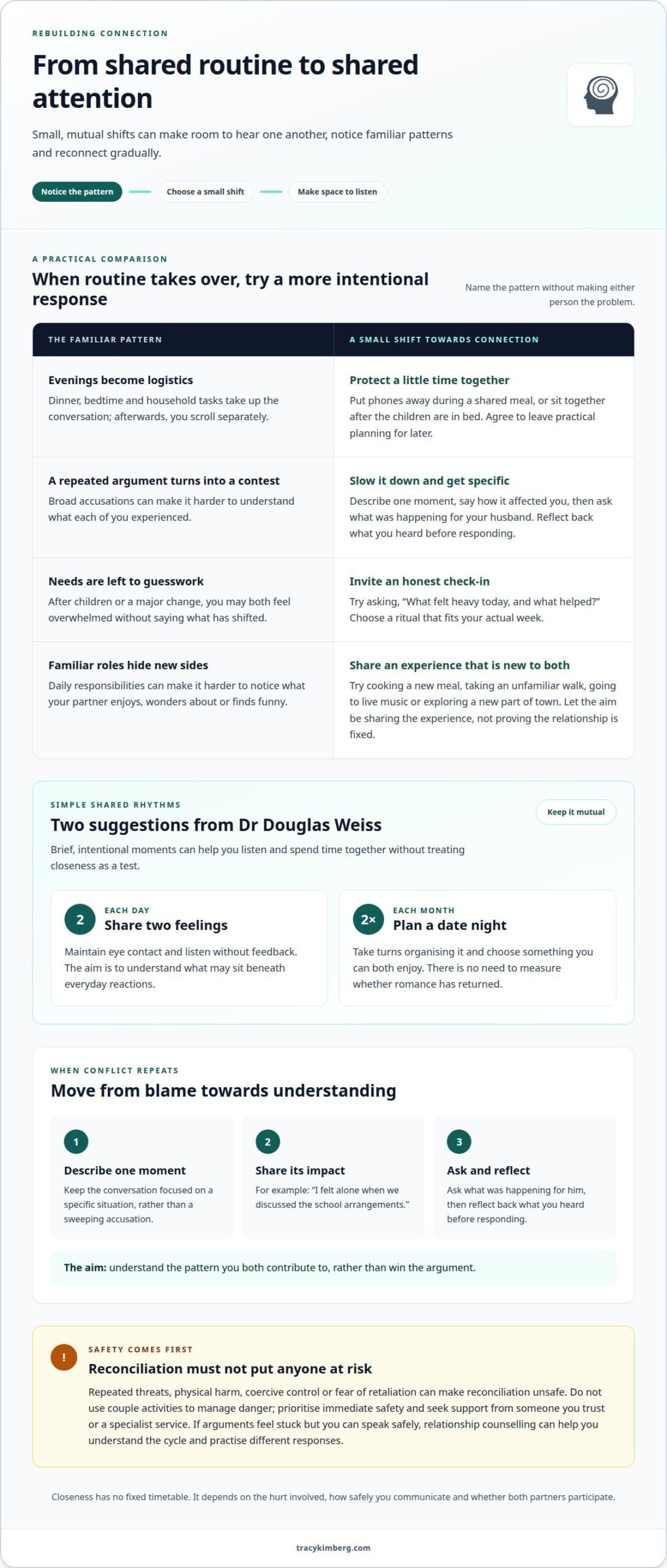
Start with a shared experience that helps you notice each other again, such as cooking a new meal or taking a walk somewhere unfamiliar. Dr Douglas Weiss recommends sharing two feelings each day, maintaining eye contact and listening without feedback. This brief exchange can help you understand what lies beneath everyday reactions. Weiss also recommends a date night twice per month, with partners taking turns organising it. Choose something you can both enjoy, rather than treating the evening as a test of whether romance has returned.
A rough patch may involve distance or frustration alongside care and a wish to reconnect. Feeling unsure or emotionally detached may point to deeper disconnection, but these feelings alone can’t define what’s happening in your marriage. Notice whether you still feel curiosity, tenderness or willingness to repair after disagreements. A shared activity can be a gentle way to explore that, without demanding an immediate answer.
When conflicts recur, slow the conversation down: describe one specific moment, explain how it affected you, then ask what your husband experienced. For example, replace “You never listen” with “I felt alone when we discussed the school arrangements; what was happening for you?” Reflect back what you heard before responding. This shifts the aim from winning an argument to understanding the pattern you both contribute to.
If your husband isn’t willing to work on the relationship, calmly explain what you miss and invite one manageable step, such as sharing a meal without phones. You can make your boundaries and choices clear, but you can’t create mutual effort alone. His response gives you information about what may be possible together.
There’s no fixed timetable for rebuilding closeness. It depends on the hurt involved, how safely you communicate and whether both partners participate. After children or major life changes, choose a realistic shared ritual, such as a short evening check-in after bedtime. Even asking what felt difficult or meaningful that day can help you connect beyond practical roles.
2. Creating novelty and seeing a partner with fresh eyes
Familiar routines can make your husband seem predictable when you mostly see him in established roles. A new experience lets you notice different qualities: how he approaches a challenge, what makes him laugh or what he enjoys learning. If you’re considering how to fall back in love with your husband, shared discovery can make room for curiosity alongside old hurts. Choose something new to both of you, such as a pottery class, live music or exploring an unfamiliar part of town.
Keep the plan simple enough to focus on each other, rather than performing romance. Agree beforehand that the aim is to share an experience, not prove the relationship is fixed. During it, ask, “What surprised you?” or “Would you do that again?” Listen for the person beneath familiar habits. He may reveal an interest, worry or playful side that daily responsibilities rarely bring into view.
Afterwards, talk about what each of you noticed. You might say, “I liked seeing how absorbed you were in that music,” rather than offering a broad compliment. Specific appreciation helps your partner feel seen, while sharing what moved you gives him a glimpse of your inner world. This exchange can build openness without demanding immediate declarations of love.
Novelty can also mean changing an ordinary conversation. If evenings usually become a review of chores, pause and ask about an idea, memory or hope you haven’t explored together. Thinking about how to fall back in love with your husband doesn’t mean forcing attraction; it can mean making room for mutual interest. If an activity feels uncomfortable for either of you, choose another together. Shared discovery works best when both feel respected and free to participate.
3. Recognising relationship routines and prioritising time together
Look for the repeated sequence that leaves you feeling like housemates rather than partners. Perhaps one of you handles dinner, the other manages bedtime, then you both scroll separately until sleep. Notice who starts conversations, which topics get postponed and when affection disappears. Naming the pattern matters more than blaming either person. You might say, “Our evenings have become all logistics; I miss hearing what you think.” That gives you both a specific routine to examine.
Then find a small opening for connection in your actual week. For example, put phones away during a shared meal or sit together after the children are in bed. Protect that time from household planning by agreeing to discuss practical tasks later. The aim isn’t to create a perfect evening; it’s to make room for conversation beyond chores, appointments and family responsibilities.
Children and major transitions can change a couple’s roles, leaving little space to meet as partners. Talk about what has changed: perhaps one person carries more of the planning, or both assume the other knows they feel overwhelmed. Choose a manageable ritual that fits your circumstances, such as asking, “What felt heavy today, and what helped?” A clear invitation can interrupt the habit of guessing each other’s needs.
Some patterns need more than protected time. Repeated threats, physical harm, coercive control or fear of retaliation can make reconciliation unsafe; don’t use couple activities to manage danger. Prioritise immediate safety and seek support from someone you trust or a specialist service. If recurring arguments feel stuck but you can speak safely, relationship counselling can help you understand the cycle and practise different ways of responding. The key question is whether both people can participate without intimidation or harm.
4. What are practical ways to reconnect emotionally with your husband?
Emotional reconnection grows through small moments when you respond to each other with attention. If you’re wondering how to fall back in love with your husband, start by noticing how you meet one another in ordinary conversations. When he shares a worry, pause before offering advice or changing the subject. You could ask, “That sounds exhausting. What was hardest about it?” Then listen without preparing your reply. This shows interest in his experience and makes space beyond household logistics.
Make appreciation specific. Each of you can offer two praises, while the person receiving them simply says, “Thank you.” Recognise that he stayed patient during a stressful family discussion, or remembered something important to you. Concrete appreciation can feel more sincere than a general “You’re great”. If accepting praise feels awkward, resist brushing it aside; let the words land before changing the subject.
When your actions have caused hurt, apologise without adding a defence. “I’m sorry I dismissed your concern yesterday. I can see why that felt lonely” names both your behaviour and its impact. Ask what would help repair things, then listen to the answer. Vulnerability also means sharing your feelings without making your husband responsible for fixing them: “I’ve felt distant, and I miss being able to talk openly with you.”
Thinking about how to fall back in love with your husband can also mean creating a calm point of contact through a shared spiritual practice. If it suits both of you, pray or do a spiritual activity together every single day, even briefly. You might share a reflection, express gratitude or sit quietly. Agree on a form that feels genuine to each partner, rather than turning it into a test of commitment. Revisit it if either person feels pressured, and choose another way to connect.
Tracy Kimberg
Tracy Kimberg offers Relationship Counselling and Coaching for Couples who want to understand disconnection and rebuild a more responsive partnership. Together, you can explore recurring conflict, emotional distance or the impact of a rupture, then practise different ways to speak and listen. This work can help you notice how each partner’s responses shape the relationship, without reducing the problem to one person’s fault.
Support may be useful when conversations repeatedly become arguments, hurt remains unresolved or attempts to reconnect are difficult to sustain. You don’t need to wait until the relationship reaches a crisis point to explore what’s happening. For example, you might seek support when everyday discussions about parenting or household responsibilities keep revealing deeper feelings of being unheard or alone.
Tracy’s structured 12-Week Relationship Recovery Process offers a focused way to work on relationship dynamics over time. It may suit couples who want a clear process for examining patterns and working towards repair. Counselling and coaching can also create space to clarify what each partner needs, where trust has been affected and what meaningful change might look like in daily life.
Support can be available online or face to face. If your husband is uncertain, you can still begin by exploring your own feelings and choices. Rebuilding a relationship requires mutual participation, but understanding your own experience is a meaningful step in itself. Where there’s intimidation, physical harm or fear, prioritise safety rather than making reconciliation the immediate goal.
If you’re ready to explore support for your relationship, contact Tracy Kimberg to start a conversation about what you’re facing.
Frequently Asked Questions
Can you talk about why forgiveness is so important for a relationship to thrive?
Forgiveness can help a relationship move beyond resentment, but it isn’t the same as excusing harm or forgetting what happened. It becomes meaningful when the person who caused hurt acknowledges it and changes their behaviour. You may forgive while still needing time, boundaries or evidence of repair. Trust is rebuilt through repeated accountability, not pressure to declare everything resolved.
What is a common root cause of marriages “going cold”?
There isn’t one cause, but emotional disconnection can grow when partners stop sharing what matters to them. Work pressure, parenting demands or unresolved disappointment may leave conversations focused on tasks, while each person assumes the other already knows how they feel. For example, one partner may interpret quietness as rejection, while the other withdraws to avoid another argument.
What must be done to regain that connection?
Begin by naming what has changed, then agree on a specific repair each of you can practise. For instance, if one partner feels dismissed during decisions, the other can make space for their view before settling plans. Check in afterwards about what felt different. This turns a broad wish for closeness into an observable effort, while making room for both partners’ perspectives.
How can couples rebuild intimacy and affection in a marriage?
Talk openly about what kinds of closeness feel welcome, rather than assuming you both want the same thing. Affection might mean a warm greeting, holding hands or a private conversation, and it needn’t lead to sex. If touch feels uncomfortable after conflict, say so kindly and discuss another way to feel connected. Respecting consent can help intimacy feel safer and more mutual.
What daily habits help couples feel closer and more appreciated?
Build brief moments of recognition into everyday transitions. A partner leaving for work might hear, “I hope your presentation goes well,” while someone arriving home could be met with a warm greeting before practical questions begin. Small acts of consideration, such as taking on a task your partner finds stressful, can communicate care. Ask what would feel supportive instead of assuming.
Can marriage counselling help rekindle love, and how do you find a qualified therapist?
Marriage counselling can help couples understand recurring difficulties and work towards more constructive ways of relating. Before beginning, ask about a therapist’s couples-specific training, professional registration, approach and how sessions address your goals. Tracy Kimberg offers Relationship Counselling and Coaching for Couples, as well as a structured 12-Week Relationship Recovery Process. These options can support couples facing emotional distance or relational breakdown.

Article by
Tracy Kimberg
Tracy Kimberg is a Relationship Expert, Couples Therapist and Coach with a dedicated focus on helping couples and individuals rebuild connection, trust and emotional safety in their relationships. Drawing on the research of John and Julie Gottman, the relational insights of Esther Perel, and years of hands-on therapeutic experience, Tracy offers a warm, non-judgemental and deeply compassionate approach to modern relationships.
Based in Dorset, Tracy works with couples navigating communication breakdowns, betrayal, intimacy challenges, separation, family dynamics and life transitions. Known for creating a safe and grounded therapeutic space, she combines practical tools with emotional depth to help clients move beyond survival patterns and towards meaningful, lasting change.
With a reputation for empathy, professionalism and dedication to her clients’ growth, Tracy is passionate about helping people feel seen, understood and empowered — both within their relationships and within themselves.
Disclaimer
Disclaimer:
The information shared in this article is intended for educational and informational purposes only and should not be considered a substitute for professional therapeutic, psychological, medical or legal advice. Every individual and relationship is unique, and the perspectives offered are based on general therapeutic principles, research and professional experience.
Reading this article does not establish a therapist-client relationship with Tracy Kimberg. If you are experiencing significant emotional distress, relationship crisis, trauma, or mental health concerns, it is important to seek support from a qualified professional appropriate to your individual circumstances.
All content remains the intellectual property of Tracy Kimberg and may not be reproduced or distributed without permission.