
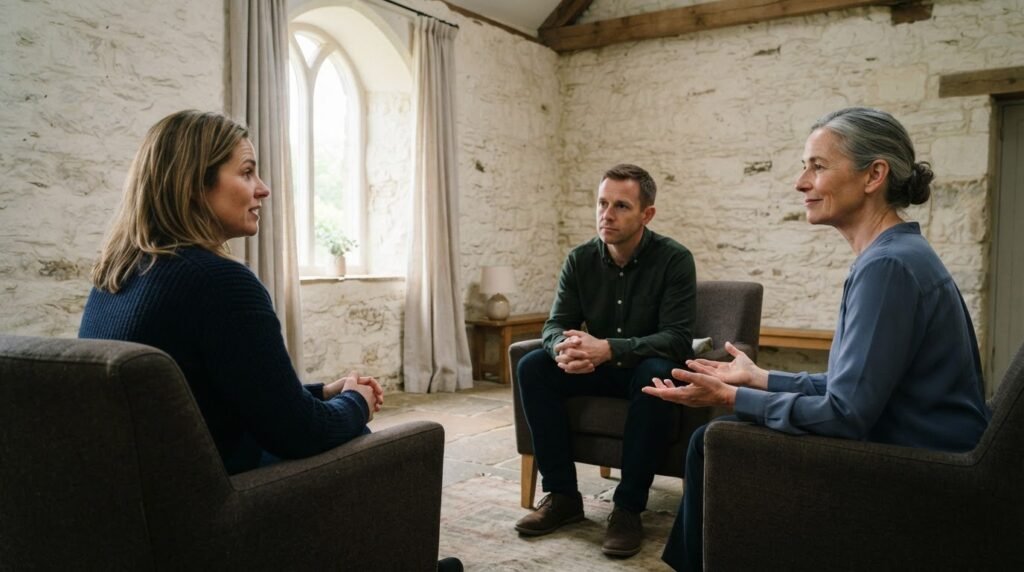
What if the harder you try to draw your partner out, the less safe they feel sharing? Learning how to get your partner to open up emotionally isn’t about finding the perfect question or pushing past silence. It starts with understanding what may be behind it: fear of judgement, past hurt, different ways of expressing feelings, or simply needing more time to process an experience.
If you’re longing for greater closeness, it’s understandable to feel lonely or unsure when meaningful conversations don’t happen. Relationship counselling can help couples build emotional safety and approach difficult conversations with care. You’ll learn why timing matters, how empathetic listening can help your partner feel heard, and how to respect differences in emotional expression while still expressing your own need for connection. Opening up can become a shared process, built gradually through trust rather than pressure.
Key Takeaways
- Build trust through steady, supportive behaviour, and notice how calm presence can help create a greater sense of safety.
- Choose a moment when you both have space to talk, rather than pressing for answers during a stressful or emotionally charged moment.
- Listen to understand before offering advice; reflecting your partner’s feelings can help them feel heard without requiring you to agree.
- Make room for different ways of expressing emotion, and consider relationship counselling when the distance between you feels hard to shift alone.
Building trust and emotional safety through consistency
Trust grows through repeated interactions, not one intense conversation. Notice how you respond when your partner shares something vulnerable, and try to meet it with care.
-
How a therapist helps couples build trust through consistent behaviour
Keep small promises, such as calling when you said you would. These moments show your partner that your words and actions align. When they share something personal, acknowledge the trust involved and thank them for telling you. If they become quiet, avoid pressing for more details. A therapist can help couples spot patterns that undermine trust and practise more dependable responses together.
-
How relationship counselling supports caring, supportive behaviour
Show care through specific, everyday actions: listen without interrupting, follow through on plans you’ve agreed, and notice when your partner has helped. For example, say, “I appreciated you making time to talk yesterday.” Naming the action makes your appreciation tangible. In relationship counselling, couples can explore how criticism, defensiveness or withdrawal shapes their conversations, then practise responses that reduce blame and make vulnerable sharing feel less exposing.
-
How a therapist can help couples practise co-regulation
Bring a calm presence to a difficult moment: soften your voice, slow your breathing and allow pauses. Co-regulation describes how one partner’s calm presence may help the other feel safer during emotional strain. It isn’t about controlling their feelings or demanding disclosure. A therapist can help couples notice signs of tension, such as clipped replies, and practise pausing before either partner feels overwhelmed. This makes space for connection without forcing a conversation.
Some partners have firm boundaries and find it difficult to open up. They may need time to build trust, rapport and emotional safety. Keeping promises consistently, such as calling when you said you would, can help build trust. Modelling supportive, emotionally safe behaviour may also help a more closed-off partner feel safer sharing.
When a partner shares something vulnerable, acknowledging it and thanking them for trusting you can help maintain the connection. Empathi describes co-regulation as helping a partner feel safe enough to open up through the presence of another settled person. The article recommends regularly setting aside time for connection, including shared activities, daily conversations, or time for intimacy.
Choosing a suitable time for emotionally charged conversations
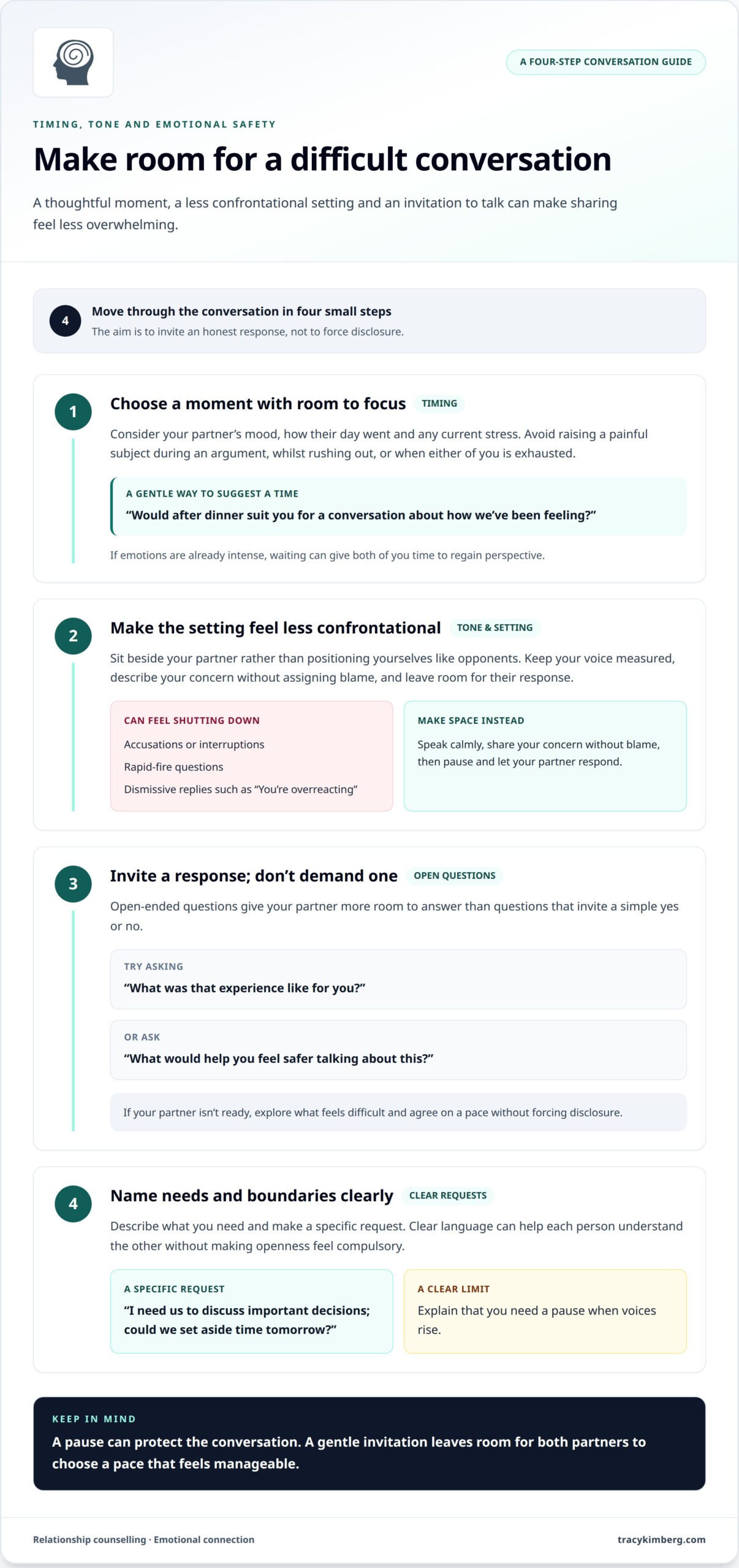
Timing and tone can make a difficult conversation feel inviting or overwhelming. A therapist can help couples practise questions that leave room for an honest answer.
- Choose a moment when there’s room to focus. Consider your partner’s mood, how their day went and any current stress. Avoid raising a painful subject during an argument, while rushing out, or when either of you is exhausted. Try: “Would after dinner suit you for a conversation about how we’ve been feeling?” If emotions are already intense, waiting can give both of you time to regain perspective.
- Make the setting feel less confrontational. Sit beside your partner rather than positioning yourselves like opponents, and keep your voice measured. Accusations, interruptions, rapid-fire questions and dismissive replies such as “You’re overreacting” can make someone feel judged or shut down. Describe your concern without assigning blame, then leave room for their response.
- Invite, rather than demand, a response. Open-ended questions give your partner more room to answer than questions that invite a simple yes or no. If you’re wondering how to get your partner to open up emotionally, a therapist can help you practise prompts such as, “What was that experience like for you?” or “What would help you feel safer talking about this?” If your partner isn’t ready, counselling can help you explore what feels difficult and agree on a pace without forcing disclosure.
- Name needs and boundaries clearly. With a therapist’s support, each partner can describe a need and make a specific request: “I need us to discuss important decisions; could we set aside time tomorrow?” They can also explain a limit, such as needing a pause when voices rise. Clear requests can help each person understand what the other needs without making openness feel compulsory.
Validation through listening, mirroring, and empathy
When your partner shares something vulnerable, your response can help them feel heard. Active listening means focusing on their words and feelings before deciding what to say.
-
How a therapist can help couples listen actively
Ask whether your partner wants a listening ear, space to vent, or feedback. Then give them your attention: pause other tasks, keep a warm expression, and avoid interrupting. Don’t immediately try to fix the problem, compare it with your own experience, or defend yourself. A therapist can help couples notice these habits and practise staying curious, even when a partner’s feelings are difficult to hear.
-
How a therapist can guide couples in mirroring what they hear
Reflect the meaning you’ve heard before adding your own view. For example, say, “You felt alone when I changed our plans,” then ask, “Have I understood?” This kind of mirroring gives your partner a chance to correct or clarify your understanding. Validation has four levels: being with, mirroring, empathy reading, and extrapolation. A therapist can help couples practise each level without turning reflection into a formula or interrogation.
-
How relationship counselling can help couples show empathy and compassion
Acknowledge the feeling without needing to agree with your partner’s interpretation. “I can see why that hurt” recognises their experience; it doesn’t mean you share their perspective. Pay attention to your tone and facial expression, too: a warm voice and attentive expression can communicate care, while a sharp reply may contradict reassuring words. Relationship counselling can help partners notice when they’re becoming judgemental or defensive and return to compassionate listening.
Recognizing differences in emotional expressiveness
Silence can reflect temperament, upbringing or a need for time to process, rather than rejection. Look for patterns, not one quiet moment.
-
How a therapist can help couples distinguish needing time from avoiding emotional conversations
Notice whether your partner can suggest a time to return to the topic. “I need to think; can we talk tomorrow?” signals a pause with a next step. Repeatedly changing the subject without revisiting it may suggest avoidance. A therapist can help you explore this pattern without treating silence as proof of indifference, and agree on how to reopen the conversation respectfully.
- Consider your partner’s usual way of expressing emotion. Someone raised to keep personal matters private may share less than someone accustomed to discussing feelings. People also process experiences at different speeds. If you notice changes in your partner’s mood, interests or everyday functioning alongside withdrawal, ask gently how they’re doing. Treat these changes as a reason to show care, not proof of a particular problem.
- Ask what helps your partner communicate instead of assuming silence has one meaning. They may need time to understand an experience before answering. Try, “Would you rather talk now, or have space to think first?” This offers a choice without dropping the subject or demanding an immediate response. Their answer may help you understand what feels manageable.
-
How relationship counselling can encourage openness without control
Invite your partner to share what they feel ready to, and respect a clear boundary. Avoid setting a deadline for emotional disclosure or treating a quieter style as a flaw. Relationship counselling can help couples discuss different needs, including one partner’s wish for closeness and the other’s need for privacy. The aim is to understand each other, not change someone’s temperament.
Tracy Kimberg
Tracy Kimberg offers Relationship Counselling and Coaching for Couples to partners who feel distant, caught in repeated misunderstandings, or unsure how to begin a more honest conversation. If you’re wondering how to get your partner to open up emotionally, counselling can help you explore what makes sharing difficult and understand how each of you responds. Together, you can practise communicating with greater care, especially when conversations at home lead to silence, defensiveness or conflict.
For couples seeking a more structured route through relationship difficulties, a dedicated programme can focus on relationship recovery. It may suit partners who want to work through recurring patterns and rebuild connection with guided support. Building emotional openness doesn’t mean expecting immediate disclosure. The work can begin by understanding what feels safe to discuss and what each person needs from the conversation.
Emotional openness can also connect with personal experiences beyond the couple relationship. Therapy for Adults offers space to explore personal feelings and relationship patterns. Therapy for Teenagers supports younger people and their parents with emotional or relational challenges. Couples can seek support together, while an individual can focus on their own emotional wellbeing.
There’s no single correct pace for sharing. One partner may need time to understand their feelings, while the other needs support expressing a wish for greater closeness without pressure. Counselling can help bring both needs into the conversation, rather than treating them as proof that someone is uncaring. If you’d like to explore support for your relationship, contact Tracy Kimberg when you feel ready.
Frequently Asked Questions
How can relationship counselling help couples create a safe space to share feelings?
Relationship counselling gives couples a supported setting to explore what makes sharing feel risky. A therapist can help partners identify what each person fears might happen after speaking, such as being criticised or having private details repeated. They can then agree on practical boundaries, including what stays between them and how to pause a conversation respectfully if either person feels overwhelmed.
What questions can a therapist help couples ask to invite emotional openness without pressure?
A therapist can help couples use questions that invite reflection rather than demand a particular answer. For example: “What do you wish I understood about this?” or “Is there something that would make this easier to discuss?” Ask one question, then allow time for a response. Your partner can also choose not to answer, helping the conversation feel like an invitation rather than a test.
How can relationship counselling help you listen empathetically when your partner shares something difficult?
Relationship counselling can help you notice when your attention shifts from understanding to preparing a defence. If your partner describes a painful disagreement, for example, focus first on what the experience meant to them rather than correcting every detail. A therapist can help you practise acknowledging the impact, then asking what support your partner wants: comfort, practical help or simply being heard.
When should couples consider therapy for difficulty communicating emotionally?
Consider relationship counselling when attempts to discuss important feelings repeatedly end in silence, escalating arguments or unresolved misunderstandings. It may also help when emotional distance affects decisions about intimacy, family life or the future of your relationship. You don’t need to agree on every detail before seeking support. Therapy can give you space to understand each person’s concerns and decide what you want to work towards.

Article by
Tracy Kimberg
Tracy Kimberg is a Relationship Expert, Couples Therapist and Coach with a dedicated focus on helping couples and individuals rebuild connection, trust and emotional safety in their relationships. Drawing on the research of John and Julie Gottman, the relational insights of Esther Perel, and years of hands-on therapeutic experience, Tracy offers a warm, non-judgemental and deeply compassionate approach to modern relationships.
Based in Dorset, Tracy works with couples navigating communication breakdowns, betrayal, intimacy challenges, separation, family dynamics and life transitions. Known for creating a safe and grounded therapeutic space, she combines practical tools with emotional depth to help clients move beyond survival patterns and towards meaningful, lasting change.
With a reputation for empathy, professionalism and dedication to her clients’ growth, Tracy is passionate about helping people feel seen, understood and empowered — both within their relationships and within themselves.
Disclaimer
Disclaimer:
The information shared in this article is intended for educational and informational purposes only and should not be considered a substitute for professional therapeutic, psychological, medical or legal advice. Every individual and relationship is unique, and the perspectives offered are based on general therapeutic principles, research and professional experience.
Reading this article does not establish a therapist-client relationship with Tracy Kimberg. If you are experiencing significant emotional distress, relationship crisis, trauma, or mental health concerns, it is important to seek support from a qualified professional appropriate to your individual circumstances.
All content remains the intellectual property of Tracy Kimberg and may not be reproduced or distributed without permission.