

Feeling more like flatmates may signal distance between you, but it doesn’t prove your relationship is over. If you’re wondering what to do when you feel more like roommates, start by noticing what has changed: perhaps you mostly talk about chores and plans, affection has faded, or you no longer turn to each other for comfort.
It’s understandable if this feels lonely or worrying, especially when you still care about each other. Disconnection can develop gradually as daily pressures and unspoken needs crowd out curiosity, warmth and shared enjoyment. Naming the pattern without blame can help you understand what each of you is missing.
This article explores what roommate syndrome can look like and how couples therapy may help you talk through recurring distance. You’ll also find gentle ways to make room for affection, playfulness and time together, so rebuilding closeness can begin with a conversation or a small moment of connection.
Key Takeaways
- Notice when everyday conversation, shared rituals and reaching for comfort have begun to fade; these patterns can help you name the distance without blame.
- Small gestures of affection and playful moments can create openings for physical and emotional closeness to grow again.
- Ask for focused time together with a clear, gentle request that makes room for both partners’ needs.
- Couples therapy can help you explore recurring patterns and have difficult conversations when trying to reconnect alone feels hard.
1. Can Couples Therapy Help When You Feel Like Roommates?
Yes. Couples therapy can help partners talk about difficult issues, recognise unhealthy patterns and understand what is affecting intimacy. It gives each person space to express feelings and needs, rather than repeating the same argument or avoiding it. In the US, there’s no single cost: the price depends on the case and is given after a quote request, with factors such as location, session format and the therapist shaping the fee.
Consider support when disconnection lasts for months or years, or when attempts to talk end in silence, blame or the same unresolved conflict. You don’t need to wait until your marriage feels beyond repair. If one partner withdraws, the other may pursue harder, creating a cycle that leaves both feeling unseen. Therapy can help couples slow that pattern down and listen for the need beneath each reaction.
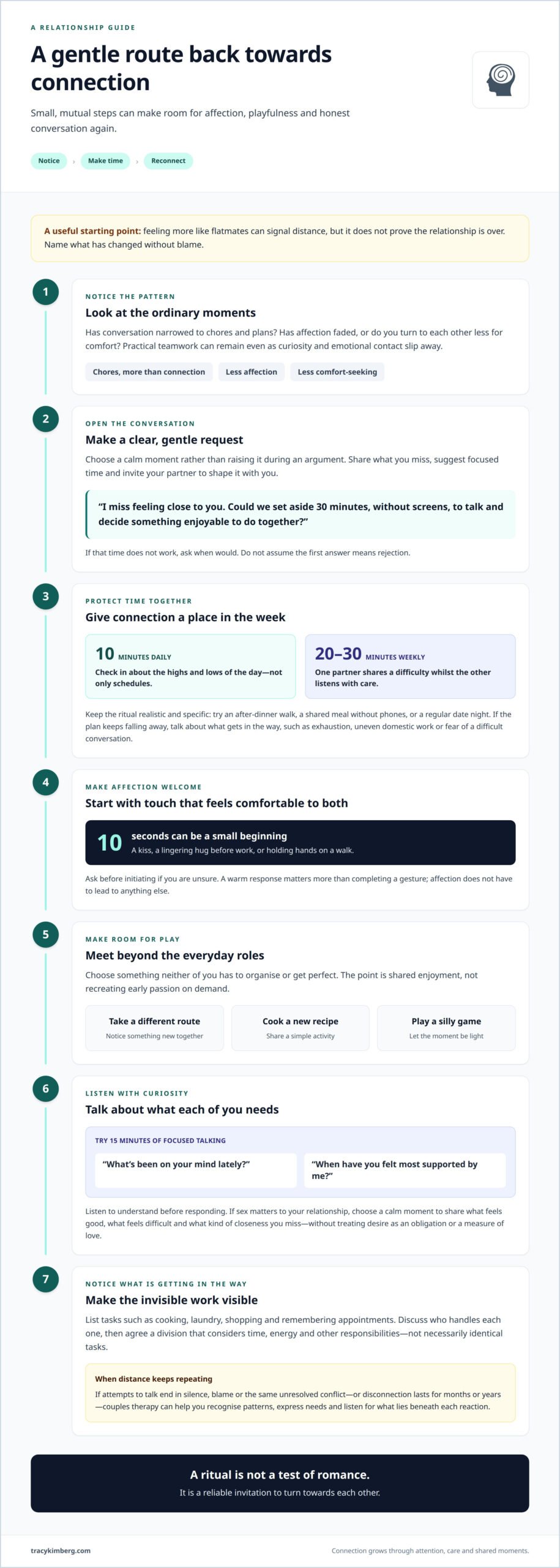
Rituals help protect couple time from routines dominated by work, chores or parenting. Try a daily 10-minute check-in about the highs and lows of the day, rather than schedules alone. Once a week, set aside 20 to 30 minutes for one partner to share a difficulty while the other listens with care. These repeated moments make connection part of ordinary life.
Keep the ritual realistic and specific. For example, choose a weekly after-dinner walk, put phones away during a shared meal, or plan a regular date night. A ritual isn’t a test of romance; it’s a reliable invitation to turn towards each other. If a plan keeps falling away, discuss what gets in the way, such as exhaustion, uneven domestic work or fear of a difficult conversation.
Roommate syndrome can take hold when practical teamwork remains but curiosity, affection and emotional contact fade. Couples therapy can help you identify what’s happening between you and find new ways to communicate. Begin with one honest conversation and one protected ritual, then notice what helps each of you feel closer.
2. Rebuilding playfulness, affection, and physical intimacy
After routines have crowded out closeness, begin with affection that feels welcome to both of you. A 10-second kiss, a lingering hug before work, or holding hands on a walk can make touch part of ordinary life again. Ask before initiating if you’re unsure; a warm response matters more than completing a gesture. Small, freely chosen moments can help physical connection feel less pressured.
Daily habits can rebuild emotional intimacy when they combine affection with attention. For example, greet each other with a hug, ask a genuine question over dinner, and listen without looking at a screen. These actions create opportunities to notice your partner’s mood and respond with care. If stress makes conversation difficult, say so gently rather than interpreting silence as rejection.
Playfulness needs room, too. Choose something neither of you has to organise, such as taking a different route home, cooking a new recipe together, or sharing a silly game. The point isn’t to recreate early passion on demand. It’s to meet each other beyond the roles of parent, housemate or task manager, and discover what still sparks interest.
Talk directly about sex if it matters to your relationship. Choose a calm moment to share what feels good, what feels difficult and what kind of closeness you miss. Listen for the feelings beneath each answer, without treating desire as an obligation or a measure of love. Affection can begin with cuddling or holding hands; it doesn’t have to lead anywhere else.
When roommate syndrome has made touch feel awkward, agree on a small, comfortable gesture and check in about how it feels. A brief goodbye kiss or sitting close during a programme can be enough to start. If attempts to reconnect keep leading to hurt or withdrawal, couples counselling can help you explore the pattern together, without turning affection into another task.
3. A sample request for time together
Choose a calm moment, rather than raising the issue during an argument. You might say, “I miss feeling close to you. Could we set aside 30 minutes, without screens, to talk and decide something enjoyable to do together?” This names your feeling, makes a clear request and invites collaboration. If your partner can’t make that time, ask when would work instead of treating the first answer as rejection.
For a date that costs little or nothing, cook a meal together at home, make a picnic from food you already have, or explore somewhere nearby. The activity matters less than being intentional: agree to put chores and phones aside for that time. Ordinary tasks can also create connection. Shopping for groceries together, for example, gives you a shared errand and room for relaxed conversation.
During 15 minutes of focused talking, ask open questions such as, “What’s been on your mind lately?” or “When have you felt most supported by me?” Listen to understand before responding, and share your own experience without blaming. If conversations keep returning to the same conflict, pause and name the pattern: “I notice we’re arguing about the schedule, but perhaps we’re both missing time together.”
Fairer chores begin by making invisible work visible. List tasks such as cooking, laundry, shopping and remembering appointments, then discuss who currently handles each one. Agree on a division that considers time, energy and other responsibilities, rather than assuming fairness means identical tasks. Set a regular time to revisit the arrangement. If one partner feels overburdened, describe the specific task and its impact: “I’m exhausted by planning meals alone. Could you take responsibility for dinner on some evenings?”
4. Signs of emotional and physical disconnection
Feeling like flatmates often shows up in ordinary moments, not one dramatic event. Signs can include conversations limited to chores, little curiosity about each other’s day, and rarely seeking comfort from your partner. You may make plans as co-managers yet feel alone with difficult emotions. Notice whether you still share jokes, affection and meaningful attention, or mostly exchange practical information.
Physical distance can be part of the pattern. For example, touch may shrink to a quick peck, with no hand-holding, cuddling or spontaneous affection for months. A lack of sex alone doesn’t explain every relationship, but avoiding any conversation about physical closeness can leave both partners guessing. Ask what touch feels welcome now, and listen without treating the answer as criticism or a promise.
Mutual withdrawal can deepen emotional distance: one partner stops reaching out while the other stops expecting a response. A date night may feel like another task, or resentment over cooking and cleaning may crowd out romantic interest. Look at what’s happening around the distance, including exhaustion, unequal domestic work or unresolved hurt. Those pressures deserve attention alongside affection, not dismissal as mere routine.
Common signs include practical-only conversations, little shared enjoyment, reduced affection and not turning to each other for care. To understand the pattern, name a recent example and describe its impact: “We planned the week, but didn’t ask how either of us felt.”
Deciding whether to work on the relationship or separate means considering whether both partners are willing to speak honestly, hear each other and address recurring problems. If one person has decided to leave, or the relationship no longer feels respectful, conversations about separation may be more appropriate than trying to restore closeness. A clear next step is to discuss what each of you wants, without using date night or physical affection as a test.
Tracy Kimberg
Tracy Kimberg offers Relationship Counselling and Coaching for Couples when distance, repeated conflict or uncertainty makes it hard to find a way forward together. Sessions can give partners space to understand the patterns between them, express what they need and consider practical steps towards greater connection. If you both want structured support, the 12-Week Relationship Recovery Process offers a defined framework for working on relationship dynamics. Support can also help you reflect on whether rebuilding the relationship or considering separation feels right for you. You don’t need to arrive with a perfect explanation; describing what has changed is a place to begin. If you’d like support with what’s happening in your relationship, contact Tracy Kimberg.
Choose one honest next step
If you’re wondering what to do when you feel more like roommates, you don’t have to solve the whole relationship in one conversation. Start by naming what you miss and asking whether your partner is willing to explore it with you. Their response can help you understand what feels possible, while your own feelings can clarify what you need next. Repair is a shared process, not a demand that one person carry all the change.
If it’s hard to speak without falling into blame or silence, support can offer a steadier space to understand what’s happening between you. Relationship counselling and coaching for couples can help you explore difficult conversations and consider a way forward together. You can contact Tracy Kimberg to discuss support. Whether you begin with a conversation at home or with help, a thoughtful next step can make room for greater honesty and connection.
Frequently Asked Questions
What Is Roommate Syndrome in Relationships?
Roommate syndrome describes a relationship where partners share a home and responsibilities but feel more like cohabitants than lovers or confidants. Practical talk may replace emotional exchange, shared enjoyment may dwindle, or each person may feel they’re managing life alone. The label can help name a pattern, but it doesn’t explain its causes. Understanding what has changed between you matters more than adopting a label.
Can Couples Therapy Help When You Feel Like Roommates?
Yes, couples therapy can help partners understand recurring conflict and communicate about unmet needs. A therapist can guide a conversation when one person shuts down or both feel unheard, helping each partner explain their perspective without turning it into a debate. You might use sessions to explore what closeness means to each of you now and whether you’re both willing to work towards a more connected relationship.
How did my partner become more like a roommate?
Usually, it’s not one decision or moment that changes how you see your partner. A gradual shift can happen as shared responsibilities take priority, conversations become task-focused, or unresolved hurt makes emotional openness feel less safe. Trace the change through specific memories: when did you last feel like a team, and what was happening around that time? This may reveal pressures to discuss together.
Why do couples start feeling like roommates?
Couples can begin to feel like roommates when the relationship becomes organised around practical demands while emotional needs go unspoken. Work pressure, caring responsibilities, resentment about household contributions or repeated misunderstandings can all affect how partners relate. If you’re wondering what to do when you feel more like roommates, start by identifying what feels most painful: loneliness, conflict, lack of affection or unequal effort.
How can couples improve physical intimacy without pressure?
Build intimacy through touch that both partners actively welcome, without treating it as a step towards sex. Ask, “Would you like a hug?” and accept either answer warmly. You could agree that a cuddle or holding hands is simply a moment of closeness, with no expectation of more. Talking openly about boundaries and what feels comfortable helps make physical connection collaborative rather than an obligation.

Article by
Tracy Kimberg
Tracy Kimberg is a Relationship Expert, Couples Therapist and Coach with a dedicated focus on helping couples and individuals rebuild connection, trust and emotional safety in their relationships. Drawing on the research of John and Julie Gottman, the relational insights of Esther Perel, and years of hands-on therapeutic experience, Tracy offers a warm, non-judgemental and deeply compassionate approach to modern relationships.
Based in Dorset, Tracy works with couples navigating communication breakdowns, betrayal, intimacy challenges, separation, family dynamics and life transitions. Known for creating a safe and grounded therapeutic space, she combines practical tools with emotional depth to help clients move beyond survival patterns and towards meaningful, lasting change.
With a reputation for empathy, professionalism and dedication to her clients’ growth, Tracy is passionate about helping people feel seen, understood and empowered — both within their relationships and within themselves.
Disclaimer
Disclaimer:
The information shared in this article is intended for educational and informational purposes only and should not be considered a substitute for professional therapeutic, psychological, medical or legal advice. Every individual and relationship is unique, and the perspectives offered are based on general therapeutic principles, research and professional experience.
Reading this article does not establish a therapist-client relationship with Tracy Kimberg. If you are experiencing significant emotional distress, relationship crisis, trauma, or mental health concerns, it is important to seek support from a qualified professional appropriate to your individual circumstances.
All content remains the intellectual property of Tracy Kimberg and may not be reproduced or distributed without permission.