

What if emotional distance is a signal to understand, rather than proof that your relationship is over? If you’re feeling emotionally detached from your partner, it can be unsettling, especially when you still care about them but find it harder to feel close.
Feeling emotionally detached from my partner can be unsettling, but feeling distant at times doesn’t automatically mean love has disappeared. Stress, unresolved hurt and patterns of seeking connection or pulling away can all affect how close partners feel. Notice whether the distance seems temporary or has become a pattern that leaves you both feeling misunderstood.
This article explores common signs of emotional disconnection, why it can develop and how to tell the difference between needing space and drifting apart. A calm conversation can help you understand what’s happening. If your partner is withdrawing, approaching them with curiosity and care may open the door to talking, without expecting either of you to have all the answers straight away.
Key Takeaways
- Notice patterns of missed connection and gradual drift, without assuming that a difficult period means the relationship is over.
- Explore how intimacy and emotional closeness relate, while recognising that disconnection and an emotional affair are not the same thing.
- Consider whether time apart helps you recharge or is becoming a way to avoid emotional connection.
- Choose a calm moment to talk about the distance, and consider relationship counselling if the pattern feels difficult to shift together.
What are the signs your partner is emotionally disconnected?
Emotional disconnection often develops through small changes in attention, affection and conversation. When bids for connection repeatedly go unanswered, partners can feel unseen. Look at the wider pattern before drawing conclusions from any one change.
Gradual Drift and Missed Connection Bids
A bid for connection is an attempt to share attention or affection. One partner might mention a difficult meeting, ask a question or move closer on the sofa. When these moments repeatedly pass unnoticed, partners may stop reaching out, and familiar routines can feel lonely. Notice a recurring moment and name the need beneath it, such as listening or warmth. You might say, “I miss telling you about my day and feeling heard.”
What Disconnection Means
Disconnection means feeling less known, supported or engaged in the relationship. It doesn’t prove love has ended. Quiet evenings, less affection or avoiding personal questions may be signs, but no single behaviour explains everything. Distance can be temporary during stress, illness, parenting or grief, and may ease as circumstances change. The words “feeling emotionally detached from my partner” can describe a painful experience, not a final decision. The situation may be more serious when neither partner wants to repair things, talk or make shared plans.
Pursue-Withdraw Cycles
A pursue-withdraw cycle can form when one partner seeks reassurance and the other retreats, making both responses stronger. The anxious partner may ask repeated questions; the withdrawing partner may go quiet or change the subject. Each may experience the other’s response as rejection, even though both may be trying to feel safer. Interrupt the pattern by sharing one feeling and making one clear request, such as asking for ten minutes to talk after dinner. If you’re thinking, “I’m feeling emotionally detached from my partner,” consider what you hope your partner will understand.
A demanding week can create distance without changing a couple’s commitment. Agree on when to reconnect, then share a meal or check in. If detachment persists, distress grows or depression includes numbness, individual therapy or other professional support may help clarify personal needs and relationship patterns.
Is lack of intimacy a sign of emotional disconnection?
Reduced intimacy can accompany emotional disconnection, but it doesn’t prove what caused it. Consider trust, openness and care across the relationship, rather than judging by one moment alone.
Disconnection and Emotional Affairs
Emotional disconnection means feeling distant from your partner. An emotional affair involves a private, intimate bond outside the relationship that crosses agreed boundaries. For example, hiding personal messages can damage trust, while reduced affection during grief may reflect strain. The distinction matters: secrecy calls for accountability, while distance may begin to shift through honest conversation.
The Meaning and Feel of Disconnection
Emotional disconnection can feel like being unknown beside someone you love. It may show up as guarded answers or intimacy that feels obligatory. A partner might discuss errands but avoid sharing fears or hopes. Naming the feeling, rather than declaring the relationship over, creates space to ask what each of you misses.
Recognising Signs of Disconnection
Signs matter more as a pattern than as isolated moments. Notice whether affection, meaningful conversation and shared decisions have faded together. For example, one partner may stop initiating touch while both avoid discussing future plans. Consider whether illness, exhaustion or unresolved hurt is affecting how each of you can show up. Context helps identify what needs attention.
Talking About Feeling Detached
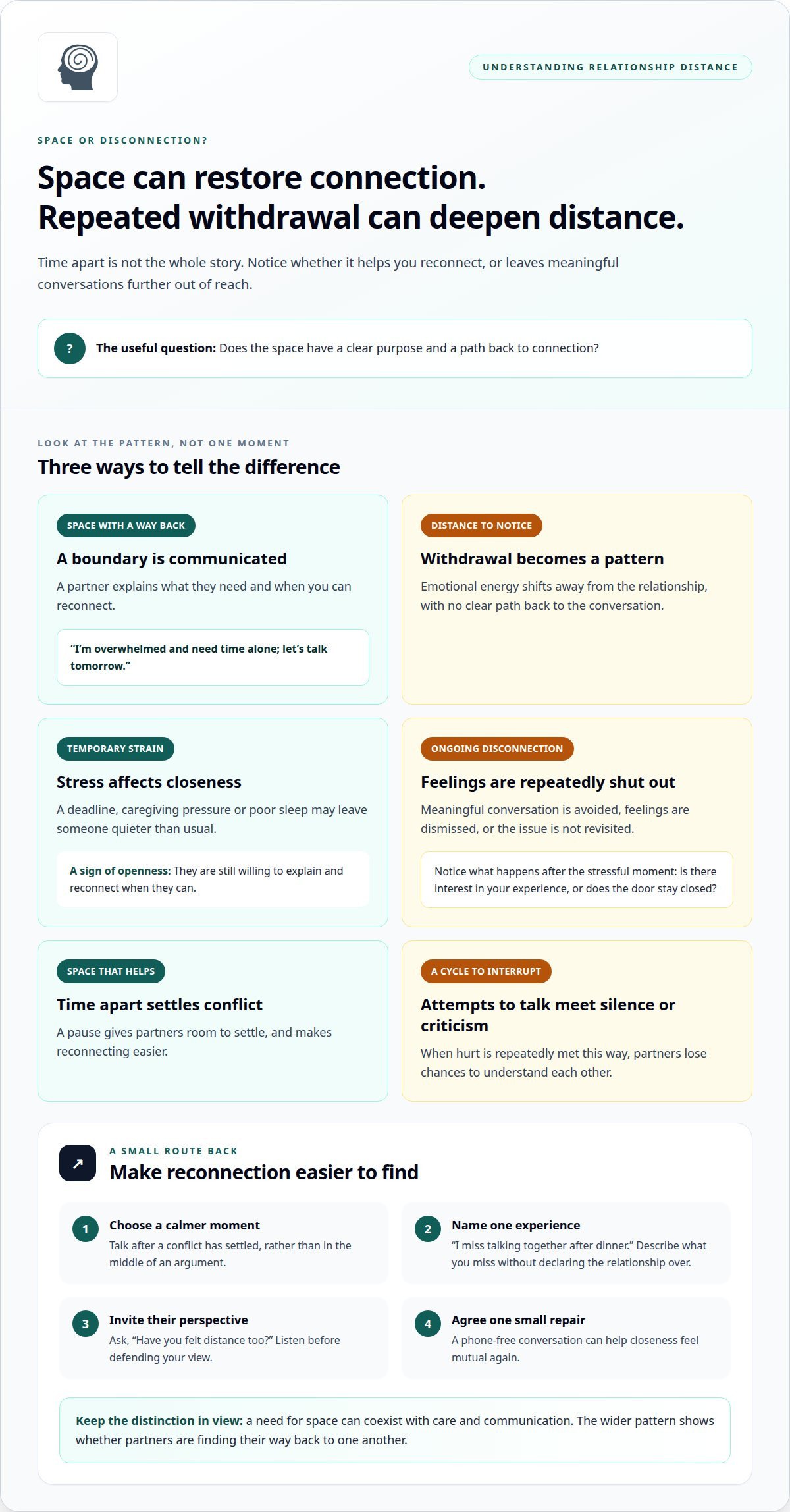
Choose a calm moment after a conflict has settled, rather than raising the issue mid-argument. Describe one experience clearly: “I miss talking together after dinner.” Then ask, “Have you felt distance too?” Listen before defending your view. Naming what triggered the feeling and agreeing on one small repair, such as a phone-free conversation, can help closeness feel mutual again.
What’s the difference between needing space and drifting apart?
Time apart can help partners settle after conflict, while ongoing withdrawal may deepen the distance. Notice whether time apart makes reconnecting easier or harder.
Healthy Boundaries and Unhealthy Detachment
A healthy boundary protects personal needs while keeping care and communication available. One partner might ask for a quiet evening, then agree to talk after dinner the next day. Clear expectations help couples enjoy independence without leaving the other person guessing.
Unhealthy detachment is different: emotional energy shifts away from the relationship, and withdrawal becomes a repeated response to conflict. If every attempt to discuss hurt is met with silence or criticism, the couple may lose chances to understand each other. Ask whether the space has a clear purpose and a path back to connection.
Stress and Emotional Unavailability
Stress can reduce closeness, especially when partners have few ways to cope together. A deadline, caregiving pressure or poor sleep may leave someone quieter than usual, but they may still be willing to explain and reconnect when they can.
Emotional unavailability is more concerning when a partner repeatedly avoids meaningful conversation, dismisses feelings or refuses to return to the issue. Consider what happens after a stressful moment: do they show interest in your experience, or keep shutting the door? The pattern can help distinguish temporary strain from ongoing disconnection.
Needing space usually comes with communication: “I’m overwhelmed and need time alone; let’s talk tomorrow.” Drifting apart may feel less mutual, with shared plans fading and neither partner making room to reconnect. Notice whether you both still respond to small invitations, such as a walk or a thoughtful question.
Ask what the pause is for and when you’ll reconnect. If conflict involves fear, control or intimidation, prioritise safety and support rather than trying to restore closeness. Relationship Counselling and Coaching for Couples can help partners explore recurring patterns when both are willing to take part.
How can I talk to my partner about feeling emotionally detached
First, notice what changed after a particular disagreement or difficult moment. Once the conflict has settled, name the specific trigger, such as feeling dismissed when you shared news about work. This helps you describe your experience without accusing your partner of not caring.
Choose a calm, low-stress time, not during an argument or at the end of an exhausting day. You might say, “I’ve felt less close since we stopped having breakfast together.” Stick to one example, then explain what you miss. A clear, personal account gives your partner something concrete to understand.
Use language that opens a conversation rather than assigning blame. Try, “I want us to understand this distance together,” instead of, “You never make an effort.” Then ask an open question, such as, “Have you noticed a change between us?” Make room for an answer you didn’t expect.
Listen for the feeling beneath your partner’s words, even if their first response sounds defensive. Reflect one point back: “You’ve felt pressured when I bring this up after work.” Then clarify your own needs, such as wanting a few minutes of undistracted conversation each evening.
Agree on one small next step, then talk about how it felt. For example, try a phone-free walk and discuss whether it helped you feel more present. If the conversation becomes heated, pause and set a time to return to it. If you feel afraid or controlled, prioritise safety over a joint discussion.
Tracy Kimberg
When emotional distance continues despite attempts to reconnect, support can help you understand the pattern and consider what you need. Tracy Kimberg offers relationship counselling and coaching for couples, as well as individual therapy for adults and teenagers. The right starting point depends on who is affected and whether the concern is shared or personal.
Relationship Counselling and Coaching for Couples may suit partners who feel stuck in recurring conflict, emotional disconnection or relational breakdown. It gives couples a setting to explore how each person experiences the relationship and what is getting in the way of closeness. Tracy Kimberg also offers a structured 12-Week Relationship Recovery Process, designed to transform relationship dynamics. This may be relevant when partners want focused support to address ongoing difficulties, including emotional disconnect or the impact of infidelity.
Therapy for Adults may help when relationship distance is connected with personal struggles such as anxiety or depression. Individual therapy offers space to explore your emotional experience and needs. Therapy for Teenagers supports young people facing emotional or relationship difficulties, giving them a safe environment to talk through what is happening without assuming their experience is the same as an adult’s.
You don’t need to arrive with a perfect explanation of the distance. You can begin by describing what feels different, what you’ve tried and what you hope might change. That conversation can help clarify which kind of support fits your situation. If you’d like to explore this further, contact Tracy Kimberg when you feel ready.
Frequently Asked Questions
Is it normal to feel emotionally distant from your partner?
Yes, partners can feel distant at times, and that feeling alone doesn’t define the relationship. Closeness can shift as routines, responsibilities and personal needs change. The phrase “feeling emotionally detached from my partner” may describe a troubling moment, but it isn’t a verdict. For example, one partner may want quiet after work while the other looks forward to talking. Consider how the connection feels in different situations.
Can couples therapy really help when you feel disconnected?
Couples therapy can help partners slow down recurring patterns, listen differently and practise new responses. For example, a therapist may help you recognise how one person’s repeated questions and the other’s silence reinforce each other. The work can also clarify what each partner wants to change. The aim isn’t to decide who is at fault, but to explore whether both partners are willing to take part.
Is my partner emotionally unavailable or just stressed?
Stress may explain a change in someone’s behaviour, but the pattern matters. A partner under pressure might say they’re overwhelmed, ask for time and later return to the conversation. Ongoing emotional unavailability may look more like repeatedly dismissing your concerns without acknowledging their impact. Consider what happens when the immediate pressure eases and whether your partner shows curiosity about your experience.
What It Means to Detach?
To detach is to step back emotionally and direct more energy towards yourself. That can be a deliberate pause to reflect, rather than an attempt to punish your partner. For example, you might take time to identify what you need before deciding whether to discuss a difficult issue. Detachment becomes concerning when withdrawal turns into your regular response to relationship conflict.
What does emotional disconnection mean in a relationship?
Emotional disconnection means feeling less emotionally close, understood or involved with your partner. You might still share a home and organise daily tasks, yet feel unable to speak openly about what matters to you. One useful distinction is whether you can raise a concern and receive engagement, even if you disagree. It describes a relationship experience, not a diagnosis or verdict.
What is the difference between emotional disconnection and an emotional affair?
Emotional disconnection is distance between partners; an emotional affair involves an intimate bond outside the relationship that breaches the couple’s agreed boundaries. A close friendship alone doesn’t establish an affair. Consider whether there is secrecy, romantic intimacy or a pattern of turning away from the relationship to confide elsewhere. Couples may define boundaries differently, so discuss what the behaviour means and how it affects you both.

Article by
Tracy Kimberg
Tracy Kimberg is a Relationship Expert, Couples Therapist and Coach with a dedicated focus on helping couples and individuals rebuild connection, trust and emotional safety in their relationships. Drawing on the research of John and Julie Gottman, the relational insights of Esther Perel, and years of hands-on therapeutic experience, Tracy offers a warm, non-judgemental and deeply compassionate approach to modern relationships.
Based in Dorset, Tracy works with couples navigating communication breakdowns, betrayal, intimacy challenges, separation, family dynamics and life transitions. Known for creating a safe and grounded therapeutic space, she combines practical tools with emotional depth to help clients move beyond survival patterns and towards meaningful, lasting change.
With a reputation for empathy, professionalism and dedication to her clients’ growth, Tracy is passionate about helping people feel seen, understood and empowered — both within their relationships and within themselves.
Disclaimer
Disclaimer:
The information shared in this article is intended for educational and informational purposes only and should not be considered a substitute for professional therapeutic, psychological, medical or legal advice. Every individual and relationship is unique, and the perspectives offered are based on general therapeutic principles, research and professional experience.
Reading this article does not establish a therapist-client relationship with Tracy Kimberg. If you are experiencing significant emotional distress, relationship crisis, trauma, or mental health concerns, it is important to seek support from a qualified professional appropriate to your individual circumstances.
All content remains the intellectual property of Tracy Kimberg and may not be reproduced or distributed without permission.