

A therapeutic relationship can matter long after the final session. You may be able to return to the same therapist later, and you can discuss reconnecting before therapy ends. Learning how to keep the connection after therapy ends isn’t about holding on to sessions indefinitely. It’s about carrying what you’ve learned into daily life while recognising that seeking support again can remain an option.
It’s understandable if finishing brings up mixed feelings. Pride in how far you’ve come can sit alongside sadness, uncertainty or a wish to stay close to the person who supported you. Those feelings don’t mean you’ve made the wrong decision. Talking openly about them can help you understand what the ending means to you and what you may need next.
This guide explores practical ways to keep using your coping tools, prepare for a thoughtful ending and understand the wish to stay connected or return later. You’ll also find ways to carry the insight and care you’ve built in therapy into your relationships, without expecting yourself to manage every future challenge alone.
Key Takeaways
- Mixed feelings about therapy ending can offer clues about what the experience has meant to you, rather than proving you’re not ready.
- Keep useful coping tools close by and practise them in everyday moments so they’re easier to reach when challenges arise.
- Use your final sessions to reflect on progress, raise unfinished concerns and agree what support could look like if you want to return.
- Wanting to stay connected is understandable, but clear therapeutic boundaries can help you carry the relationship’s meaning forward safely.
1. Is it normal to feel emotional about ending therapy?
Yes. Finishing therapy can bring pride, sadness, uncertainty or guilt, sometimes all at once. An ending may stir earlier experiences of separation, anxiety or needing care. For example, you might suddenly feel distant from your therapist or try to fit too much into the final session. These reactions are worth exploring, not judging: they can reveal what the therapeutic relationship has come to mean to you.
Bring those feelings into the conversation before the last appointment. You could say, “I feel relieved, but I’m also worried about managing without our sessions.” A therapist can make room for that honesty and help you explore what feels unresolved. If a new subject comes up near the end, name it together and agree whether to start discussing it or include it in a future plan. You don’t have to appear comfortable to make the ending meaningful.
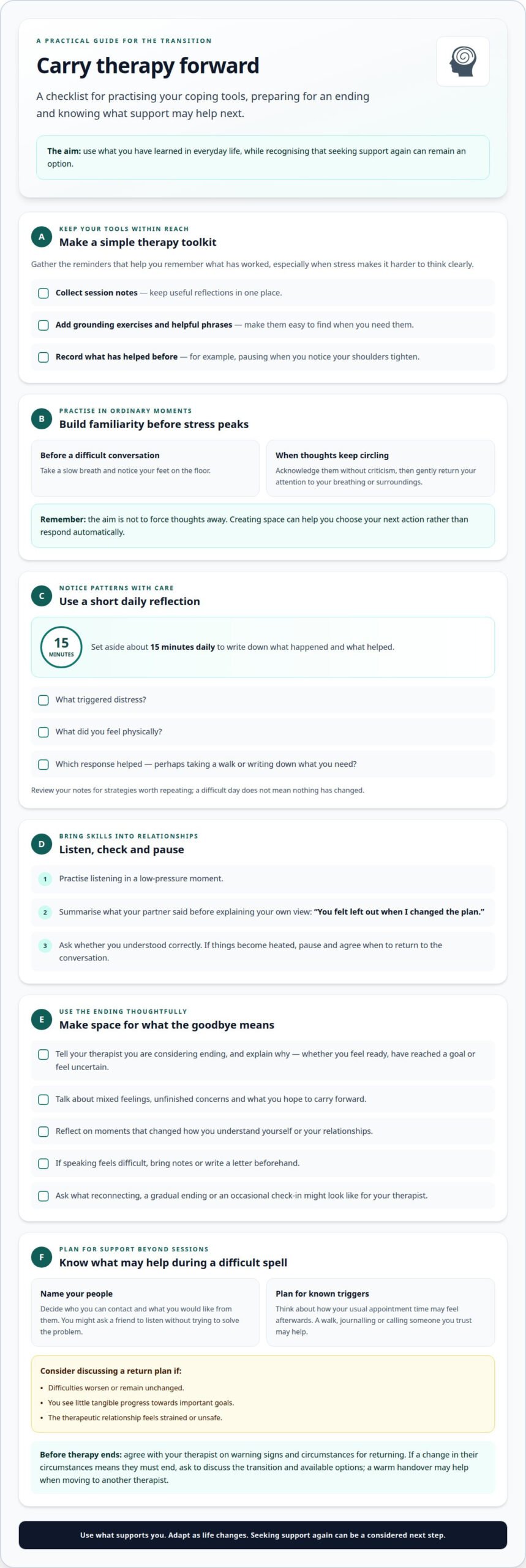
Use the final session to reflect on what you’re taking with you and how you want to say goodbye. If speaking feels difficult, write a letter beforehand or bring a few notes. You might name a moment that changed your perspective, a coping tool you want to keep practising, or something you wish you’d said. Consider how your usual appointment time might feel afterwards and what could help you then.
Plan for emotional triggers as well as the goodbye itself. If a regular session usually helps you process relationship tension, decide what you’ll do that evening: take a walk, journal or call a trusted friend. Slow breathing and noticing the room can help you settle when feelings rise. Signs you may need to resume therapy include difficulties that worsen or remain unchanged, little tangible progress towards important goals, or feeling strained or unsafe in the therapeutic relationship.
Make a support plan with friends, family or a support group. Name who you can contact, what you’d like from them and what helps during a difficult spell. For instance, ask a friend to listen without trying to solve the problem. Agree with your therapist on warning signs and circumstances for returning. Seeking support again can be a considered next step.
2. Continuing to use learned coping tools
A coping tool becomes easier to use through practice in ordinary moments, not only during a crisis. Keep a simple therapy toolkit in one place: notes from sessions, grounding exercises, helpful phrases and reminders of what has worked. For example, if pausing before responding helped during a tense conversation, note the cue you used, such as noticing your shoulders tighten. This makes progress easier to recall when stress affects your attention.
Choose a skill to practise in a real situation. Before a difficult conversation, take a slow breath and notice your feet on the floor. If your thoughts keep circling afterwards, acknowledge them without criticism, then gently bring your attention to your breathing or surroundings. The aim isn’t to force thoughts away. It’s to create enough space to choose your next action rather than responding automatically.
A short reflection can help you notice patterns and support your mental health. Set aside about 15 minutes daily to write down what triggered distress, what you felt physically and which response helped. For instance, you might find that a walk settles you after a disagreement, whilst writing helps you name what you need. Review your notes to spot strategies worth repeating, rather than treating every difficult day as proof that nothing has changed.
For relationship skills, practise listening in a low-pressure moment. Summarise what your partner said before explaining your own view: “You felt left out when I changed the plan.” Then ask whether you understood correctly. If the conversation becomes heated, pause and agree when to return to it. Repeating these small steps can make a learned response feel more familiar over time.
Keep the toolkit flexible. A breathing exercise may help with immediate tension, whilst a trusted friend’s perspective may help with a recurring problem. Notice what supports you, adapt strategies as circumstances change, and seek further support with coping tools if old patterns become difficult to manage.
3. Discussing a thoughtful ending with a therapist
Begin by telling your therapist you’re considering ending, and explain why. You may feel ready to manage independently, have reached a goal or feel uncertain about continuing. Naming the reason helps you consider together whether this is a natural stopping point, a pause or a sign that something in the work needs attention. If you’re wondering how to keep the connection after therapy ends, start by discussing what you hope to carry forward rather than assuming contact must continue.
Use your remaining sessions to reflect on the work from different angles. Which moments changed how you understand yourself or your relationships? What would you like to remember when a familiar challenge returns? You could bring a short note about a moment when you responded differently than before. This gives you and your therapist something specific to explore, beyond a general sense of progress.
Discuss what support might look like in the future. You can ask about your therapist’s approach to reconnecting and whether a gradual ending or occasional check-in could suit your needs. Consider how you’ll recognise that further help would be useful, such as feeling stuck with a recurring difficulty or wanting to work through a new change. These conversations can make future choices clearer without requiring a firm prediction.
If your therapist must end because of a change in their circumstances, ask to talk through the transition and available options. When moving to another therapist, a warm handover can help you explain what matters without having to begin from scratch. In your final session, agree on what feels most useful to address. Part of how to keep the connection after therapy ends is letting its impact shape how you understand yourself, even as the therapeutic relationship concludes.
4. Effects of attachment on post-therapy contact
A therapist may become an important figure because you’ve shared vulnerable experiences and worked through difficult patterns together. Wanting contact after the ending can express gratitude, attachment or worry about losing a source of support. Before acting, write in a journal about what you hope contact would provide. Then consider whether friends, family or other relationships could meet that need.
Boundaries matter because a therapist’s role differs from a friend’s. Discuss any wish to stay in touch during therapy, including what contact would mean and whether it could affect your independence or relationships outside sessions. For example, ask whether occasional follow-up meetings are possible or whether contact should focus on returning for support. A clear agreement can prevent uncertainty about expectations.
Can a therapist and former client become friends or connect on social media? Such contact can blur roles and create confusion about the relationship. A 2016 study interviewing nine people who became friends with former therapists found confusion about the therapy-friendship relationship across all interviews. Friendship may also shift emotional support towards the therapist, rather than helping you build shared connections elsewhere.
Social media can make that ambiguity stronger. A follow, private message or comment may feel like a small gesture, yet leave you wondering whether it signals friendship, professional care or something else. Before asking to connect, reflect on what lies behind the wish and what response you might feel comfortable receiving. Your therapist can discuss boundaries directly, without shaming the feelings behind the question.
Keep the therapeutic bond meaningful without needing ongoing private contact. You might preserve a letter, note a phrase that stayed with you, or share an insight with someone you trust. If attachment brings up relationship challenges you want to understand, explore support for relationship concerns as a way to continue that work.
Tracy Kimberg
Tracy Kimberg offers therapy for adults and relationship counselling and coaching for couples, providing space to explore what support could look like after therapy ends. If you’re finding it difficult to use coping tools alone, or relationship patterns are resurfacing, further support can help you understand what’s happening and consider practical next steps. The focus isn’t on replacing your connection with a previous therapist, but on supporting your wellbeing and relationships now.
For couples, counselling and coaching can help partners explore emotional distance, recurring conflict or uncertainty about how to move forward. Adults can also seek therapy when personal challenges feel difficult to manage independently. Share what you’re hoping to work through and discuss whether support feels like the right next step. To explore this together, contact Tracy Kimberg.
Carry what matters into what comes next
Learning how to keep the connection after therapy ends can begin with recognising what the relationship helped you experience: being heard, making sense of difficult feelings or finding new ways to respond. Those qualities can become part of how you relate to yourself and others. You don’t have to recreate the therapy relationship to honour its impact.
Let your next step reflect what matters now, rather than what you think you ought to need. Perhaps you want space to strengthen your independence; perhaps a new challenge has made support feel useful again. Either choice can be part of a continuing story of growth. You’re allowed to move forward at your own pace, carrying lessons with you while staying open to change.
If you’d like to explore what support could look like for you or your relationship, contact Tracy Kimberg to discuss your next steps. You can start with what’s on your mind and take the conversation from there. The work you’ve already done can be a starting point for what comes next.
Frequently Asked Questions
Can I return to the same therapist later?
You can ask your former therapist whether returning is possible and explain what has changed since your last session. For example, you might describe a new relationship difficulty or say that an old concern has become harder to manage. Your therapist can discuss whether continuing together suits your current needs. You can also ask how to arrange another conversation if you want support again.
Is it normal to feel emotional about ending therapy?
Yes, feeling emotional as therapy ends is a common response to a meaningful relationship and a significant change. Relief might arise alongside sadness, or a familiar appointment day might feel unexpectedly quiet. Notice what the feeling brings up rather than treating it as proof that you’ve made the wrong choice. Sharing it with someone you trust can help you feel less alone.
What happens after therapy ends?
After therapy ends, you continue making choices and responding to life with the insight you’ve developed. Some days may feel steady; a new transition or relationship challenge can prompt fresh reflection. If your needs change, you can reconsider what support might help. Ending therapy doesn’t erase the work you’ve done or prevent you from seeking help again later.
How can I prepare for the end of therapy with my therapist?
Bring specific examples of what has changed since therapy began, such as how you handle disagreements or ask for support. These details can make progress easier to recognise than relying on memory alone. You could also write down a concern you’ve avoided raising, so it has space in the conversation. Agreeing on what you want to understand by the end of the final session can make it feel more purposeful.
What are common feelings and reactions when therapy ends?
People can feel pride, sadness, relief, uncertainty or guilt, and those emotions may shift over time. You might notice a reaction later, such as missing the routine of talking things through during a stressful week. A feeling doesn’t dictate what you should do next. Try naming it plainly, then consider what it might be asking for, such as rest, connection or renewed support.
How can I maintain progress and use coping skills after therapy?
Choose a skill for a situation you regularly face, then notice what happens when you use it. For example, after a disagreement, pause before replying and consider whether your response reflects what you need. If an old reaction returns, treat it as useful information: identify the trigger and choose a different response next time. Progress can include repairing a difficult moment, not only avoiding one.

Article by
Tracy Kimberg
Tracy Kimberg is a Relationship Expert, Couples Therapist and Coach with a dedicated focus on helping couples and individuals rebuild connection, trust and emotional safety in their relationships. Drawing on the research of John and Julie Gottman, the relational insights of Esther Perel, and years of hands-on therapeutic experience, Tracy offers a warm, non-judgemental and deeply compassionate approach to modern relationships.
Based in Dorset, Tracy works with couples navigating communication breakdowns, betrayal, intimacy challenges, separation, family dynamics and life transitions. Known for creating a safe and grounded therapeutic space, she combines practical tools with emotional depth to help clients move beyond survival patterns and towards meaningful, lasting change.
With a reputation for empathy, professionalism and dedication to her clients’ growth, Tracy is passionate about helping people feel seen, understood and empowered — both within their relationships and within themselves.
Disclaimer
Disclaimer:
The information shared in this article is intended for educational and informational purposes only and should not be considered a substitute for professional therapeutic, psychological, medical or legal advice. Every individual and relationship is unique, and the perspectives offered are based on general therapeutic principles, research and professional experience.
Reading this article does not establish a therapist-client relationship with Tracy Kimberg. If you are experiencing significant emotional distress, relationship crisis, trauma, or mental health concerns, it is important to seek support from a qualified professional appropriate to your individual circumstances.
All content remains the intellectual property of Tracy Kimberg and may not be reproduced or distributed without permission.