

It’s okay to ask for more support and connection, even when your partner is ill. The impact of chronic illness on a relationship can include changing everyday roles, added caregiving responsibilities, and shifts in intimacy and closeness. Asking for what you need doesn’t dismiss your partner’s pain; it makes room for both people’s experiences.
It can be hard to name your needs when you know your partner is already carrying a lot. But care doesn’t have to flow in only one direction, and asking for support isn’t a failure of love. This article explores five ways illness can reshape a partnership, from household responsibilities and outside support to physical intimacy and emotional closeness. You’ll find practical ways to discuss changing needs, make space for both partners’ feelings, and adapt together. There’s no single way to navigate illness as a couple, but you don’t have to pretend everything is fine or manage every change alone.
Key Takeaways
- Talk together about which responsibilities feel manageable and where extra help could ease the strain.
- Make specific requests to trusted family or friends so support can extend beyond the couple.
- Explore ways to stay close that respect changing energy, comfort and desire.
- Learn about your partner’s condition and make room for both of you to share difficult feelings.
- Keep care mutual by checking in, adapting as a team and asking for support when you need it.
1. Shifting roles and caregiving responsibilities
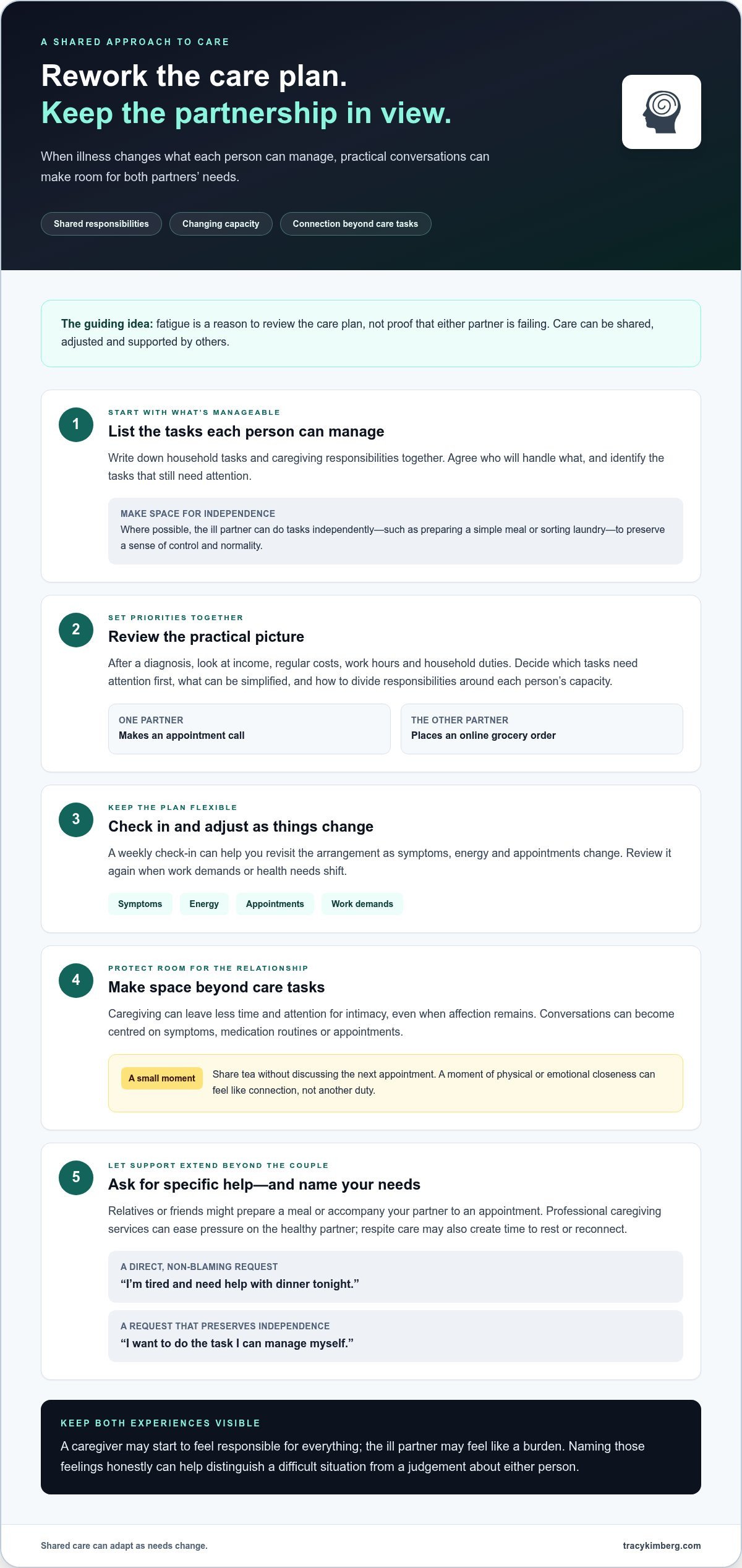
Share caregiving by listing the household tasks each partner can manage, then agree who will handle the rest. A weekly check-in can help you adjust the plan as symptoms, energy and appointments change. Where possible, the ill partner can do tasks independently, such as preparing a simple meal or sorting laundry, to preserve a sense of control and normality.
After a diagnosis, review income, regular costs, work hours and household duties together. Decide which tasks need attention first, what can be simplified, and how to divide responsibilities around each person’s capacity. For example, one partner might make an appointment call while the other places an online grocery order. Revisit the arrangement when work demands or health needs change.
These practical changes can affect how you see each other. A partner who once shared domestic work may now need help, while the other takes on more chores and caregiving. The caregiver may begin to feel responsible for everything; the ill partner may feel like a burden. Naming these feelings honestly helps distinguish a difficult situation from a judgement about either person.
Caregiving can leave less time and attention for the relationship, reducing intimacy even when affection remains. Conversations may revolve around symptoms, medication routines or appointments, leaving little space for play, desire or ordinary companionship. Choose one small moment outside care tasks, such as sharing tea without discussing the next appointment. Physical or emotional closeness can then feel like connection, not another duty.
Fatigue is a reason to review the care plan, not proof that someone is failing. Ask relatives or friends for specific help, such as preparing a meal or accompanying your partner to an appointment. Professional caregiving services can ease pressure on the healthy partner; respite care may also create time to rest or reconnect. Where specialised treatment is required, mobile clinical providers like healix360.com can bring advanced care directly into the home to reduce stressful clinic travel. The right support depends on the tasks your partner needs help with.
Guilt can make both partners reluctant to ask for help: the caregiver may feel selfish for needing a break, while the ill partner may fear creating extra work. Use direct, non-blaming language: “I’m tired and need help with dinner tonight,” or “I want to do the task I can manage myself.” Honest requests support shared decisions and make caregiving less likely to take over the partnership.
2. Support from family, friends, and support groups
Support beyond the couple can ease isolation, especially when illness makes everyday tasks harder to manage. Instead of making a broad request, name one useful form of help: “Could you collect the shopping this week?” A friend might drive your partner to an appointment, while a relative could help with a household errand. Clear requests give people a way to respond and help you decide what support feels comfortable to accept.
For older couples, illness can reshape roles built over decades. A partner who once organised family gatherings may now prefer someone else to coordinate them, while still wanting to choose who attends. Ask what they would like to remain involved in, then offer help with the rest. The impact of chronic illness on a relationship can include changes to familiar roles, while the couple’s shared history and preferences remain important.
Accepting help can bring mixed feelings. You may worry about imposing or feel that asking friends for support exposes private parts of your relationship. Try a specific request that preserves choice: “Would you be able to help with this? It’s also fine if you can’t.” A peer support group can offer another place to talk with people who understand illness-related challenges. Finding a group that feels comfortable may take time, so consider whether you prefer listening, sharing experiences or discussing practical matters.
Illness can affect communication and trust when changed plans are interpreted as a lack of care. For instance, a friend cancelling a visit might leave one partner feeling overlooked, while the other sees it as a health-related change. Talk through what each person assumed before deciding what the cancellation meant. The impact of chronic illness on a relationship can be easier to understand when both partners separate what happened from the story each person formed about it.
There isn’t one relationship-satisfaction or divorce outcome that applies to every couple affected by chronic illness. Instead of treating strain as proof that a relationship has failed, notice whether both partners can raise concerns and seek repair. Couples therapy may help when conversations repeatedly become conflict or silence. Tracy Kimberg’s Relationship Counselling and Coaching for Couples can offer a space to explore those patterns and clarify each partner’s perspective.
Support from relatives and friends works best when it respects the couple’s boundaries. Agree together what you’re comfortable sharing, who can be updated, and which decisions remain private. For example, one partner might handle practical updates to relatives while the other chooses whether to discuss emotional concerns. If someone’s response feels intrusive or dismissive, you can limit what you share and ask another trusted person for support. This lets outside help strengthen your connection without taking over your choices.
3. Changing intimacy and physical closeness
Chronic illness can change how partners experience touch, desire and romantic connection. Pain, fatigue, treatment routines or uncertainty may shape what feels comfortable on a given day. One partner might want closeness but find physical contact difficult; the other may interpret distance as rejection. Naming the difference between “I don’t want you” and “I’m not up to this today” can prevent painful assumptions.
Make conversations about intimacy specific, brief and kind. Each partner can use an “I” statement, such as, “I miss feeling close, and I’d like to find a comfortable way to reconnect.” Then listen without rushing to explain or fix things. A planned check-in, perhaps during a quiet walk or at home without phones, gives both people space to describe what feels welcome, difficult or uncertain.
Sexual intimacy doesn’t need to follow an old routine or happen on a set timetable. Partners can talk about what they enjoy now, what causes discomfort, and what they would rather pause. If energy is usually better earlier in the day, they could choose that time for physical intimacy. Either person can change their mind, so a shared plan should leave room for that.
Closeness can also grow through small, non-sexual gestures. Try holding hands, sitting together quietly, or offering a gentle touch after asking whether it feels comfortable. These moments aren’t consolation prizes for sex; they can express affection in their own right. A couple might agree that one partner initiates contact and the other signals when they need space.
When symptoms or emotions intensify, create a shared signal for overload. A simple phrase such as “I need a pause” can help stop a conversation or touch before either partner feels pressured. You could also agree what happens next: take a break, sit nearby, or return to the conversation later. Clear steps can make boundaries easier to respect without turning them into rejection.
Romantic rituals can change without losing their meaning. If a usual evening out feels demanding, choose a quiet meal at home, a favourite film, or another activity that suits your current needs. Tell friends which plans feel manageable, rather than accepting an invitation and silently struggling through it. A new ritual can help the couple protect time together while adapting to illness.
A study of caregivers renegotiating sexuality and intimacy in the context of cancer was published in volume 39 of Archives of Sexual Behavior. Its subject reflects a central challenge: partners may need to renegotiate what intimacy means as care and health needs change. Keep asking what feels connecting to each of you, and let the answer evolve rather than treating one conversation as final.
4. Learning about a partner’s condition and watching for depression
A diagnosis can draw a couple’s attention to appointments, symptoms and immediate decisions. Learning about the condition together can replace guesswork with a clearer picture of what your partner experiences. Start by asking what they want you to understand, then write down questions for their next health appointment. Discuss how symptoms or limitations affect ordinary plans, such as cooking together or visiting friends. This helps you respond to your partner’s actual needs rather than assumptions about what illness means.
The University of Michigan advises couples navigating chronic illness to learn about the partner’s condition and watch for signs of depression. Keep this in mind alongside the practical demands of care. If you notice concerning changes in your partner’s mood or behaviour, make space to talk and encourage them to raise those concerns with their healthcare team. You can say, “I’ve noticed things seem harder lately. How are you feeling?” This opens a conversation without diagnosing or blaming.
Illness can become the organising force in a relationship. Meals, weekends and conversations may all revolve around managing symptoms or appointments. That may be necessary at times, but the couple also needs room for a shared identity beyond illness. Choose one ordinary activity that still feels possible, such as listening to music together or discussing a favourite programme. The aim isn’t to deny the condition, but to make space for more than its demands.
Both partners may grieve changes they didn’t choose. One might miss spontaneous travel; the other might mourn independence, work or an earlier sense of physical ease. Sadness, anger and overwhelm can exist alongside love. Rather than rushing to resolve those emotions, each partner can name a feeling and let the other acknowledge it. “I miss how we used to spend Sundays” invites understanding; it doesn’t mean the relationship has stopped mattering.
Restoring balance doesn’t mean pretending every responsibility can be shared equally. It means making the partnership visible in small, deliberate ways. Set aside time to ask what each person needs from the week, including something unrelated to illness. One partner may want help planning a family visit; the other may need quiet time after work. Treat both answers as meaningful, even when they call for different kinds of care.
Making room for difficult feelings can help prevent grief from quietly turning into resentment. Try listening first, reflecting what you heard, and asking whether your partner wants comfort, practical help or simply company. For instance: “You’re worried about losing more independence. Would it help if I stayed with you while you make that call?” These small exchanges keep emotional attention shared, rather than allowing illness to define every moment of the relationship.
5. How illness can shift relationship roles and closeness
A diagnosis can change a couple’s roles, but it needn’t erase their connection. One partner may become the person who organises appointments, remembers routines or handles decisions. The other may need more help while still wanting to contribute and be recognised as a whole person. Ask what each partner wants to keep doing, what needs adapting, and where support would feel welcome. This makes the situation something you can discuss together, rather than a fixed identity of “carer” and “patient”.
Care can remain mutual, even when practical responsibilities aren’t equal. The partner living with illness might offer emotional support, share decisions, or notice when the caregiving partner needs time to rest. The caregiving partner might take on tasks that currently exceed their loved one’s capacity. These contributions won’t always look alike. Naming them helps both people see care flowing in more than one direction, despite the imbalance illness can bring.
Try a brief check-in focused on the relationship, not just health logistics. Each partner can share one thing that felt connecting and one thing they’d like to change. For example, “I felt close when we listened to music together; I miss choosing our weekend plans.” The other partner can reflect what they heard before responding. This helps couples engage with each other’s feelings rather than treating every concern as a problem to fix.
Health psychology researcher Evangelos Karademas is associated with the Dyadic Regulation Connectivity Model. Couples can put dyadic coping into practice by checking in, making space for each other’s feelings and adapting as a team. For example, after a difficult appointment, one partner might ask whether the other wants quiet company or a conversation. The answer can guide what happens next without assuming both partners cope in the same way.
A systematic review examined the effects of cardiac disease on partner relationships. Its focus offers a useful reminder: illness can affect both partners, not only the person diagnosed. Each may have different worries, limits and hopes. Treating those perspectives as part of a shared experience can help you make decisions together, rather than allowing illness to become the only voice shaping daily life.
Choose one small ritual that recognises you as partners. It could be sharing breakfast, watching a favourite programme or discussing something unrelated to appointments. Protecting that moment doesn’t deny the illness; it keeps connection visible within the changing situation. If conversations about roles or closeness keep ending in hurt or silence, explore Relationship Counselling and Coaching for Couples as a way to work through those patterns together.
Tracy Kimberg: Relationship Counselling and Coaching for Couples
Tracy Kimberg’s Relationship Counselling and Coaching for Couples offers partners space to explore how illness is changing their relationship. You can bring difficult conversations about care, resentment, closeness or changing expectations, and work towards understanding each other’s perspectives. It may be helpful when attempts to talk at home keep ending in silence or conflict, or when you want support adapting together.
For couples seeking a structured approach, the 12-Week Relationship Recovery Process is another option. Counselling isn’t about deciding who is right or asking either partner to ignore their needs. It can help you identify what feels difficult and consider how to move forward as a couple.
If you’d like support with these conversations, contact Tracy Kimberg to explore the next step.
Make space for the relationship you’re building now
The impact of chronic illness on a relationship isn’t defined only by what has changed. It also takes shape through the choices you make together now. Rather than waiting for everything to feel settled, choose one conversation about what you want your partnership to make room for next. It might be a shared plan, a new tradition, or simply a way to feel heard when life feels uncertain.
Start small: ask each other, “What would help us feel more like a team this week?” Listen for the need beneath the answer, whether it’s reassurance, autonomy, patience or practical support. You don’t have to agree on every feeling to treat it with care. If you’d like help finding a way forward together, contact Tracy Kimberg for support. Change can be difficult, but honest conversation can help you keep shaping a relationship that belongs to both of you.
Frequently Asked Questions
Is it okay to ask for more, even when my partner is hurting?
Yes. Your needs still matter, and naming them doesn’t diminish your partner’s pain. Make a request that respects both realities, such as, “Could we find a way to spend time together that feels manageable for you and meaningful for me?” If your partner can’t meet that need today, discuss another option or a time to revisit it. Mutual care means neither person has to disappear from the conversation.
What is dyadic coping, actually?
Dyadic coping means partners respond to stress as a team, rather than treating it as one person’s problem to solve alone. For example, before a demanding week, you might discuss what feels hardest, decide how to handle a change of plans, and check how each of you is coping afterwards. It doesn’t require identical feelings or roles. It means recognising stress as something affecting the relationship you share.
How does chronic illness affect romantic relationships and emotional intimacy?
Illness can alter how partners feel understood, desired and emotionally available to each other. One person may focus on getting through the day, while the other longs for more conversation or shared attention. Try asking, “What helps you feel close to me lately?” The answer may be emotional honesty, shared humour or interest in something beyond health. These conversations can help partners keep discovering each other as people, not only as patient and supporter.
What are common relationship challenges for couples when one partner has a chronic illness?
Couples may face uncertainty, conflicting needs, changing plans and questions about identity or independence. A partner might want to attend an event, then feel unable to go on the day; the other may feel disappointed and unsure how to respond. Agree on how to communicate changes, and discuss what alternatives would feel worthwhile. The aim isn’t to eliminate frustration, but to ensure neither partner has to interpret silence alone.
How does caregiving for a partner with chronic illness affect the caregiver’s mental and physical health?
Caregiving can leave a partner emotionally strained and physically tired, particularly when responsibilities continue without a chance to rest. Notice personal changes such as feeling constantly on edge, withdrawing from friends or struggling to recover after busy days. These can prompt a review of what support is available and what responsibilities can be shared. Arranging flexible, short-term support through services like Royal Care Companion can provide carers with essential respite. If distress persists, speaking with a health professional can help the caregiver discuss their own wellbeing, not only their partner’s needs.
How can couples maintain intimacy and sexual health when one partner has a chronic illness?
Start with a conversation about comfort, interest and boundaries, rather than assuming past routines still suit both partners. You might agree to check in before intimacy and use clear language if something feels uncomfortable. If questions involve symptoms, treatment or sexual health, raise them with a healthcare professional familiar with the condition. Partners can then make informed choices together, without treating intimacy as a test of love or commitment.
What communication strategies help couples cope with chronic illness together?
Choose a calm moment, take one concern at a time, and explain what you feel or need without assigning blame. For example, “I’m worried about how we’ll manage the family visit” gives your partner something specific to respond to. Reflect back what you’ve heard before offering a solution. If one person becomes overwhelmed, agree to pause and decide when to continue, so the discussion doesn’t simply disappear.
What support groups, counselling, or therapy options help couples dealing with chronic illness?
A support group can connect you with people who understand illness-related pressures; couples counselling can help partners explore conflict, changing roles and emotional distance. Tracy Kimberg offers Relationship Counselling and Coaching for Couples, including online and face-to-face sessions. Individual therapy may also help one partner address personal distress. Consider which format feels most useful: shared conversations together or space to work through individual feelings first.

Article by
Tracy Kimberg
Tracy Kimberg is a Relationship Expert, Couples Therapist and Coach with a dedicated focus on helping couples and individuals rebuild connection, trust and emotional safety in their relationships. Drawing on the research of John and Julie Gottman, the relational insights of Esther Perel, and years of hands-on therapeutic experience, Tracy offers a warm, non-judgemental and deeply compassionate approach to modern relationships.
Based in Dorset, Tracy works with couples navigating communication breakdowns, betrayal, intimacy challenges, separation, family dynamics and life transitions. Known for creating a safe and grounded therapeutic space, she combines practical tools with emotional depth to help clients move beyond survival patterns and towards meaningful, lasting change.
With a reputation for empathy, professionalism and dedication to her clients’ growth, Tracy is passionate about helping people feel seen, understood and empowered — both within their relationships and within themselves.
Disclaimer
Disclaimer:
The information shared in this article is intended for educational and informational purposes only and should not be considered a substitute for professional therapeutic, psychological, medical or legal advice. Every individual and relationship is unique, and the perspectives offered are based on general therapeutic principles, research and professional experience.
Reading this article does not establish a therapist-client relationship with Tracy Kimberg. If you are experiencing significant emotional distress, relationship crisis, trauma, or mental health concerns, it is important to seek support from a qualified professional appropriate to your individual circumstances.
All content remains the intellectual property of Tracy Kimberg and may not be reproduced or distributed without permission.