

What if arguing every day is a signal to understand your relationship, not a verdict on its future? If you’re asking, “is it normal to argue every day?”, you may feel worn down by the same disagreements returning, even after you’ve tried to resolve them. It makes sense to wonder whether this is ordinary conflict or a sign that something needs attention.
Arguments can point to unmet needs, recurring differences or ways of communicating that leave one or both partners feeling unheard. Frequency alone can’t tell you what your relationship means, but how conflict unfolds matters. Disagreement is different from intimidation, contempt or behaviour that makes you feel unsafe.
This article will help you make sense of recurring arguments without rushing to blame yourself or your partner. We’ll explore patterns that can make conflict more harmful, how repair can help you reconnect, and practical ways to move towards calmer conversations. Change doesn’t require you to agree on everything. It can begin with understanding what happens between you when tension rises.
Key Takeaways
- If you’re asking “is it normal to argue every day?”, consider the effect of conflict on both partners, not just how often it happens.
- Look beneath repeated disagreements for the worries or unmet needs that may be keeping the same cycle alive.
- Notice whether you can take responsibility, listen and find your way back to each other after tension rises.
- Try pausing respectfully when an argument escalates, then agree on a time to return to the conversation.
- Couples counselling can offer space to understand recurring patterns and explore change without assigning blame or promising a particular outcome.
Is it normal to argue every day? What frequent conflict can mean
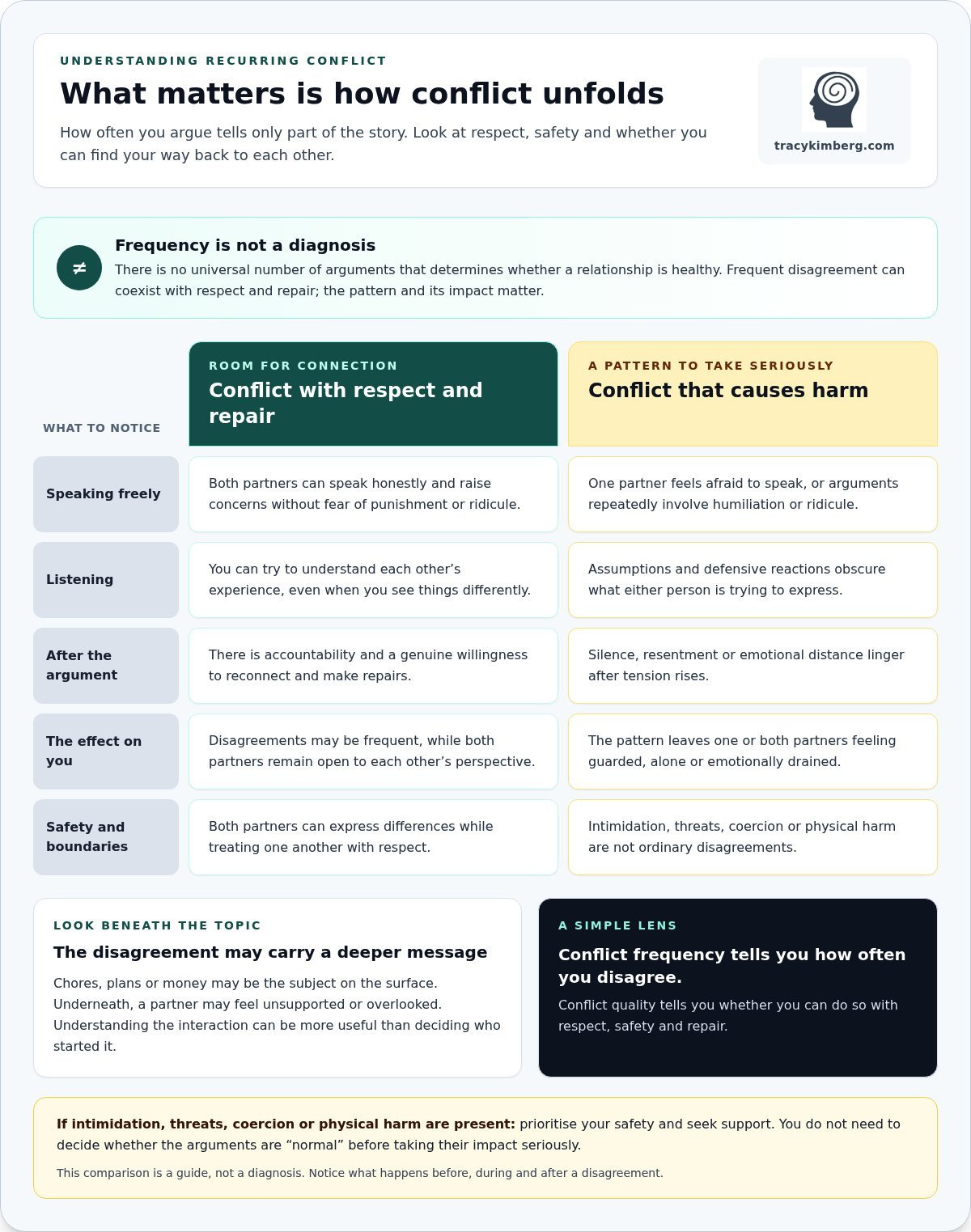
Frequent arguments can happen in relationships, but frequency alone proves little. If you’re asking, “is it normal to argue every day?”, look beyond the number of disagreements. Do you both feel able to speak honestly? Can you listen, take responsibility and reconnect afterwards, or does each argument leave you more guarded and alone?
It’s understandable to feel emotionally drained when the same tensions keep resurfacing. That exhaustion doesn’t mean either partner is automatically “the problem”. A disagreement about chores, plans or money may touch something deeper, such as feeling unsupported or overlooked. Understanding the interaction between you can be more useful than deciding who started it.
Conflict is a process involving different responses and behaviours, not simply a raised voice or a difference of opinion. This broader view of interpersonal conflict can help make sense of how a disagreement develops. What matters in a relationship is how that process affects each person and whether there is room to repair the connection.
Does arguing every day mean a relationship is unhealthy?
There’s no universal number of arguments that can diagnose a relationship as healthy or unhealthy. Couples may disagree often and still treat one another with respect, stay open to each other’s perspective and make repairs. By contrast, arguments that repeatedly end in humiliation or leave one partner afraid to speak point to a more serious concern than frequency alone.
Intimidation, threats, coercion and physical harm aren’t ordinary disagreements. If these are part of your relationship, prioritise your safety and seek support. You don’t need to decide whether your arguments are “normal” before taking their impact seriously.
What matters more than how often you argue?
Notice what happens before, during and after a disagreement. Can you raise a concern without fearing punishment or ridicule? Does your partner try to understand your experience, even when they see things differently? After tension rises, is there accountability and a genuine willingness to reconnect, or do silence, resentment and emotional distance linger?
Conflict frequency tells you how often you disagree; conflict quality tells you whether you can do so with respect, safety and repair. This isn’t a pass-or-fail test. It’s a way to notice the pattern you’re living in, including whether both of you can speak freely and take steps towards each other after a difficult moment.
Why couples argue every day: the patterns beneath repeated disagreements
A row about washing up may seem to be about who left the dishes, but the feelings underneath can be much bigger: “I don’t feel supported” or “I’m afraid my effort goes unnoticed.” Everyday subjects such as household responsibilities, time together and feeling dismissed can become the stage for deeper concerns. The topic is real, but it may not be the whole story.
Why do we keep having the same argument?
Sometimes a concern remains unresolved, so it resurfaces in different situations. One evening, it’s the chores; the next, it’s plans made without checking in. Both partners may be trying to express something important, but assumptions and defensive reactions can obscure the message.
For example, one partner says, “You’re always on your phone.” The other hears an accusation and replies, “I can never do anything right.” The conversation shifts from wanting more shared attention to defending against criticism. Each reaction can intensify the other: one partner presses harder to be heard, while the other withdraws or pushes back. The cycle starts to feel familiar, even if neither person wants another fight.
Relationship researcher John Gottman describes criticism, contempt, defensiveness and stonewalling as The Four Horsemen, patterns that can make it harder for partners to hear and respond to one another. Recognising a pattern isn’t about labelling either person. It can help you notice how the interaction takes shape between you.
How stress and past experiences can shape conflict
Stress can narrow your capacity to listen patiently. When you’re already stretched by work, caring responsibilities or uncertainty, a small disagreement may feel like one more demand. You might react quickly, read blame into a comment or struggle to explain what you need. Your partner’s response can then land more sharply, and the exchange escalates.
Personal history may also influence what feels especially sensitive. If being ignored or criticised mattered in earlier relationships or family life, a present-day moment may carry extra emotional weight. That doesn’t prove trauma, define your personality or explain everything. It can be a reason to get curious: “What did that moment mean to you?” and “What were you hoping I’d understand?”
If you’re wondering is it normal to argue every day, exploring the cycle beneath the arguments may reveal more than counting them. Couples counselling with Tracy Kimberg can offer a supportive space to understand each partner’s experience and the pattern you create together, without making one person the sole cause.
Daily arguments: ordinary conflict or a sign that something needs to change?
Not every disagreement is harmful, and a difficult argument doesn’t automatically mean a relationship is in trouble. The distinction often lies in whether both partners can speak freely, respect each other’s boundaries and make an effort to reconnect. The table below offers a guide, not a diagnosis. Look at the pattern and its impact rather than relying on one moment alone.
| Pattern | What it may look like |
|---|---|
| Respectful disagreement | You can disagree without insults or threats. Each person has room to speak, and you can return to the issue or reconnect, even if you don’t reach agreement. |
| Damaging cycle | The same conflict escalates into criticism, defensiveness, withdrawal or lingering resentment. You may both feel unheard, and attempts to resolve things rarely bring a sense of understanding. |
| Unsafe behaviour | One partner uses threats, coercion, intimidation or physical force, or restricts the other’s choices through fear. This is not simply a communication difficulty. |
Can couples argue often and still repair well?
Repair means recognising how your words or actions affected your partner, listening to their experience and returning to the conversation with care. “I can see that hurt you. I want to understand” opens a different door from mocking, dismissing the impact or putting all the blame on the other person. Repair matters, but no single apology or kind gesture guarantees that a relationship is healthy.
Some disagreements concern differences that may not have a final solution. The Gottman Institute describes these as perpetual problems. The aim may be to understand and manage a recurring difference with respect, rather than force one partner to surrender their perspective.
When daily arguments involve fear or control
In a mutual disagreement, both people can express a view, even if emotions run high. Control is different: a partner may threaten, frighten or pressure the other, or use intimidation to limit what they feel able to say or do. If you’re asking “is it normal to argue every day?” because you’re afraid of your partner’s reaction, take that fear seriously.
Safety concerns need a safety-focused response, not simply better communication techniques. If you feel unsafe, prioritise your immediate safety and seek appropriate support from someone you trust or a relevant support service. You don’t have to manage threatening or violent behaviour by finding the perfect words.
How to interrupt the daily argument cycle and talk differently
Changing a familiar argument doesn’t mean finding the perfect phrase or solving everything at once. It means noticing when the conversation is moving away from understanding, then choosing a small next step together. If either of you feels overwhelmed, a pause can protect the conversation rather than end it.
What can you do in the middle of an argument?
Watch for signs that it’s becoming harder to listen: a racing heart, a tight jaw, rising volume, going blank or feeling an urgent need to win, leave or defend yourself. These can be cues to slow things down. Try a respectful pause that makes clear you intend to return, such as: “I want to talk this through, but I’m getting overwhelmed. Can we take a break and come back to it later today?”
A pause works best when it isn’t used to punish, frighten or avoid the issue indefinitely. Agree on a time to resume, if you can. In the meantime, resist sending angry messages or rehearsing a list of past wrongs. Threats, insults and pressure to settle everything immediately tend to make it harder for either person to feel heard.
How to return to the conversation after a pause
Come back to one specific concern. Rather than reopening every past disagreement, describe what happened and how it affected you, without deciding what your partner intended. For example: “When our plans changed without us talking, I felt disappointed. I’d like us to check in with each other next time.” This leaves room for your partner’s experience too.
Then take turns listening before trying to solve the problem. One person can explain what they felt and needed; the other can reflect back what they heard and ask whether they’ve understood. You don’t have to agree with every detail to show that you’re trying to understand.
Before ending, agree on one manageable next step, such as discussing plans together earlier. Check that both of you feel understood enough to pause the conversation, even if the issue isn’t fully resolved. If you’re still asking “is it normal to argue every day?”, practising a different way to re-enter difficult conversations may help you see what changes and what remains hard.
If the same arguments keep returning, explore couples counselling with Tracy Kimberg as a space to understand the cycle and consider new ways of responding. These communication steps aren’t a substitute for safety support when intimidation, threats or harm are present.
How relationship counselling can help with arguments that keep returning
When the same disagreement keeps circling back, it can be hard to hear what each of you is trying to say beneath the frustration. Couples counselling offers a supportive space to slow that pattern down. A counsellor can help you notice what tends to trigger conflict, how each partner responds and how those responses affect the other, without making one person the cause of every difficulty.
If you’ve been wondering “is it normal to argue every day?”, counselling can help you explore what the arguments mean for your relationship. The aim isn’t to promise that conflict will disappear or that you’ll reach a particular decision. It’s to understand your dynamic, consider what each of you needs and explore whether new ways of relating feel possible.
What might couples explore in relationship counselling?
You might look at how a disagreement begins, what feelings or unmet needs are underneath it, and what makes it difficult to listen once emotions rise. You can also explore how you reconnect after conflict, or why attempts to repair don’t always land as intended. The focus is on understanding the pattern between you, not deciding who is at fault.
Tracy Kimberg provides relationship counselling and coaching for couples, with support available online and face to face. The setting can offer room for both partners to share their perspectives and listen to one another with care.
When might structured relationship support feel useful?
You might consider support if you’ve tried to change how you argue but find yourselves returning to the same painful exchange. This doesn’t mean you’ve failed. Sometimes it’s difficult to see a shared pattern clearly while you’re caught up in it.
Tracy also offers a structured 12-Week Relationship Recovery Process. It provides a defined period for couples to explore their relationship difficulties; it doesn’t guarantee a particular outcome. Counselling can support reflection and change, while the decisions and direction of the relationship remain yours.
If you’d like support to understand the pattern you’re caught in, you can explore relationship support with Tracy. You can take the next step at your own pace.
Take a thoughtful next step towards calmer conversations
If you’re still wondering, “is it normal to argue every day?”, remember that frequency alone can’t tell the whole story. Notice whether disagreements leave room for listening and repair, or whether a recurring cycle is creating distance, fear or hurt. Small changes, such as pausing respectfully and returning to one concern at a time, can help you approach conflict differently.
Arguments may also be a sign that something important needs attention beneath the surface. Understanding the pattern is not about deciding who is to blame; it’s about making space for both partners’ experiences. If conflict involves threats, intimidation or harm, prioritising safety matters more than trying to communicate better.
Tracy Kimberg specialises in relationship counselling and coaching for couples, with support available online and face to face. If you’d like help exploring what keeps happening between you, explore relationship counselling and support with Tracy. You can take things at your own pace, and a more understanding conversation can begin with one small step.
Frequently Asked Questions
Is it normal to argue every day in a relationship?
Couples can argue frequently, but there’s no single number that determines whether a relationship is healthy. If you’re asking, “is it normal to argue every day?”, look at how conflict affects you both. Can each of you speak honestly, listen and reconnect afterwards? Or do arguments leave one or both of you feeling afraid, belittled or increasingly alone? The pattern and its impact matter more than frequency by itself.
Can arguing every day ruin a relationship?
Repeated arguments can erode closeness if they regularly lead to contempt, hurt, avoidance or resentment without repair. But arguing often doesn’t automatically mean a relationship is doomed. Notice whether you can take responsibility, listen to each other and make changes together. If conflict involves threats, coercion, intimidation or physical harm, prioritise safety rather than treating it as a routine communication problem.
Why do couples argue about the same things every day?
The visible topic may keep changing while an underlying concern remains unresolved. A disagreement about chores, for example, might also involve feeling unsupported or unappreciated. Assumptions and defensive reactions can make it harder to express or hear that deeper concern. Try asking, “What feels most important to you about this?” Listening for the meaning beneath the complaint can reveal what the repeated argument is really about.
How do you stop arguing with your partner every day?
You may not be able to stop every disagreement, but you can try changing how you approach one. Notice when either of you is overwhelmed, then suggest a respectful pause and agree when to return. Focus on one specific concern, describe your own feelings without attacking your partner’s character, and listen before problem-solving. These steps aren’t a substitute for safety support if intimidation or harm is present.
Does arguing every day mean we should break up?
No, frequent arguments alone can’t decide whether you should stay together or separate. Consider whether you feel safe and respected, whether both partners are willing to understand the recurring pattern, and whether attempts to change it are possible. You don’t have to make a decision based on one difficult period. If there’s fear, coercion or violence, focus first on your safety and seek appropriate support.
Can couples counselling help if we argue every day?
Couples counselling can help partners explore what triggers recurring arguments, understand each other’s perspectives and consider different ways of responding. It offers a space to examine the relationship dynamic rather than assign blame, but it can’t guarantee that arguments will stop or that the relationship will continue. Tracy Kimberg provides couples counselling and coaching online and face to face, supporting couples as they explore their relationship difficulties.
What should I do if arguments with my partner make me feel afraid?
Take your fear seriously. Threats, coercion, intimidation or physical harm aren’t simply communication problems, and you don’t have to find the perfect words to prevent them. If you’re in immediate danger, move towards safety and contact emergency services. If it’s safe to do so, tell someone you trust and seek support from a relevant service. Focus on safety before considering joint conversations or counselling.

Article by
Tracy Kimberg
Tracy Kimberg is a Relationship Expert, Couples Therapist and Coach with a dedicated focus on helping couples and individuals rebuild connection, trust and emotional safety in their relationships. Drawing on the research of John and Julie Gottman, the relational insights of Esther Perel, and years of hands-on therapeutic experience, Tracy offers a warm, non-judgemental and deeply compassionate approach to modern relationships.
Based in Dorset, Tracy works with couples navigating communication breakdowns, betrayal, intimacy challenges, separation, family dynamics and life transitions. Known for creating a safe and grounded therapeutic space, she combines practical tools with emotional depth to help clients move beyond survival patterns and towards meaningful, lasting change.
With a reputation for empathy, professionalism and dedication to her clients’ growth, Tracy is passionate about helping people feel seen, understood and empowered — both within their relationships and within themselves.
Disclaimer
Disclaimer:
The information shared in this article is intended for educational and informational purposes only and should not be considered a substitute for professional therapeutic, psychological, medical or legal advice. Every individual and relationship is unique, and the perspectives offered are based on general therapeutic principles, research and professional experience.
Reading this article does not establish a therapist-client relationship with Tracy Kimberg. If you are experiencing significant emotional distress, relationship crisis, trauma, or mental health concerns, it is important to seek support from a qualified professional appropriate to your individual circumstances.
All content remains the intellectual property of Tracy Kimberg and may not be reproduced or distributed without permission.