

Staying in an unhappy marriage doesn’t inevitably lead to lifelong unhappiness: in a 2002 study, two-thirds of unhappy adults who stayed together were happy five years later. Still, the long-term effects of staying in an unhappy marriage can include ongoing stress and strain on your wellbeing, particularly when conflict or emotional disconnection persists.
If you’re weighing whether to stay, you may be holding two truths at once: the relationship is hurting, and leaving feels complicated. That uncertainty doesn’t mean you’re failing to decide; it reflects how much is at stake.
This article explores how an unhappy marriage may affect your health, happiness and opportunities, why some relationships improve while others don’t, and what to consider when deciding whether or when to leave. It also looks at the impact on children and how support can help you make sense of what comes next.
Key Takeaways
- Look at the relationship’s patterns over time, not only a difficult moment, when weighing whether change is possible.
- Notice how ongoing conflict or disconnection affects your wellbeing, confidence and ability to pursue what matters to you.
- Consider your emotional, practical and family circumstances when thinking about separation, rather than treating the decision as all-or-nothing.
- If conversations repeatedly become conflictual or you feel unsafe, recognise that this may shape what support and timing you need.
Should Couples in Unhappy Marriages Stay Together?
There’s no single answer: some relationships improve, while others remain painful or end. Consider the pattern over time, the possibility of meaningful change and each partner’s wellbeing.
Relationship outcomes around separation
Separation changes a relationship’s form, but it doesn’t guarantee greater happiness. In a 2002 study, adults who divorced were no happier on average than those who stayed together. In a UK study of married parents who thought their relationship was near separation, just under 30 percent later broke up during the next 10 years. These findings matter because feeling close to separation doesn’t determine what happens next.
Outcomes for couples who stay together
Staying together can offer time for repair, but the outcome depends on whether both partners engage with change. In the 2002 study, two-thirds of unhappy adults who stayed together were happy five years later. In the UK study, 68 percent of couples who stayed together after reporting unhappiness said they were happy when their child was 11; 7 percent were still unhappy. For couples willing to work on communication, counselling can help clarify needs and recurring patterns. Active listening means not interrupting, considering your partner’s perspective, staying calm and showing empathy.
High-conflict and emotionally distant marriages
High-conflict marriages involve recurring arguments, while emotionally distant ones may be marked by withdrawal and little intimacy. Conflict can create immediate tension and expose children to distress; distance may feel quieter but leave partners isolated. To protect your wellbeing while deciding, note recurring patterns, speak with someone you trust and set aside time for a calm conversation. If abuse or coercive control is present, prioritise safety: use a safer device, tell a trusted person and seek help privately. Couples counselling is not the first step when speaking openly could increase danger.
Effects on children and across life stages
Chronic conflict can affect children’s emotional, social, academic and behavioural development; a 2018 review of research found potential harms when children witness frequent conflict at home. Their age and understanding shape how they interpret what they see, so offer reassurance without asking them to take sides. Effects can also vary with life stage, health, caregiving responsibilities and the marriage’s duration. The available findings don’t establish a universal difference by gender or age, making each family’s circumstances important.
Limits on personal happiness and opportunities
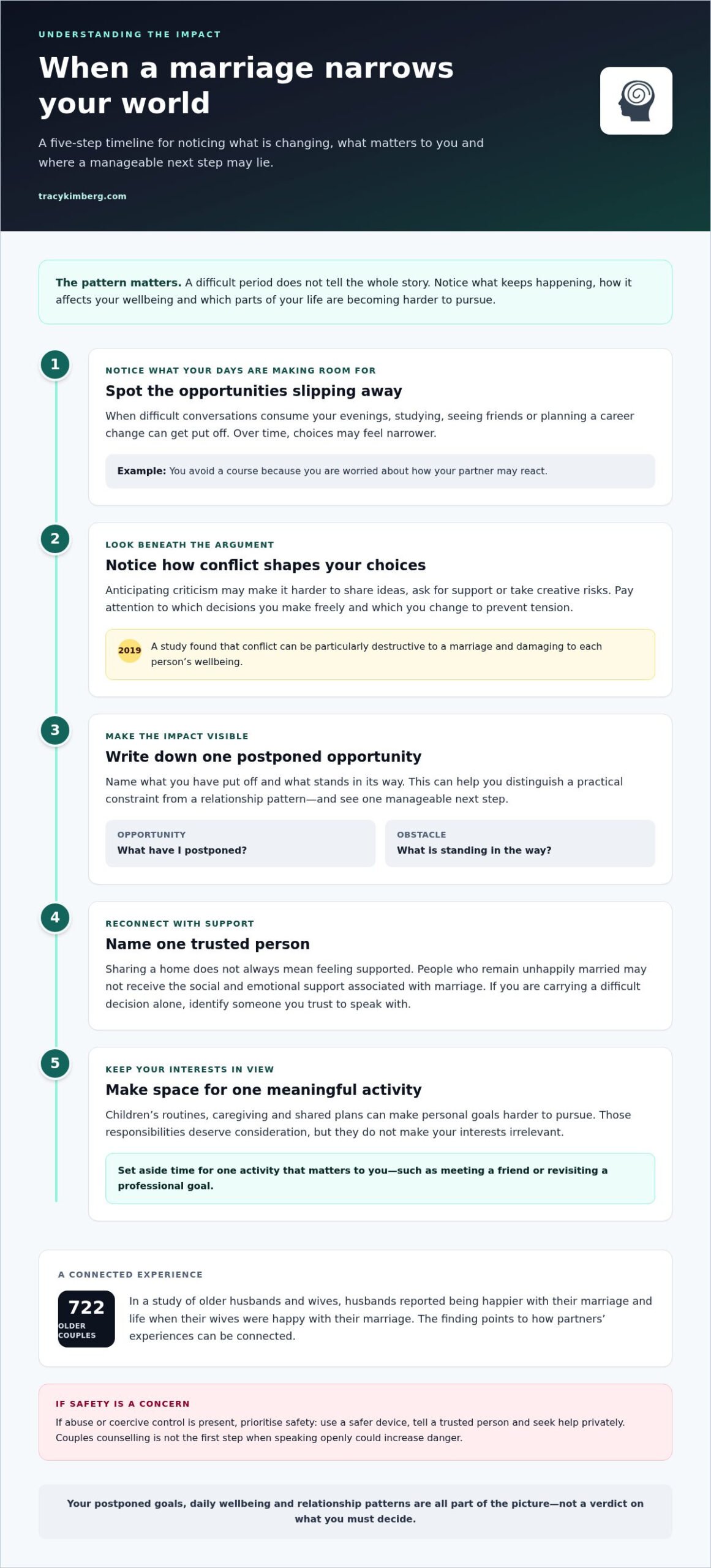
The long term effects of staying in an unhappy marriage can include losing sight of what gives your life purpose. If difficult conversations consume your evenings, you may put off studying, seeing friends or planning a career change. For example, someone who avoids a course because their partner may react badly can find their choices narrowing over time.
A 2019 study found that conflict can be particularly destructive to a marriage and damaging to each person’s wellbeing. The impact may reach beyond arguments themselves: anticipating criticism can make it harder to share ideas, ask for support or take creative risks. Notice which decisions you’re making freely and which you’re changing to prevent tension.
Happiness within a couple can also affect how each partner experiences the relationship. In a study of 722 older husbands and wives, husbands reported being happier with their marriage and life when their wives were happy with their marriage. This finding points to the way partners’ experiences can be connected, rather than unfolding separately.
Yet sharing a home doesn’t always mean feeling supported. People who remain unhappily married may not receive the social and emotional support associated with marriage. If you’re carrying a difficult decision alone, consider naming one trusted person you could speak with rather than waiting until you feel certain.
Children’s routines, caregiving and shared plans can make personal goals harder to pursue. Those responsibilities deserve consideration, but they don’t make your interests irrelevant. Try setting aside time for one activity that matters to you, such as meeting a friend or revisiting a professional goal.
Understanding the long term effects of staying in an unhappy marriage also means noticing what your days allow you to become. Write down one opportunity you’ve postponed and what stands in its way. This can help you distinguish a practical constraint from a relationship pattern and identify a manageable next step.
Considering whether to divorce
Deciding about divorce means weighing what the relationship is doing now against what could realistically change. One national study followed 1,150 married people over a 12-year period, interviewing them at four time points. Researchers classified participants as unhappily married when their scores consistently fell below the group’s average. This offers a useful reminder: a persistent pattern matters more than one difficult week.
These findings also show why divorce cannot be judged by a single outcome. People who divorced and remained unmarried had greater life satisfaction, higher self-esteem and better overall health than people who stayed unhappily married. That comparison doesn’t predict your future, but it highlights emotional and physical costs to consider alongside disruption, family responsibilities and the hope of repair.
Try separating three questions in your reflections: What keeps happening? What would need to change for the relationship to feel safe and mutual? Are both partners willing to take part in that change? For example, a couple facing emotional distance may agree to honest conversations and counselling. Repeated broken agreements or fear of a partner’s response point to different concerns.
- Wellbeing: Notice changes in sleep, confidence, anxiety or mental health, and record when they occur.
- Repair: Identify specific behaviours each partner must change, rather than relying on promises alone.
- Practical life: Consider children’s needs, housing, finances and the support you can access.
- Personal values: Ask whether staying reflects a genuine choice or mainly fear, pressure or guilt.
Give yourself room to think without treating uncertainty as proof that you must stay or leave. A trusted person or therapist can help you examine the pattern and prepare for a careful conversation. If abuse or coercive control is present, prioritise safety and seek confidential support before discussing separation with your partner. The aim is a considered decision grounded in your wellbeing, not a choice made solely to end one painful moment.
Deciding when to leave
There’s no universal timetable for ending a marriage. Focus on safety, recurring patterns and whether meaningful change is taking place.
Healthier outcomes from separation or divorce
Separation or divorce may be healthier when a relationship involves abuse, coercive control or ongoing harm that cannot be addressed safely. Someone experiencing abuse may decide it’s time to move on. Staying can mean continued fear, while leaving can bring grief and practical upheaval. Weigh both realities without treating either as a simple choice.
Look at what happens after concerns are raised. For example, if one partner acknowledges hurtful behaviour, takes responsibility and follows through, that’s different from repeated apologies without change. Ask yourself whether you can speak honestly, disagree safely and make decisions without intimidation. If you cannot, consider seeking support from someone you trust before discussing separation with your partner.
Recognising when leaving is right
Leaving may feel right when the relationship repeatedly undermines your safety or wellbeing and attempts to change the pattern have not helped. Notice concrete signs: you censor ordinary opinions to avoid retaliation, feel afraid at home or find that agreed changes never last. These examples can help distinguish a difficult period from a relationship that remains damaging.
Consider timing in terms of practical preparation, not pressure to act on a particular day. Write down what you need to feel safe, identify trusted support and think through children’s routines, housing and finances. If coercive control or abuse is present, use a safer way to seek help and avoid announcing plans if doing so could increase danger. A calm, supported decision can make the next steps clearer.
If separation is becoming the considered choice, explore a conscious approach to divorce and separation to bring care and clarity to the process.
Tracy Kimberg: Relationship Counselling and Coaching for Couples
Tracy Kimberg offers Relationship Counselling and Coaching for Couples to help partners understand recurring patterns, communicate more openly and consider what they want next. It can be useful when conversations repeatedly end in conflict, emotional distance has grown, or both partners want to explore whether repair is possible. The structured 12-Week Relationship Recovery Process offers a focused way to work on relationship dynamics. If you’re facing separation, support can also help you approach decisions with greater care and clarity. Therapy for Adults may offer space to explore your own needs and wellbeing, while Therapy for Teenagers can support young people affected by family difficulties. Choosing support doesn’t require you to have already decided whether to stay or leave. Visit tracykimberg.com to explore support that may fit your situation.
Choose a next step that feels grounded
The long term effects of staying in an unhappy marriage are personal, so let your next step reflect what you need now. You don’t have to settle the whole future in one conversation. Instead, write down what would need to change for the relationship to feel workable and what support would help you think clearly.
Tracy Kimberg offers Relationship Counselling and Coaching for Couples, alongside a 12-Week Relationship Recovery Process. These can help partners explore their relationship dynamics and consider a way forward. Therapy for Teenagers is also available for young people affected by difficulties at home. Support can be valuable whether you’re hoping to rebuild trust, understand your own feelings or prepare for a change.
If you’d like a calm space to discuss what comes next, contact Tracy Kimberg to discuss your options. You can take this decision one thoughtful step at a time.
Frequently Asked Questions
Is staying in a bad marriage slowly killing you?
Ongoing relationship stress can affect health and wellbeing, though not in the same way for everyone. Prolonged stress may influence sleep, appetite, digestion, blood pressure and concentration. If you notice persistent changes, such as struggling to sleep before difficult conversations or feeling constantly on edge at home, speak with a health professional about those symptoms and consider what support could reduce the strain.
What are the consequences of staying in an unhappy marriage?
The effects can include emotional exhaustion, reduced confidence and less connection with people outside the relationship. For instance, someone may avoid inviting friends home because tension feels hard to manage, then become more isolated. Over time, this can make it harder to see the relationship clearly or ask for help. Notice which parts of daily life have become smaller, and share specific examples with someone you trust.
What are the psychological effects of a loveless marriage?
A loveless marriage can leave someone feeling lonely, rejected or emotionally numb, even while sharing a home with their partner. For example, a lack of affection or meaningful conversation may make ordinary moments feel disconnected. Some people also find themselves questioning their worth or anticipating criticism. Naming specific experiences, such as avoiding conversation or feeling unseen, can help you understand what you need emotionally.
When is it a good idea to focus on your own happiness?
It’s worth focusing on yourself whenever your needs, interests or relationships outside the marriage have disappeared from view. This doesn’t require an immediate decision about staying or leaving. You might reconnect with a friend, return to a meaningful activity or make time for private reflection. Notice whether these choices help you feel more grounded and better able to recognise what you want from the relationship.
When is moving out a good option?
Moving out may be worth considering if staying in the same home feels unsafe, severely distressing or prevents you from thinking clearly. Before acting, consider where you could stay, how children’s routines might be affected and who can offer practical support. If abuse or coercive control is involved, seek help privately and prioritise safety. Avoid announcing plans if doing so could increase the danger.
When is waiting it out a good option?
Waiting can make sense when both partners recognise the problem and take consistent steps to address it. For example, you might agree to stop a recurring hurtful behaviour, make space for weekly conversations or seek relationship support. Decide what observable change would matter to you, then revisit whether it is happening. Waiting without honest discussion or follow-through can leave the same painful pattern untouched.

Article by
Tracy Kimberg
Tracy Kimberg is a Relationship Expert, Couples Therapist and Coach with a dedicated focus on helping couples and individuals rebuild connection, trust and emotional safety in their relationships. Drawing on the research of John and Julie Gottman, the relational insights of Esther Perel, and years of hands-on therapeutic experience, Tracy offers a warm, non-judgemental and deeply compassionate approach to modern relationships.
Based in Dorset, Tracy works with couples navigating communication breakdowns, betrayal, intimacy challenges, separation, family dynamics and life transitions. Known for creating a safe and grounded therapeutic space, she combines practical tools with emotional depth to help clients move beyond survival patterns and towards meaningful, lasting change.
With a reputation for empathy, professionalism and dedication to her clients’ growth, Tracy is passionate about helping people feel seen, understood and empowered — both within their relationships and within themselves.
Disclaimer
Disclaimer:
The information shared in this article is intended for educational and informational purposes only and should not be considered a substitute for professional therapeutic, psychological, medical or legal advice. Every individual and relationship is unique, and the perspectives offered are based on general therapeutic principles, research and professional experience.
Reading this article does not establish a therapist-client relationship with Tracy Kimberg. If you are experiencing significant emotional distress, relationship crisis, trauma, or mental health concerns, it is important to seek support from a qualified professional appropriate to your individual circumstances.
All content remains the intellectual property of Tracy Kimberg and may not be reproduced or distributed without permission.