

What if your partner’s pushback isn’t proof that a boundary has failed, but a sign you’re both working out what it means? Setting boundaries in a relationship can feel like a tug-of-war, yet clear, respectful limits offer both partners safety and room to grow. Resistance can be hard to hear, but it doesn’t mean you’re getting your relationship wrong.
You can hold a limit without dismissing your partner’s feelings. Explain what matters to you, listen to their perspective and agree what happens if the limit is crossed. This can make the conversation less about winning and more about building trust.
This article explores why couples need boundaries and how to respond when a partner pushes back. You’ll find practical ways to stay calm, make space for each other’s voice and model the respect you hope to share. We’ll also consider when a deeper difficulty may be beneath the conflict, and how professional support can help you find a steadier way forward together.
Key Takeaways
- Invite your partner into conversations about boundaries, and revisit them as trust and understanding grow.
- Keep expectations around safety and respect clear while making space for each other’s needs and choices.
- Model healthy boundaries in your relationship, while staying curious about your partner’s perspective.
- Listen for what may sit beneath repeated conflict, and consider professional support when you need more help.
1. What do I do when my partner pushes boundaries?
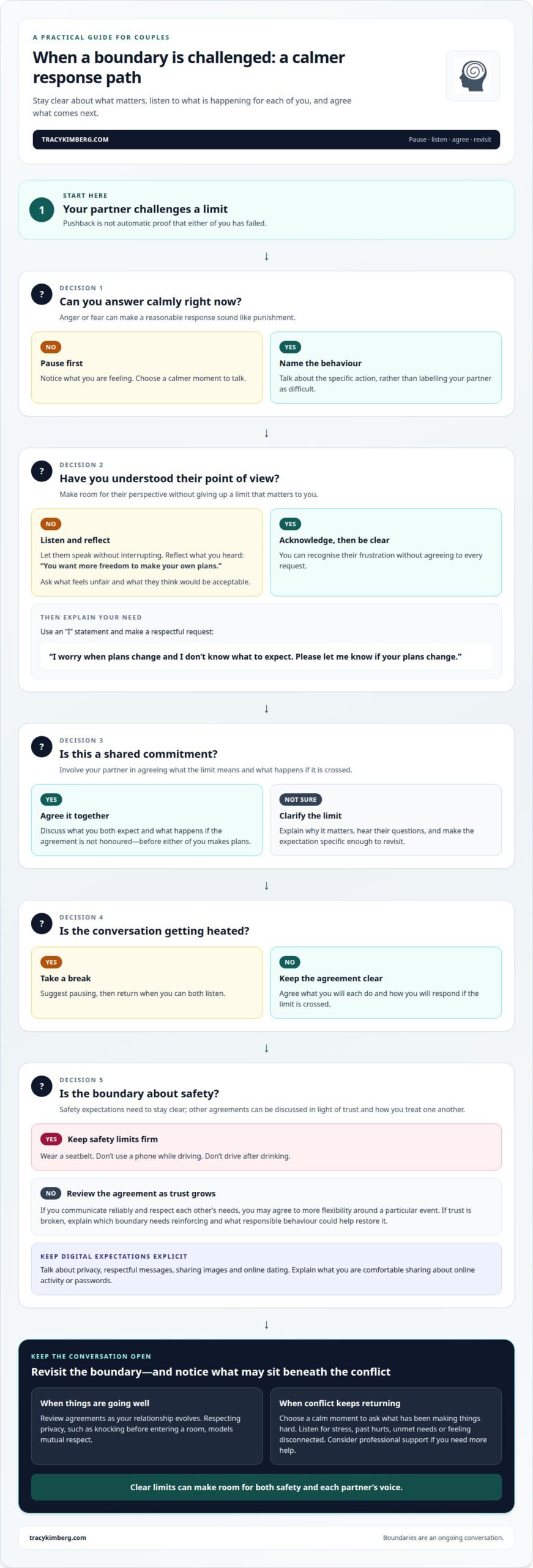
When your partner challenges a limit, pause before answering. Differences around boundaries are part of relationships, not automatic proof that either of you has failed. Notice your emotions first: anger or fear can make a reasonable response sound like punishment. Choose a calmer moment, then address the specific behaviour rather than labelling your partner as difficult.
Listen without interrupting, then reflect what you heard: “You want more freedom to make your own plans.” Ask what feels unfair and what your partner thinks would be acceptable. You can acknowledge their frustration without agreeing to every request. Explain how the behaviour affects you using an “I” statement, then make a respectful request. For example: “I worry when plans change and I don’t know what to expect. Please let me know if your plans change.”
Involve your partner in agreeing on the limit and how you’ll respond if it’s crossed. For a shared commitment, discuss what you both expect and what happens if it isn’t honoured before either of you makes plans. A clear agreement gives you both something specific to revisit. If the conversation becomes heated, suggest a break and return to it when you can both listen.
As your relationship evolves, review boundaries in light of how you treat one another, not just how long you’ve been together. If you communicate reliably and respect each other’s needs, agree to more flexibility around a particular event. If trust is broken, explain which boundary needs to be reinforced and what responsible behaviour could help restore it. Setting boundaries with a partner is an ongoing conversation: keep your needs clear while making room for intimacy and mutual respect to grow.
2. Do couples still need boundaries?
Yes. In a relationship, boundaries help protect safety and trust while making room for each person’s needs. Clear expectations show what feels acceptable and why, while respectful discussion gives both partners room to question a limit. That balance matters: a rule imposed without explanation can feel like control, whereas a boundary discussed together can help each partner understand their responsibilities.
When you’re apart, agree how you’ll communicate about changes to plans, what reassurance you need and what respectful behaviour looks like. For example, you might agree to check in by 10 pm if plans change. Discuss how you’ll handle situations that feel uncomfortable, including how to support one another without taking over. These conversations should centre mutual respect, not restrictions.
Keep safety boundaries firm: wear a seatbelt, don’t use a phone while driving, and don’t drive after drinking. Set clear digital expectations too. Talk openly about privacy, respectful messages, sharing images and online dating. Explain what you’re comfortable sharing about your online activity or passwords. Boundaries work best when both partners know what’s expected and can ask questions without fear of humiliation.
Support independence and trust by making flexible agreements responsive to each other’s needs. Agree on a check-in, then review it if you’ve both communicated reliably and followed the plan. Keep safety boundaries steady, but allow more choice around lower-risk activities as trust grows. Remember that boundaries work both ways: respecting your partner’s privacy, such as knocking before entering a room, models the mutual respect you’re asking for. If conversations about safety or online behaviour become difficult, a calm follow-up can keep communication open.
Modeling healthy boundaries
Partners learn about boundaries not only through conversations, but also by watching how each other behaves. If you’re exhausted, you might say, “I need half an hour to rest before we talk.” Then return as promised. This shows that naming a need can protect connection rather than reject someone. When your partner tests a boundary, respond consistently and without shaming them; your tone teaches as much as the consequence.
Healthy relationships make room for closeness and difference. You can care deeply about your partner and still decline a request, explain your reasons and listen to their disappointment. For example, if they ask you to keep a serious safety concern secret, explain that you’ll seek appropriate support. Being honest about what you can keep private builds more trust than making a promise you can’t keep.
Use everyday conversations to explore what healthy relationships look like. A partner who accepts “I can’t meet tonight” respects a boundary; someone who repeatedly pressures, threatens or shares private messages does not. Ask what each of you notices in the relationship, and listen without immediately judging each other’s choices. This helps you recognise patterns while keeping the conversation open.
Healthy boundaries can reduce resentment and burnout by making needs and expectations clearer. They can also help partners stay steady, rather than agreeing to everything and later reacting with anger. Try setting one clear limit in your own life, such as not answering work messages during dinner together, then explain it and follow through. That example shows your partner that boundaries involve mutual respect, not simply rules imposed by one person. Consistent limits can help people feel safer expressing needs, disagreeing and repairing hurt.
4. Listening for underlying issues and seeking professional help
Repeated conflict can sometimes point to a difficulty beneath the issue you’re arguing about. Choose a calm moment and ask, “What’s been making things hard between us lately?” Then listen without interrupting or rushing to solve it. You might gently ask whether stress, past hurts, unmet needs or feeling disconnected are affecting your relationship. Stay curious rather than treating one answer as the whole story. Your partner may need time before they can explain what they’re experiencing.
Make space for conversation without turning every exchange into an investigation. A regular meal together, such as a weekly breakfast or dinner, can offer a quieter setting. Ask an open question, then let your partner lead. You could say, “Would you like me to listen, or help you think through what to do?” This gives them some choice and helps distinguish a need for connection from a request for advice.
Consider professional help if distress continues, affects everyday life, or leaves either of you struggling to feel safe. A therapist can help explore what’s contributing to the difficulty and support healthier ways to communicate. If your partner talks about harming themselves or faces immediate danger, seek urgent help. According to the 988 Suicide & Crisis Lifeline, people in the United States can call or text 988 for free mental health help.
The key step is to respond to both the behaviour and the feeling beneath it. Keep reasonable boundaries, while encouraging each other to take responsibility and share what support you need. If conversations keep returning to the same painful conflict, explore professional support for couples as a way to understand what’s happening and find a path forward together.
5. Tracy Kimberg: Therapy for Couples
Tracy Kimberg offers couples therapy, a supportive next step when conversations about boundaries keep ending in conflict or you and your partner feel overwhelmed. Therapy can give you both space to explore feelings, relationship patterns and pressures that may be difficult to discuss together. It can also help you understand what may lie beneath repeated arguments, without reducing either partner to their behaviour.
Consider seeking support when distress persists, affects your closeness or friendships, or makes everyday life together feel increasingly strained. You might notice one of you withdrawing, becoming unusually irritable or struggling to explain what’s wrong. These signs don’t tell the whole story, but they can prompt a caring conversation about what support might help. You can raise therapy as an option, rather than presenting it as a punishment for getting something wrong.
In therapy, you can explore what boundaries mean to each of you, what feels difficult to communicate and how you want to be heard. You may also benefit from understanding how relationship patterns shape conflict. The aim isn’t to make every disagreement disappear or make one partner comply without question. It’s to create room for clearer communication, reflection and a better understanding of each other’s needs.
Getting support doesn’t mean stepping away from your relationship. You can continue setting appropriate limits while making space for each other’s perspectives. If you’re unsure how to introduce the idea, keep it simple: explain that support could offer you both another place to talk, then listen to your partner’s response. Couples therapy may be a useful step when conversations at home aren’t enough to address what’s troubling you. If you’d like to explore this support, contact Tracy Kimberg.
Take the next step towards a more connected relationship
Trust grows through small moments of honesty, repair and follow-through. You don’t have to find perfect words every time; what matters is staying curious about what your partner’s behaviour may be communicating. As you continue strengthening your relationship, let each conversation be an opportunity to understand one another, not simply settle who is right.
When strain enters a relationship, support can help you understand the patterns shaping your connection and find new ways to hear one another. Tracy Kimberg offers Relationship Counselling and Coaching for Couples, and a 12-Week Relationship Recovery Process. The right kind of support depends on where the difficulty is showing up and what you need help working through together.
If you’d like to explore support for your relationship, contact Tracy Kimberg to discuss support. A more trusting connection can begin with one thoughtful conversation.
Frequently Asked Questions
Do couples still need boundaries?
Yes, boundaries help partners understand what feels safe and respectful while making room for each person’s needs. They can clarify expectations around time, privacy and friendships, while showing that care and respect go both ways. For example, agreeing how you both make space for time together and apart can support closeness without diminishing either person’s independence. Review expectations as your circumstances change.
What do I do when my partner pushes boundaries?
Pause, then address the specific action rather than judging your partner’s character. You might say, “We agreed to talk before making plans that affect us both. What happened?” Give them time to explain before deciding what needs to happen next. If the discussion becomes heated, pause it and return when you can both speak and listen more calmly.
How do we set clear boundaries in our relationship?
Make each boundary specific enough that you can both tell what it means in practice. Instead of saying “be more considerate”, agree on what feeling respected looks like, including how you handle private conversations. Consider each person’s needs, the level of trust and the responsibility you have shown. Explain the reason behind the boundary, then revisit it as your relationship develops.
How can we involve each other in setting relationship expectations?
Invite your partner to suggest expectations for a shared issue, such as making time for one another or managing household responsibilities. Ask what feels fair, then discuss both your needs before agreeing on a clear expectation. Include what you will do if the agreement is not kept, so you understand how to address it together. Writing down the agreement can prevent different memories of what was decided.
What are effective ways to respond when a partner breaks an agreement?
Choose a response that relates to what happened, is proportionate and can be followed through calmly. If a partner shares something you asked them to keep private, a conversation about privacy may be more relevant than withdrawing affection. Restate the expectation, invite them to describe what went wrong, and agree on what rebuilding trust will involve. A response should support understanding, not humiliate.
How can we communicate boundaries without escalating conflict?
Choose a quieter moment rather than raising a sensitive issue in the middle of an argument. Be specific and use an “I” statement, such as, “I feel worried when plans change and I don’t hear from you.” Ask your partner how they see the situation, and reflect what you’ve understood. If either of you becomes overwhelmed, take a break and resume the conversation later.

Article by
Tracy Kimberg
Tracy Kimberg is a Relationship Expert, Couples Therapist and Coach with a dedicated focus on helping couples and individuals rebuild connection, trust and emotional safety in their relationships. Drawing on the research of John and Julie Gottman, the relational insights of Esther Perel, and years of hands-on therapeutic experience, Tracy offers a warm, non-judgemental and deeply compassionate approach to modern relationships.
Based in Dorset, Tracy works with couples navigating communication breakdowns, betrayal, intimacy challenges, separation, family dynamics and life transitions. Known for creating a safe and grounded therapeutic space, she combines practical tools with emotional depth to help clients move beyond survival patterns and towards meaningful, lasting change.
With a reputation for empathy, professionalism and dedication to her clients’ growth, Tracy is passionate about helping people feel seen, understood and empowered — both within their relationships and within themselves.
Disclaimer
Disclaimer:
The information shared in this article is intended for educational and informational purposes only and should not be considered a substitute for professional therapeutic, psychological, medical or legal advice. Every individual and relationship is unique, and the perspectives offered are based on general therapeutic principles, research and professional experience.
Reading this article does not establish a therapist-client relationship with Tracy Kimberg. If you are experiencing significant emotional distress, relationship crisis, trauma, or mental health concerns, it is important to seek support from a qualified professional appropriate to your individual circumstances.
All content remains the intellectual property of Tracy Kimberg and may not be reproduced or distributed without permission.