

What if romance doesn’t need to look the way it did at the beginning of your marriage? A fresh shared experience can help you see one another with renewed curiosity. Learning how to bring romance back into a marriage can start with trying something new, expressing appreciation and making room for genuine connection.
If everyday routines have crowded out playfulness or affection, it doesn’t mean your relationship has lost its meaning. Long-term partners keep changing, and reconnecting can mean getting to know the person beside you as they are now, rather than trying to recreate an earlier chapter.
Here are practical ways to bring more warmth and shared excitement into your relationship. Explore new activities, thoughtful gestures, conversations that help you feel closer and meaningful memories. Then choose a small next step that feels right for both of you.
Key Takeaways
- Build connection by discovering who your partner is now, rather than trying to recreate the early days of your relationship.
- Plan adventures together and share responsibility for nurturing the marriage, so making time for each other becomes a joint effort.
- Make appreciation specific: noticing your wife’s valued qualities can help strengthen friendship, trust and intimacy.
- Use meaningful experiences and thoughtful questions to invite closeness; relationship counselling can offer support when reconnecting feels difficult.
Creating novelty rather than trying to recreate the beginning of a relationship
A long marriage may not feel like the early dating stage, and it doesn’t have to for romance to grow. Romance can grow through novelty: choose a new shared setting, such as a different walking route, or cook an unfamiliar meal together. Protect an evening from routine demands and make time for each other. The aim isn’t to recreate the past, but to meet one another as you are now.
Start a conversation with one gentle question: “What could I do to help you feel more loved and special?” Then listen with curiosity instead of preparing a defence or solution. Ask how your partner has been feeling and make space for an honest answer. A specific request, such as putting your phone away during dinner, is easier to understand and act on.
If only one partner wants to rekindle romance, they can share that wish without making the other responsible for fixing everything. Invite a conversation about what each of you needs, and listen to your partner’s perspective. A small shared step, such as choosing a new activity together, can begin the process without demanding that either of you recreate the early days.
Respect matters in these conversations: take your partner’s feelings seriously, avoid sarcasm and show interest in their point of view. Revisiting memories can also bring warmth into the present. Add a ticket, photograph or note to a relationship scrapbook every couple of months, then talk about the story behind it. Instead of simply looking back, ask what the memory reveals about what you valued together and how you might bring that quality into your relationship now.
Trying new and adventurous activities together
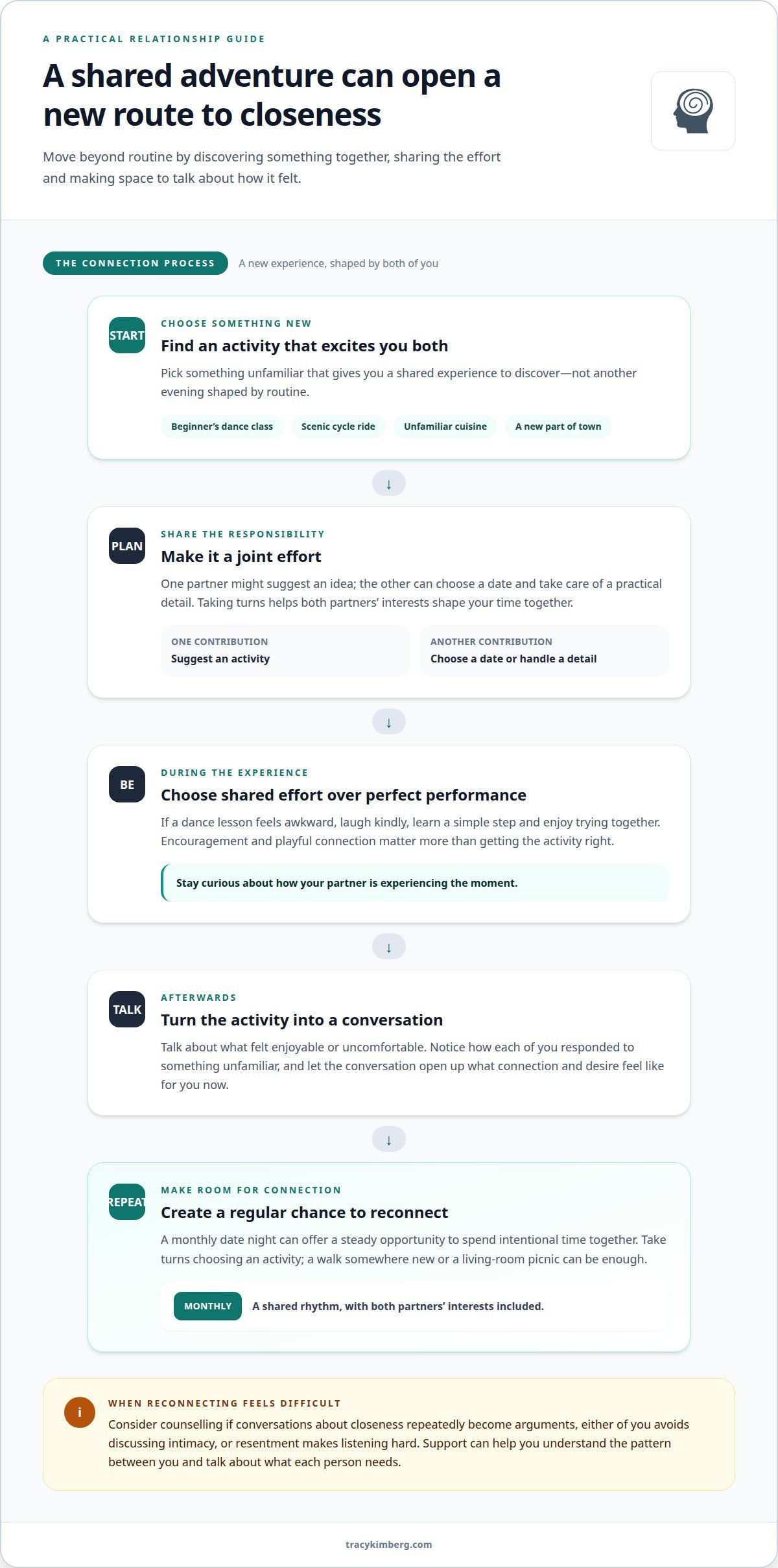
A new experience gives you something to discover as a couple, rather than another evening shaped by routine. Choose an activity that excites you both, such as a beginner’s dance class, a scenic cycle ride or cooking a meal from a cuisine you haven’t tried. Share the planning: one partner can suggest an idea while the other picks a date and takes care of a practical detail. Working together helps both partners feel involved, rather than leaving one person responsible for fixing the marriage.
Focus on being together, not performing the activity perfectly. If your husband feels awkward at a dance lesson, for example, laugh kindly, learn a simple step and enjoy the shared effort. Trying something unfamiliar creates opportunities for encouragement and playful connection. These moments can strengthen friendship and intimacy, especially when you stay curious about how your partner experiences the date.
There’s no single schedule that suits every couple, but planning a monthly date night offers a regular chance to reconnect. Take turns choosing the activity so each partner’s interests shape your time together. A walk somewhere new or a living-room picnic can make a date feel intentional without elaborate plans.
Consider counselling if conversations about closeness repeatedly turn into arguments, either of you avoids discussing intimacy, or resentment makes it hard to listen. Support can help you understand the pattern between you and talk about what each person needs.
Adventure doesn’t have to mean going far. Sing a favourite love song together in the car, take a beginner’s pottery class or explore a new part of town. Afterwards, talk about what felt enjoyable or uncomfortable. A simple reflection can turn an activity into a more meaningful conversation about connection and desire.
Thinking about what you love and appreciate about your wife
Routine can make a partner’s everyday kindness feel familiar rather than noticed. Pause and name the qualities you value in your wife: perhaps her humour, her patience with the children or the care she takes in welcoming friends. This can shift your attention from irritation towards friendship. It doesn’t deny challenges; it helps you see the person alongside the problem and remember what first drew you together.
Set aside 15 minutes to write down reasons you’re grateful for her. Make each one specific: “I appreciated how you checked in after my difficult meeting” says more than “you’re great”. Then choose one reason and tell her what it meant to you. This small act of recognition can help your wife feel wanted and understood, rather than taken for granted.
Try a two-minute exchange: take turns naming what you find beautiful about each other. Include qualities as well as appearance, such as courage, generosity or the way your partner makes you laugh. Listen without correcting or joking about the moment. Receiving appreciation can feel exposing, but a simple “thank you” lets warmth and trust grow between you.
Let appreciation become a practice, not another task to perform perfectly. For example, thank her for making tea and mention the care behind the gesture. If passion feels distant, a genuine compliment can open a conversation about closeness without demanding immediate change. When resentment makes gratitude difficult, calmly notice what happens in your routine and name the challenge. A therapist can help couples explore recurring patterns when these conversations repeatedly stall.
Using shared exciting experiences to encourage attraction and connection
Shared excitement can shift your attention towards one another as you respond, adapt and laugh together. Choose an activity that stretches you a little, such as a beginner climbing session, a local food tour or a tandem cycle ride. The point isn’t to prove anything, but to share the anticipation and notice how each of you responds to something unfamiliar. A new setting can make room for attraction and connection to emerge through mutual encouragement. That’s one way to rekindle closeness without treating romance as a performance.
When conversation feels difficult, use a question as a gentle starting point. Mandy Len Catron wrote about 36 questions in The New York Times, and a prompt can help couples move beyond practical updates. Try asking, “What’s something you’d like us to experience together?” Listen to the answer without turning it into a plan straight away. Curiosity matters: the question invites your partner to share a wish, while your attention shows that their inner world matters to you.
Make connection a small, repeatable practice. Set aside time after dinner to share one moment from the day that made you feel close, then ask what your partner noticed. Or try a simple exercise: each of you names one thing you’d like more of, such as affection, laughter or uninterrupted conversation. These specific exchanges help you understand what closeness means to each person instead of assuming you want the same things.
A shared experience can open a door, but everyday responses help keep it open. If a cooking class leaves you both laughing over a burnt dish, bring that playful spirit into the next ordinary evening. If you’re finding it hard to talk or reconnect, explore relationship counselling and coaching for couples as a space to understand your patterns and practise new ways of relating.
Tracy Kimberg
Tracy Kimberg offers Relationship Counselling and Coaching for Couples when attempts to reconnect keep ending in frustration. Together, you can explore what lies beneath the distance, how each partner experiences intimacy and what changes might help you feel closer. This support may be useful when affection has faded or conversations about the relationship repeatedly become tense or stuck.
In counselling, both partners can share their perspectives. One may long for more affection, while the other feels overwhelmed by unresolved disagreements. Understanding this pattern can help you move beyond blame and identify what each person needs. From there, you can consider practical ways to communicate, rebuild trust and make space for connection in everyday life.
If difficulties feel persistent or affect several parts of your relationship, the structured 12-Week Relationship Recovery Process offers a defined programme for working on relationship dynamics. It may suit couples who want focused support with disconnection, relational breakdown or the impact of infidelity. The process is not about recreating an earlier stage of marriage; it’s about understanding the relationship you have now and exploring how you want to move forward.
You don’t need to wait until every attempt to reconnect has failed before seeking support. If conversations keep circling the same hurt, or you’re unsure how to address the distance, professional guidance can help you approach these patterns with care. The first step can simply be naming what feels difficult and what you hope might change. Contact Tracy Kimberg to talk about support for your relationship.
Take one thoughtful step towards renewed closeness
Romance doesn’t have to arrive as a grand gesture or a sudden return to the past. It can begin with choosing to turn towards your partner, sharing what you’re longing for and staying open to what you discover about each other. Learning how to bring romance back into a marriage is less about finding a perfect formula and more about making room for honest connection.
Choose a next step that feels possible for both of you. Perhaps that means starting a calmer conversation, making time for a shared experience or seeking support when the same painful pattern keeps returning. You don’t need every answer before you begin. A willingness to understand one another can itself mark a meaningful shift.
If you’d like support exploring what could help your relationship move forward, contact Tracy Kimberg to talk. A more connected chapter can start with one honest conversation and the care you bring to it.
Frequently Asked Questions
What are practical ways to bring romance back into a marriage?
Learning how to bring romance back into a marriage can begin with discovering what feels meaningful to your partner now. Ask whether they’d welcome affection, practical help or time together, then agree on one small gesture you can both sustain. For example, leave a kind note before a demanding day. Keep the gesture personal and pressure-free, rather than treating it as a test of your partner’s response.
How can couples improve emotional intimacy and communication?
Couples can build emotional intimacy by sharing honestly and making room for each person’s experience. Take turns speaking about one concern while the other listens without interrupting, then reflect back what you heard. For example: “It sounds like you felt alone when I made that decision.” You don’t have to agree on everything; this helps each partner feel understood before you discuss what might change.
What are affordable romantic date ideas for married couples?
Choose a date centred on attention, not spending. Visit a local library and pick a book for each other, explore a neighbourhood you rarely visit, or make a playlist together and take turns explaining your choices. You could also have a home cinema evening with a film you both want to see. Choosing an idea together can make an ordinary evening feel considered and shared.
How can spouses rebuild physical intimacy after a long dry spell?
Begin by talking about what feels comfortable, rather than assuming physical intimacy must quickly return to how it was. Agree on affectionate contact with no expectation of sex, such as sitting close or holding hands, and check that it feels welcome. If either partner feels uneasy, pause and talk about what came up. Relationship counselling can help you discuss distance, desire and boundaries with care.
What daily habits help keep romance alive in marriage?
Small daily rituals can help partners feel remembered amid busy routines. Greet each other with attention when you reconnect at home, share one detail about your day or offer a warm goodbye before leaving. If tension arises, return to the conversation after you’ve both had time to settle instead of letting silence become the only response. The most useful habit is one that feels genuine and manageable for you both.
How can couples reconnect after having children or during a busy season?
Parenting demands and competing responsibilities can leave little energy for couple time. Talk through the practical load together, including tasks that are easy to overlook, and decide what you can share or simplify. A short check-in after the children are settled can help you feel like partners, not only co-parents. If disconnection persists, couples counselling can provide space to understand what has changed.

Article by
Tracy Kimberg
Tracy Kimberg is a Relationship Expert, Couples Therapist and Coach with a dedicated focus on helping couples and individuals rebuild connection, trust and emotional safety in their relationships. Drawing on the research of John and Julie Gottman, the relational insights of Esther Perel, and years of hands-on therapeutic experience, Tracy offers a warm, non-judgemental and deeply compassionate approach to modern relationships.
Based in Dorset, Tracy works with couples navigating communication breakdowns, betrayal, intimacy challenges, separation, family dynamics and life transitions. Known for creating a safe and grounded therapeutic space, she combines practical tools with emotional depth to help clients move beyond survival patterns and towards meaningful, lasting change.
With a reputation for empathy, professionalism and dedication to her clients’ growth, Tracy is passionate about helping people feel seen, understood and empowered — both within their relationships and within themselves.
Disclaimer
Disclaimer:
The information shared in this article is intended for educational and informational purposes only and should not be considered a substitute for professional therapeutic, psychological, medical or legal advice. Every individual and relationship is unique, and the perspectives offered are based on general therapeutic principles, research and professional experience.
Reading this article does not establish a therapist-client relationship with Tracy Kimberg. If you are experiencing significant emotional distress, relationship crisis, trauma, or mental health concerns, it is important to seek support from a qualified professional appropriate to your individual circumstances.
All content remains the intellectual property of Tracy Kimberg and may not be reproduced or distributed without permission.