

What if your first date in twenty years wasn’t actually a search for a new partner, but a long-overdue reunion with yourself? It’s completely natural to feel like a fish out of water when you step back into a digital landscape of swipes and algorithms after decades of partnership. You might feel a heavy sense of guilt whilst your ex-spouse still shares your social circles, or perhaps you’re terrified of repeating the same painful patterns that led to your separation. Rebuilding confidence after divorce UK is a delicate process that requires more than just a polished profile; it demands a shift in how you view your own worth outside of a couple.
I understand that this transition feels overwhelming, yet it’s also a powerful opportunity for growth. This guide provides a psychologically grounded framework to help you manage the emotional complexities of the 2026 dating scene. We’ll explore how to establish a clear sense of individual identity and adopt a conscious approach to dating that prioritises your emotional health. By the end of this piece, you’ll have the tools to move forward with calm optimism, turning what once felt like a daunting task into a positive adventure of self-discovery.
Key Takeaways
- Learn how to untangle your individual identity from the shared habits of a long marriage to rediscover who you are today.
- Discover a psychologically grounded framework for rebuilding confidence after divorce UK, helping you move from anxiety to calm curiosity.
- Navigate the shift towards intentional digital dating with a strategy for creating an authentic profile that reflects your mature values.
- Use a research-based checklist to assess your emotional readiness, ensuring you date from a place of exploration rather than a need for validation.
- Understand how professional support can provide a safe container to clear emotional clutter as you begin this new, positive adventure.
The Emotional Threshold: Why Dating Again After Decades Feels Different
After twenty or thirty years of marriage, your sense of self is often inextricably linked to your partner. This creates what we call the “Relationship Shadow”, a persistent echo of shared habits, inside jokes, and a future that was once set in stone. Stepping out of this shadow is the primary challenge when rebuilding confidence after divorce UK. Even if the decision to leave was yours, the loss of that projected future can feel like a profound bereavement. You aren’t just losing a spouse; you’re losing the version of yourself that existed within that union.
Psychologically, ending a long-term partnership is frequently described by clients as losing a limb. This is due to identity merging, where your neural pathways have literally wired themselves around the presence and routines of another person. Research into the psychological effects of divorce highlights how this disruption impacts your self-esteem and social confidence. This disorientation is compounded by the fact that dating in 2026 bears little resemblance to the courtship rituals of the 1990s or early 2000s. The structural shift from organic meetings to intentional digital matching creates a sharp learning curve that can leave you feeling vulnerable.
The “Time Warp” Effect
When you consider dating again, you might find yourself mentally regressing to the last time you were single. You’re effectively a mature adult with the romantic experience of a twenty-year-old. This creates a psychological gap between your memories of “going out” and the reality of modern apps. Dating re-entry is a vital developmental milestone in mid-life that requires patience and a willingness to be a beginner again. It’s about bridging the gap between who you were then and the resilient individual you’ve become now.
Grief and Anticipation: The Dual-Process Model
Healing is rarely a linear journey. You can feel a deep sadness for the life you lost whilst simultaneously feeling a spark of excitement for someone new. This is the dual-process model of grief in action, where you oscillate between processing the loss and engaging with a new reality. It’s common to feel a pang of guilt when you first find yourself attracted to another person. This isn’t a betrayal of your past; it’s a sign of your capacity to heal. rebuilding confidence after divorce UK starts with giving yourself permission to hold these conflicting emotions without judgement. Seeking conscious closure ensures you don’t carry the “emotional clutter” of the old marriage into a fresh connection.
The Psychology of Re-Entry: Moving Beyond the Spousal Identity
Entering the dating market after decades is often less about finding a new partner and more about rediscovering the individual who existed before the “we” took over. Esther Perel’s concept of erotic intelligence is a powerful tool for this stage of mid-life self-discovery. It isn’t merely about physical attraction; it’s about cultivating a sense of vitality, curiosity, and playfulness that may have been dormant for years. Rebuilding confidence after divorce UK requires you to distinguish between the reactive loneliness of an empty house and a proactive, healthy desire for connection. One is a flight from pain, while the other is an invitation to growth.
Your emotional self-regulation plays a pivotal role in this transition. Without it, you might fall into “rebound” patterns, seeking a quick fix for the discomfort of being alone. It’s also essential to recognise how your attachment style may have evolved. A person who entered a marriage feeling “secure” might emerge “anxious” or “avoidant” after years of systemic conflict. Understanding these internal shifts prevents you from carrying old wounds into new interactions, allowing you to date from a place of stability rather than a desperate need for validation.
Reclaiming the “I” in the “We”
In long-term partnerships, we often sacrifice our authenticity to maintain the attachment. Gabor Maté frequently highlights this tension; many of us suppressed our true interests to keep the peace or align with a spouse’s lifestyle. To reclaim your “I”, try identifying three personal interests or hobbies that were submerged during your marriage. Building this “self-intimacy” ensures that your self-worth is rooted in your own identity rather than external approval. Establishing this foundation of self-trust is a prerequisite for a healthy 2026 romantic life.
Breaking the Repetition Compulsion
Psychologically, we are often drawn to what is familiar, even if that familiarity was painful. This “repetition compulsion” can lead you to subconsciously seek out a “better version” of your former spouse, effectively repeating the same relationship blueprint you carried for decades. Updating this blueprint involves identifying the specific dynamics of your past marriage and consciously choosing different traits in future partners. Engaging in a 12-Week Relationship Recovery Process provides the clinical framework needed to rewrite your romantic narrative, ensuring you move forward with clarity rather than repeating the past.
Navigating the Modern Landscape: Apps, Etiquette, and Authenticity
The transition from meeting someone at a local social gathering to the “intentional” digital marketplace of 2026 can feel jarring. In the UK, the cultural shift towards apps means dating is no longer a happy accident; it’s a deliberate choice. Rebuilding confidence after divorce UK involves accepting that while the medium has changed, the human need for connection remains the same. Curating an authentic profile is your first step. Focus on showcasing your mature self, highlighting current passions rather than who you were twenty years ago. This isn’t about appearing “desperate” for a match. It’s about being clear about your values and what you bring to the table today.
For a generation raised on landlines and handwritten letters, modern behaviours like “ghosting” or “slow-fading” can feel deeply disrespectful. It’s vital to remember that these actions usually reflect the other person’s lack of communication skills rather than your worth. Setting firm boundaries early on helps protect your emotional energy. Decide in advance how much you want to share about your past marriage. You aren’t required to provide a full autopsy of your divorce on a first date. Maintaining a sense of mystery isn’t about being cagey; it’s about protecting your peace.
The Digital Gatekeepers: Using Apps Mindfully
Choosing the right platform is essential for success in the UK market. Some apps cater to casual flings, while others are designed for those seeking long-term companionship. Managing “app fatigue” is a crucial part of rebuilding confidence after divorce UK. Limit your usage to specific times of the day to prevent burnout. I often suggest meeting in person within a week or two of matching. This avoids “false intimacy”, where you build a fantasy version of a person through text that doesn’t survive a face-to-face encounter.
Communicating Your History with Dignity
Your divorce shouldn’t become the “third person” at the dinner table. Whilst it’s a significant part of your story, it doesn’t define your entire future. I recommend the “Three-Date Rule” for deeper disclosures. Use the first few meetings to establish rapport and shared interests. Save the complex details of family dynamics or the split for when you’ve established a baseline of trust. This approach allows you to maintain your privacy whilst being vulnerable enough to foster a genuine new connection. It’s about sharing your history with dignity, not as a burden.
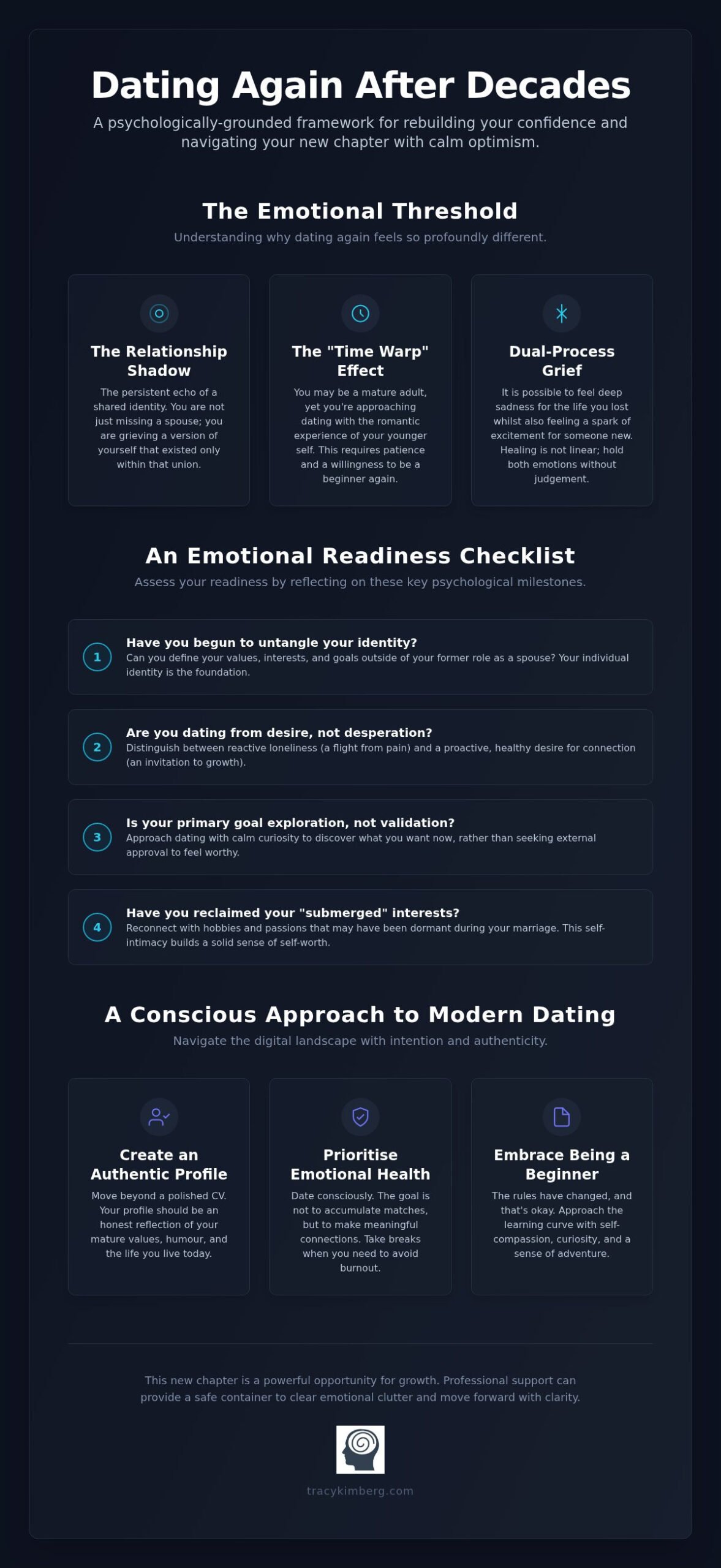
Emotional Readiness: A Research-Based Checklist for Dating
Before you download an app or agree to a coffee date, it’s helpful to audit your internal landscape. Rebuilding confidence after divorce UK is a process of ensuring your foundation is solid enough to support a new structure. You aren’t looking for a replacement for what was lost; you’re looking for a new way to relate to the world. Research-based indicators of readiness suggest that you’re ready when you can meet the following criteria:
- Neutrality: You can discuss your ex-spouse or the marriage without experiencing intense emotional flooding, panic, or lingering rage.
- Intent: Your motivation for dating is rooted in curiosity and exploration rather than a desperate need for validation to prove you’re still “desirable”.
- Stability: You’ve established a “single” routine, including hobbies and social connections, that you actually enjoy and value on its own merits.
- Accountability: You’ve moved past simple blame and can objectively see the part you played in the marriage’s breakdown, which prevents you from carrying the same “systemic” issues into the future.
The Gottman Perspective: Your New “Sound Relationship House”
In my work, I often use the Gottman “Sound Relationship House” framework to help clients identify their new non-negotiables. This involves getting quiet and determining which core values are essential for a prospective partner. You must also re-learn how to recognise “Bids for Connection”. These are the small, subtle attempts a person makes to engage with you. In a long-term marriage that became distant, these bids were often ignored; part of rebuilding confidence after divorce UK is learning to see and respond to them again. Emotional readiness is the ability to be alone without feeling lonely.
Managing Expectations and the Fear of Rejection
Rejection after a twenty-year marriage can feel like a personal indictment of your entire worth. It’s easy to spiral into the belief that if one person “left”, everyone else will too. To combat this, I encourage you to reframe “failed dates” as valuable data collection for your evolving identity. Each interaction tells you more about what you need and what you can no longer tolerate. Don’t do this alone. Build a “dating support squad” consisting of trusted friends or a professional coach who can offer a grounded perspective when things feel uncertain. If you’re ready to clear the emotional clutter and start your next chapter with clarity, my 12-Week Relationship Recovery Process provides the structured support you need to move forward with confidence.
Conscious Moving On: How Professional Support Facilitates Your New Chapter
While friends and family usually offer support with the best intentions, their perspectives are often coloured by their own histories or a loyalty that leads them to take sides. This can inadvertently stall your progress when rebuilding confidence after divorce UK. Individual relationship counselling offers a neutral, safe container where you can unpack dating-related anxieties without the fear of being judged or misunderstood. It represents a vital shift in perspective. You move away from the traditional model of “divorce therapy” and step into a space of active growth coaching. This transition is essential for anyone looking to reclaim their identity after decades of being part of a pair.
The 12-Week Foundation for Future Success
True recovery requires more than just the passage of time. It demands a deliberate strategy to clear the emotional clutter left behind by a long-term partnership. A structured 12-Week Relationship Recovery Process provides the clinical framework necessary to identify and break subconscious relationship patterns. These are the “ghosts” of past dynamics that can quietly sabotage new connections if left unaddressed. By working through this programme, you successfully move from a narrative of “victim or villain” to one of growth and personal agency. You aren’t just surviving the split; you’re using it as a catalyst for a more authentic version of yourself. This proactive work ensures that your 2026 dating experience is built on your current values rather than the echoes of a previous life.
Your Journey, Your Pace
The concept of “conscious separation” serves as a sturdy bridge between your past marriage and a vibrant new future. It allows you to honour the history of your partnership whilst prioritising your long-term emotional health. Rebuilding confidence after divorce UK is a personal mission that doesn’t have a fixed expiry date. You are allowed to take the time you need to feel solid in your own skin again. Your best years are not a closed chapter; they’re being reimagined and rewritten in this very moment. This process is a positive adventure of self-discovery that prepares you for a partner who truly aligns with who you have become. If you’re ready to start this transformative work, book a consultation to begin your conscious new chapter with Tracy.
Embracing Your Authentic New Chapter
Stepping back into the dating world after decades is more than a social transition; it’s a profound reunion with yourself. You’ve explored how to navigate the digital landscape with dignity. You’ve identified the psychological markers of true readiness. By moving from a merged spousal identity to a reclaimed sense of “I”, you’re now equipped to date with intention rather than anxiety. rebuilding confidence after divorce UK is an active, evolving experience that prioritises your long-term emotional health over quick fixes.
I specialise in conscious divorce and separation, utilising a research-based approach that draws on the expertise of Gottman, Perel, and Maté. My signature 12-Week Relationship Recovery Process provides a manageable, powerful framework to help you clear the emotional clutter of the past. If you’re ready to view this transition as a proactive and positive adventure, I invite you to connect. Start your journey toward a conscious new chapter with Tracy Kimberg. Your best years are being reimagined right now. Trust the process and enjoy the journey ahead.
Frequently Asked Questions
How long should I wait to date after a 20-year marriage?
There is no universal timeline for returning to the dating world, as healing is a deeply individual process. Instead of watching the clock, focus on your internal readiness. You are likely prepared when you can envision a future that doesn’t include your ex-spouse. Prioritising your emotional health through professional support can accelerate this transition. Rebuilding confidence after divorce UK often involves first finding joy in your own company before inviting someone else to share it.
Is it normal to feel like I am cheating on my ex-spouse when I go on a date?
Feeling a sense of “infidelity” on a first date is a very common experience for those who have been monogamous for decades. Your brain is still wired to the old relationship blueprint, and your “Relationship Shadow” doesn’t disappear overnight. Acknowledge this guilt without judgement. It’s a sign of your past commitment, not a reason to stop moving forward. Over time, as you reclaim your individual identity, these feelings of betrayal will gradually transform into a healthy sense of curiosity.
What are the best dating apps for people over 50 in the UK?
In the UK, platforms such as OurTime are specifically designed for the over-50 demographic, offering a community of peers with similar life experiences. Many mature daters also find success on Hinge due to its focus on intentionality and detailed profiles. It’s best to choose one or two platforms that align with your values rather than spreading yourself too thin. Remember that apps are just digital gatekeepers; the goal is to move to a face-to-face meeting fairly quickly.
How do I tell my adult children that I am dating again?
When sharing this news with adult children, clarity and reassurance are your best tools. Choose a calm, private moment and be direct about your decision to seek new connections. You don’t need to ask for permission, but you can acknowledge that this might be a significant adjustment for them too. Reassure them that your relationship with them remains unchanged. Keeping the focus on your own growth and happiness helps them see this as a positive new chapter.
Should I mention my divorce on the first date?
You should mention that you are divorced if it feels relevant, but avoid making it the centre of the conversation. A first date is about discovering a new connection, not performing an autopsy on your previous marriage. A simple, neutral statement about being single and moving forward is usually sufficient. Save the deeper disclosures for later meetings when you have established a baseline of trust. This approach ensures your past doesn’t become the “third person” at the table.
Can I date whilst I am still going through the legal divorce process?
Legally, you are free to date whilst your divorce is being finalised in the UK, but it’s important to consider the emotional implications. The “reflection period” in the no-fault divorce system is designed for processing the end of the marriage. Dating during this time can sometimes complicate your emotional recovery or create friction in the conscious separation process. Ensure you are dating from a place of curiosity rather than seeking a distraction from the ongoing legal and emotional transition.
What if I have forgotten how to flirt or be romantic?
Flirting is a skill that may feel rusty after decades of partnership, but it’s never truly forgotten. Think of it as a form of playfulness and curiosity rather than a high-stakes performance. Rebuilding confidence after divorce UK includes rediscovering your own “erotic intelligence” and vitality. Start with small, low-pressure interactions and focus on being present. Authenticity is far more attractive than a polished routine. Be patient with yourself as you navigate this new, positive adventure.
How can I avoid choosing someone exactly like my ex-partner?
Avoiding a “repetition compulsion” requires a conscious effort to update your relationship blueprint. You must first identify the specific dynamics and patterns that defined your previous marriage. By understanding your attachment style and core values, you can begin to look for different traits in a new partner. My 12-Week Relationship Recovery Process is specifically designed to help you clear this emotional clutter. This structured support ensures you make choices based on your current authenticity rather than old, subconscious habits.

Article by
Tracy Kimberg
Tracy Kimberg is a Relationship Expert, Couples Therapist and Coach with a dedicated focus on helping couples and individuals rebuild connection, trust and emotional safety in their relationships. Drawing on the research of John and Julie Gottman, the relational insights of Esther Perel, and years of hands-on therapeutic experience, Tracy offers a warm, non-judgemental and deeply compassionate approach to modern relationships.
Based in Dorset, Tracy works with couples navigating communication breakdowns, betrayal, intimacy challenges, separation, family dynamics and life transitions. Known for creating a safe and grounded therapeutic space, she combines practical tools with emotional depth to help clients move beyond survival patterns and towards meaningful, lasting change.
With a reputation for empathy, professionalism and dedication to her clients’ growth, Tracy is passionate about helping people feel seen, understood and empowered — both within their relationships and within themselves.
Disclaimer
Disclaimer:
The information shared in this article is intended for educational and informational purposes only and should not be considered a substitute for professional therapeutic, psychological, medical or legal advice. Every individual and relationship is unique, and the perspectives offered are based on general therapeutic principles, research and professional experience.
Reading this article does not establish a therapist-client relationship with Tracy Kimberg. If you are experiencing significant emotional distress, relationship crisis, trauma, or mental health concerns, it is important to seek support from a qualified professional appropriate to your individual circumstances.
All content remains the intellectual property of Tracy Kimberg and may not be reproduced or distributed without permission.