

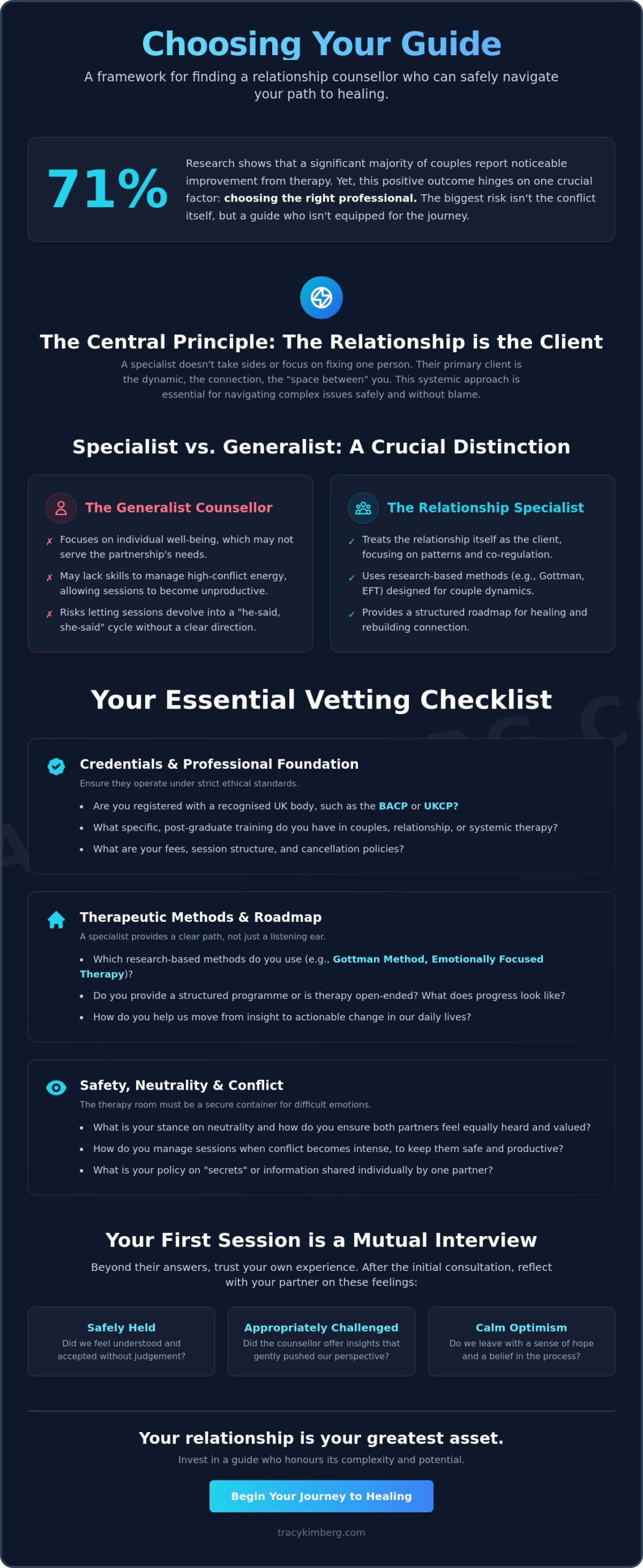
What if the biggest risk to your partnership isn’t the conflict itself, but the person you hire to help you resolve it? Research shows that 71% of people who attend couples therapy report a noticeable improvement, yet the fear of making things worse by choosing the wrong professional is a heavy burden to carry. It’s completely natural to feel anxious about being judged or to worry about wasting money whilst the clock ticks down in a generalist’s office. Knowing the right questions to ask a relationship counsellor is the first step in finding a Wise Guide who offers more than just a sympathetic ear. You need a specialist who uses research-based methods to navigate your complex emotional landscape.
In this article, we’ll provide a clear checklist to ensure your therapist is the right fit for your unique needs. You’ll discover how to vet a professional who treats the relationship as the primary client and provides a structured roadmap for healing. We’ll explore how to identify a practitioner who understands both the science of connection and the art of staying together, giving you the confidence that your path to recovery is grounded in clinical expertise and deep human empathy.
Key Takeaways
- Learn why a systemic approach—where the bond itself is the primary client—is essential for navigating complex interpersonal dynamics safely.
- Identify the essential questions to ask a relationship counsellor about their specific credentials and research-based methods to avoid the pitfalls of generalist therapy.
- Discover how to vet a practitioner’s stance on neutrality and “secrets” to ensure a secure, transparent environment for both partners.
- Gain insight into how a specialist manages high-conflict sessions and provides a structured roadmap for rebuilding trust after significant breaches.
- Understand how to use your first session as a mutual interview to find a guide who makes you feel both safely held and appropriately challenged.
Beyond the Bio: Why Vetting a Relationship Counsellor is Essential
Choosing to seek help isn’t a sign of failure; it’s a profound act of stewardship for your bond. That flutter of anxiety you feel before making the first call? It’s evidence of how much you still care. However, not all support is created equal. Many people assume that any therapist can help a couple, but relationship work is a distinct clinical discipline. In the context of Couples therapy, the “patient” isn’t you or your partner; it’s the relationship itself. This systemic perspective is vital because it ensures the professional focuses on the patterns and dynamics between you, rather than taking sides or pathologising individuals. Finding the right fit starts with knowing the specific questions to ask a relationship counsellor to ensure they have the expertise to hold your story safely.
The goal of this process is to find a professional who balances clinical expertise with warm, non-judgemental accessibility. You need someone who can act as a Wise Guide, helping you navigate the complexities of intimacy whilst keeping the atmosphere productive and secure. When a therapist lacks this specific focus, sessions can quickly become unhelpful or even harmful, particularly in high-conflict scenarios where emotions run hot.
The Difference Between a Generalist and a Specialist
A generalist counsellor might be excellent at helping an individual process personal trauma, yet they may struggle when faced with the high-voltage energy of a couple in crisis. Individual therapy is often about self-actualisation, whilst relationship work is about co-regulation and “the space between” two people. Without specific post-graduate training in relational systems, a therapist might inadvertently cause harm by letting sessions devolve into a “he-said, she-said” battle. A specialist understands how to manage the unique dynamics of a partnership, ensuring that both voices are heard without the session losing its therapeutic direction.
What to Look for in an Initial Consultation
Your first interaction is a mutual interview. You aren’t just looking for a bio with the right letters after a name; you’re looking for a Wise Guide who makes both of you feel seen. Do they offer a structured path to recovery, or does it feel like you’ll just be “talking about your week” every Tuesday? A productive session should feel both challenging and secure. You want to feel that the counsellor is neutral, non-judgemental, and deeply knowledgeable about the science of connection. Trust your gut feeling during this stage. If you don’t feel a sense of calm optimism after the first meeting, they might not be the right fit for your journey. Preparing a list of questions to ask a relationship counsellor before that first call can help you move past the surface and find the expert guidance your partnership deserves.
The Practical Checklist: Credentials, Methods, and Logistics
Finding the right fit for your partnership requires moving beyond a simple “vibe check”. It is about ensuring the professional you choose has the clinical tools to handle the specific weight of your situation. When compiling your list of questions to ask a relationship counsellor, begin with their professional foundation. Are they registered with a recognised UK body like the BACP or UKCP? This ensures they adhere to strict ethical standards and maintain ongoing professional development. You should also ask about their specific training in relational work. Do they use the Gottman Method, Emotionally Focused Therapy (EFT), or perhaps a 12-week relationship recovery process that provides a clear, structured roadmap for healing?
Practicalities matter just as much as philosophy. Administrative friction can add unnecessary stress to an already tense situation. Ask clearly about their fees and cancellation policies to reduce any future anxiety. Knowing whether they offer online sessions or face-to-face therapy in a dedicated centre allows you to choose a format that truly fits your life. Clear relationships and communication patterns often begin with the clarity you establish with your therapist during these initial logistical discussions.
Research-Based Approaches to Look For
A specialist doesn’t just “listen”; they apply proven frameworks to deconstruct your conflict. The Gottman Method, for example, focuses on the “Sound Relationship House”, using measurable metrics to improve friendship and manage conflict. You might also look for influences from Esther Perel, who explores the delicate balance between the need for security and the fire of desire. Systemic therapy is another vital lens. It helps you understand the family patterns and “shadows” that might be influencing your current behaviour without you even realising it.
The Logistics of Long-Term Change
Change isn’t an overnight event. It is a process that requires momentum. Ask your potential counsellor about the typical duration of treatment for issues similar to yours. Do they recommend weekly sessions to build a foundation, or a different frequency? Understanding how progress is measured throughout your journey ensures you aren’t just treading water. If you are ready to start this proactive adventure, you can connect with a specialist to see how a structured approach can help your partnership move forward.
Deep Insight Questions: Exploring Conflict, Intimacy, and Change
Once you’ve settled the logistics, the conversation must shift toward the emotional core of your partnership. The most revealing questions to ask a relationship counsellor are those that probe their ability to hold the space when things get difficult. For instance, how do they handle sessions where conflict boils over and both partners feel overwhelmed? A skilled practitioner acts as a container for your collective distress, helping you co-regulate rather than letting the session spin out of control. It’s also vital to ask if they provide structured exercises to help you fix communication in our relationship outside the therapy room. Change doesn’t just happen in fifty-minute increments; it happens in the small, daily choices you make amongst the laundry and the school runs.
You are looking for a professional who isn’t afraid of the “heat” in the room. They should be able to explain their philosophy on complex issues like infidelity or the loss of intimacy without sounding judgemental or overly clinical. This level of transparency helps you feel confident that you aren’t just being managed, but truly guided through your complex emotional landscape. By preparing these questions to ask a relationship counsellor, you ensure that the person you hire is equipped to handle the specific “shadows” that might be haunting your connection.
Navigating Infidelity and Trust
A breach of trust is a relational earthquake. You need to know if your therapist has a specific protocol for couples therapy for infidelity. A compassionate expert knows that trust isn’t rebuilt by rushing to forgiveness. They understand the distinction between the “atonement” phase, where the hurt partner’s pain is fully witnessed, and the long-term work of recovery. When researching how to find a qualified couples therapist, look for someone who understands the trauma of discovery and doesn’t pathologise the intense emotional reactions that follow.
Addressing the “Roommate Syndrome”
Many couples enter the room not because they are fighting, but because they have simply stopped “seeing” each other. They’ve drifted into a roommate phase where sexual connection has withered. Ask your counsellor how they help couples rediscover curiosity and play. A systemic approach often explores how individual histories create current relational blocks. By understanding what’s really going on beneath the surface, a specialist can help you move from parallel lives back into a shared emotional adventure.
Safety and Neutrality: Ensuring a Non-Judgemental Space
For a partnership to heal, the therapy room must be the safest space you inhabit. It is where the unspoken is finally heard and where the “shadows” of your history are brought into the light. Amongst the most critical questions to ask a relationship counsellor are those concerning neutrality and safety. You need to know that your therapist won’t become an ally for one partner against the other. Instead, they should hold the relationship itself as the primary client, ensuring that both voices are heard whilst maintaining a clear, unbiased perspective. This neutrality is what allows for true, non-judgemental exploration of even the most painful dynamics.
Safety also extends to how a professional handles high-stakes situations. What is their approach if they suspect emotional or physical abuse? How do they manage a “mixed agenda” where one partner is leaning out of the bond whilst the other is leaning in? A Wise Guide doesn’t ignore these imbalances. They address them with clinical precision and deep empathy, providing a structured path that respects the dignity of both individuals. If you feel your relationship is at a crossroads, you can book a consultation to discuss how a neutral, specialist approach can provide the clarity you need.
The “No Secrets” Policy Explained
Transparency is the lifeblood of successful relational work. Most specialists operate a “no secrets” policy, meaning that if one partner emails the therapist privately, that information may be shared in the joint session. This isn’t about a lack of privacy; it’s about protecting the therapeutic alliance. When a counsellor holds a secret for one partner, they are effectively being forced into a coalition that undermines the other partner’s trust. Understanding how individual sessions are managed within the broader couples framework is one of the essential questions to ask a relationship counsellor before you begin your journey.
Neutrality and the “Third Entity”
A specialist views your relationship as a “third entity” that exists between you. Their role is to protect this bond from their own personal biases and from the “triangulation” that often occurs in high-conflict couples. Triangulation happens when one partner tries to pull the therapist onto “their side” to validate their perspective. A truly neutral counsellor has the strength to challenge both partners with equal compassion. They help you see that the enemy isn’t your partner, but the negative cycle of behaviour that has taken hold of your connection. This balance ensures the space remains productive, preventing the sessions from devolving into a courtroom where one person is “wrong” and the other is “right”.
From Questions to Connection: Starting Your Journey
Finding the right professional is about discovering a Wise Guide who makes you feel both safely held and appropriately challenged. It’s a delicate balance; you need someone who validates your experience whilst gently illuminating the patterns that keep you stuck. Preparing your questions to ask a relationship counsellor is more than just a vetting process. It is your first act of stewardship for the relationship, a signal that you are ready to move from reactive conflict to proactive healing. Taking this step together shows a shared commitment to the possibility of a different, more connected future.
View your initial meeting as a mutual interview rather than a clinical necessity. This is your chance to see if the therapist’s energy and method align with your partnership’s unique rhythm. Sometimes, the path to joint work isn’t a straight line. If one partner feels unready or if personal triggers are particularly high, individual relationship counselling can serve as a vital precursor. By working on your own relational blueprints first, you create a more stable foundation for the work you will eventually do together.
Preparing for Your First Session
Approach the first sixty minutes with a blend of honesty and realistic expectations. This initial intake is primarily about gathering history and establishing a baseline of safety. Bring your curiosity, but leave the desire to “win” the argument at the door. The goal isn’t to settle old scores in the first hour; it’s to see if the counsellor can hold the space for your story. Having your questions to ask a relationship counsellor ready ensures that you stay focused on finding the right fit during the emotional intensity of the first meeting. Afterwards, take time to discuss the experience with your partner. Reflect on whether the therapist stayed neutral and if their proposed roadmap felt like a viable path forward.
The 12-Week Relationship Recovery Option
The fear of “endless therapy” can often prevent couples from taking the first step. To combat this, many find that a structured, time-bound programme offers the best results. A 12-week framework reduces administrative anxiety by providing a clear beginning, middle, and end. It replaces the weight of “forever” with the possibility of tangible, measurable progress. This structured approach allows you to focus on the science of connection whilst feeling supported by a compassionate expert. If you are ready to discover a roadmap for your recovery, you can book a consultation with Tracy Kimberg to see if our research-based method is the right fit for your journey.
Taking the First Step Toward Relational Health
Choosing to seek help is a brave acknowledgement that your bond is worth protecting. By preparing your questions to ask a relationship counsellor, you’ve already moved from the weight of the problem toward the possibility of a solution. You now understand the importance of finding a specialist who doesn’t just listen, but actively guides you through the intricacies of intimacy and conflict using research-based frameworks. Finding a Wise Guide is about ensuring your story is held in a space that is both clinically rigorous and deeply human.
Whether you are navigating the aftermath of a breach of trust or trying to bridge the distance in a “roommate” phase, a structured roadmap makes the journey feel manageable. My practice provides a safe, non-judgemental environment where I specialise in the Gottman Method and Perel-influenced therapy. Through the 12-Week Relationship Recovery Process, we move beyond circular arguments toward a resilient connection. Book Your Initial Relationship Consultation Today and let’s begin this proactive adventure together. Your partnership deserves the clarity that comes from expert, compassionate guidance.
Frequently Asked Questions
What is the most important question to ask a relationship counsellor?
The most vital question is whether the therapist views the relationship itself as the primary client. This ensures they focus on the “space between” you rather than pathologising individuals. When considering questions to ask a relationship counsellor, this inquiry reveals their clinical orientation. A specialist will prioritise the health of the bond, helping you navigate patterns rather than just acting as a referee for your arguments.
Should I see a counsellor individually before we go as a couple?
Individual therapy can be a powerful precursor to joint sessions, but it shouldn’t replace the systemic work of couples therapy. If one partner carries deep personal trauma or intense emotional triggers, working individually can create the internal stability needed for partnership work. However, the goal is always to bring those insights back into the shared space to transform how you relate to one another in the present.
How do I know if a relationship counsellor is taking sides?
You will know a counsellor is remaining neutral if they challenge both partners with equal compassion and insight. If you feel consistently unheard or blamed, or if the therapist seems to validate one person’s narrative whilst ignoring the other’s, they may be struggling with triangulation. A Wise Guide maintains a steady presence, ensuring the relationship remains the focus rather than taking a side in your conflict.
What if my partner refuses to answer the counsellor’s questions?
Resistance is actually valuable clinical information that helps the therapist understand your current level of emotional safety. If a partner refuses to engage, a skilled specialist won’t push for compliance. Instead, they will explore the fear or self-protection behind the silence. This often reveals the “shadows” of past experiences that make vulnerability feel dangerous, providing a compassionate path toward deeper understanding and genuine connection.
How many sessions does it usually take to see an improvement?
Tangible improvements often begin within the first four to six sessions, though a structured 12-week process provides a more comprehensive roadmap for recovery. Research indicates that 71% of people who attend couples therapy report a noticeable improvement. Whilst every partnership is unique, setting a clear, time-bound framework helps reduce the anxiety of “endless therapy” and keeps both partners focused on achieving specific, healthy relational goals.
Can a relationship counsellor help if we have already decided to separate?
Relationship counselling is incredibly beneficial for couples who have decided to separate, often referred to as conscious approached divorce. This process focuses on emotional closure and ensuring a respectful transition, which is particularly vital if children are involved. It allows you to uncouple with dignity, processing the pain of the ending whilst creating a healthy, non-judgemental foundation for your future as individuals.
What qualifications should a UK relationship counsellor have?
A qualified UK practitioner should be registered with a professional body such as the BACP or UKCP. Beyond this, they should hold specific post-graduate training in relational or systemic therapy. When researching questions to ask a relationship counsellor, always verify their credentials and ask about their experience with your specific challenges. This ensures your guide has the clinical expertise to hold your story safely and professionally.
What is a “no secrets” policy in couples therapy?
A “no secrets” policy means the therapist will not hold private information shared by one partner that could undermine the other’s trust. If one of you emails the counsellor privately, the contents are typically brought into the joint session. This transparency protects the therapeutic alliance and ensures that the work remains honest, preventing the therapist from being forced into a coalition that damages the bond.
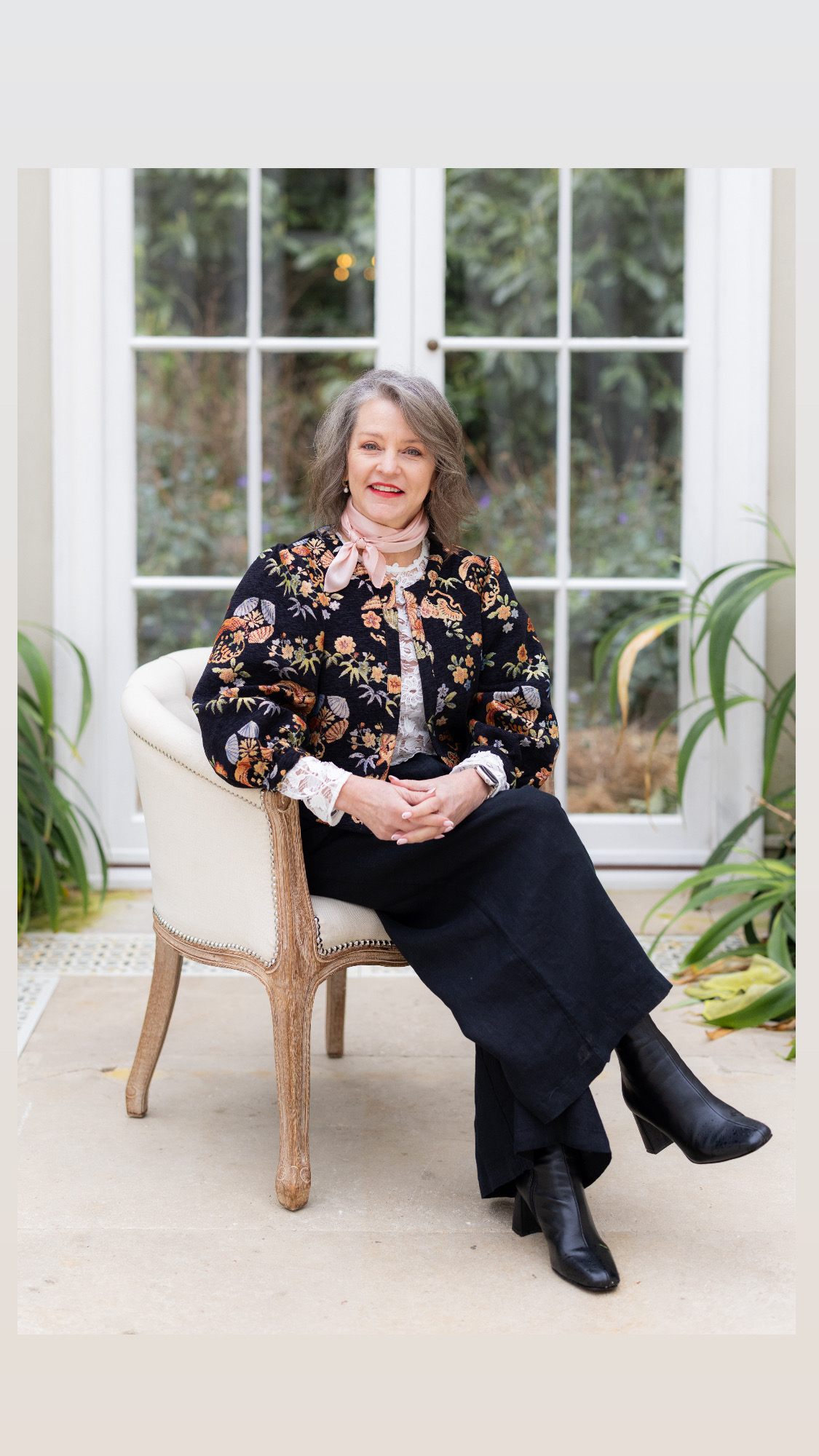
Article by
Tracy Kimberg
Tracy Kimberg is a Relationship Expert, Couples Therapist and Coach with a dedicated focus on helping couples and individuals rebuild connection, trust and emotional safety in their relationships. Drawing on the research of John and Julie Gottman, the relational insights of Esther Perel, and years of hands-on therapeutic experience, Tracy offers a warm, non-judgemental and deeply compassionate approach to modern relationships.
Based in Dorset, Tracy works with couples navigating communication breakdowns, betrayal, intimacy challenges, separation, family dynamics and life transitions. Known for creating a safe and grounded therapeutic space, she combines practical tools with emotional depth to help clients move beyond survival patterns and towards meaningful, lasting change.
With a reputation for empathy, professionalism and dedication to her clients’ growth, Tracy is passionate about helping people feel seen, understood and empowered — both within their relationships and within themselves.
Disclaimer
Disclaimer:
The information shared in this article is intended for educational and informational purposes only and should not be considered a substitute for professional therapeutic, psychological, medical or legal advice. Every individual and relationship is unique, and the perspectives offered are based on general therapeutic principles, research and professional experience.
Reading this article does not establish a therapist-client relationship with Tracy Kimberg. If you are experiencing significant emotional distress, relationship crisis, trauma, or mental health concerns, it is important to seek support from a qualified professional appropriate to your individual circumstances.
All content remains the intellectual property of Tracy Kimberg and may not be reproduced or distributed without permission.