

What if the right question isn’t simply whether to stay or go, but what your shared history tells you about your relationship today? A ‘should I stay or should I go’ relationship quiz can be a useful starting point, especially when your feelings pull you in different directions. But it can’t make the decision for you.
It makes sense to seek clarity when a long-term relationship holds both hurt and meaning. Your history matters, but so do the patterns you’re living with now and whether there’s room for change. This guide will help you weigh those factors, understand what mostly A answers may suggest, and recognise the limits of an online quiz. The aim is a more grounded reflection, not treating a result as a verdict on your relationship or future.
Key Takeaways
- Look at the patterns in your shared history, not only the length of the relationship or its happiest memories.
- Mostly A answers can point to recurring concerns; consider what they reflect about your relationship today.
- Use a quiz as a starting point for reflection, not as a diagnosis or a decision-maker.
- If you need support to understand what comes next, relationship counselling can help you explore the choice with care.
Using a Couple’s Shared Relationship History to Assess Its Outlook
Start with a private reflection: name a difficult period you faced together. Note what each of you did, what helped, and whether the same conflict keeps returning. A past breach of trust, for example, may involve real hurt as well as later efforts to rebuild honesty. Your history matters most when it reveals patterns, not simply how long you’ve been together.
Then have a guided conversation about one specific memory. Each partner can describe what happened, how it felt, and what they needed at the time. Listen for curiosity and accountability rather than debating whose account is correct. A therapist can help couples slow the conversation down, especially when familiar arguments quickly turn defensive or distant.
A stay-or-leave quiz may ask whether you feel respected, whether you can repair conflict, and whether both partners want a shared future. Treat each answer as a prompt to examine a real example. “We apologise” means more when you can point to a time when changed behaviour followed.
Signs a relationship may be worth working on include mutual respect, honest accountability, and willingness to change. For example, both partners might recognise a recurring disagreement and make a genuine effort to respond differently.
Emotional abuse or coercive control can involve threats, isolation, monitoring or controlling access to money. If you feel afraid or unable to make choices freely, prioritise your safety rather than treating this as an ordinary relationship conflict. People experiencing a crisis are advised to contact 988 Suicide & Crisis Lifeline.
Past struggles offer useful context, but they don’t settle the future. Couples counselling can provide a structured space to examine recurring patterns, attempts to repair conflict, and each person’s needs, then consider what meaningful change would involve.
A therapist or couples counsellor can help people work on improving a relationship, individually or together with their partner.
Interpreting Mostly A Answers
Mostly A answers can feel like a verdict, but the letter has no universal meaning. Its significance depends on what option A describes in that particular quiz. One quiz may use A for distress; another may use it for commitment or uncertainty. Read the result’s explanation before connecting your score to a decision.
This quiz groups responses into four broad relationship experiences. Consider which experiences your answers point to, then compare them with everyday examples. If A reflects emotional distance, ask whether you’ve stopped sharing ordinary details, such as how your day went. If it reflects recurring conflict, consider whether disagreements end with repair or leave resentment behind.
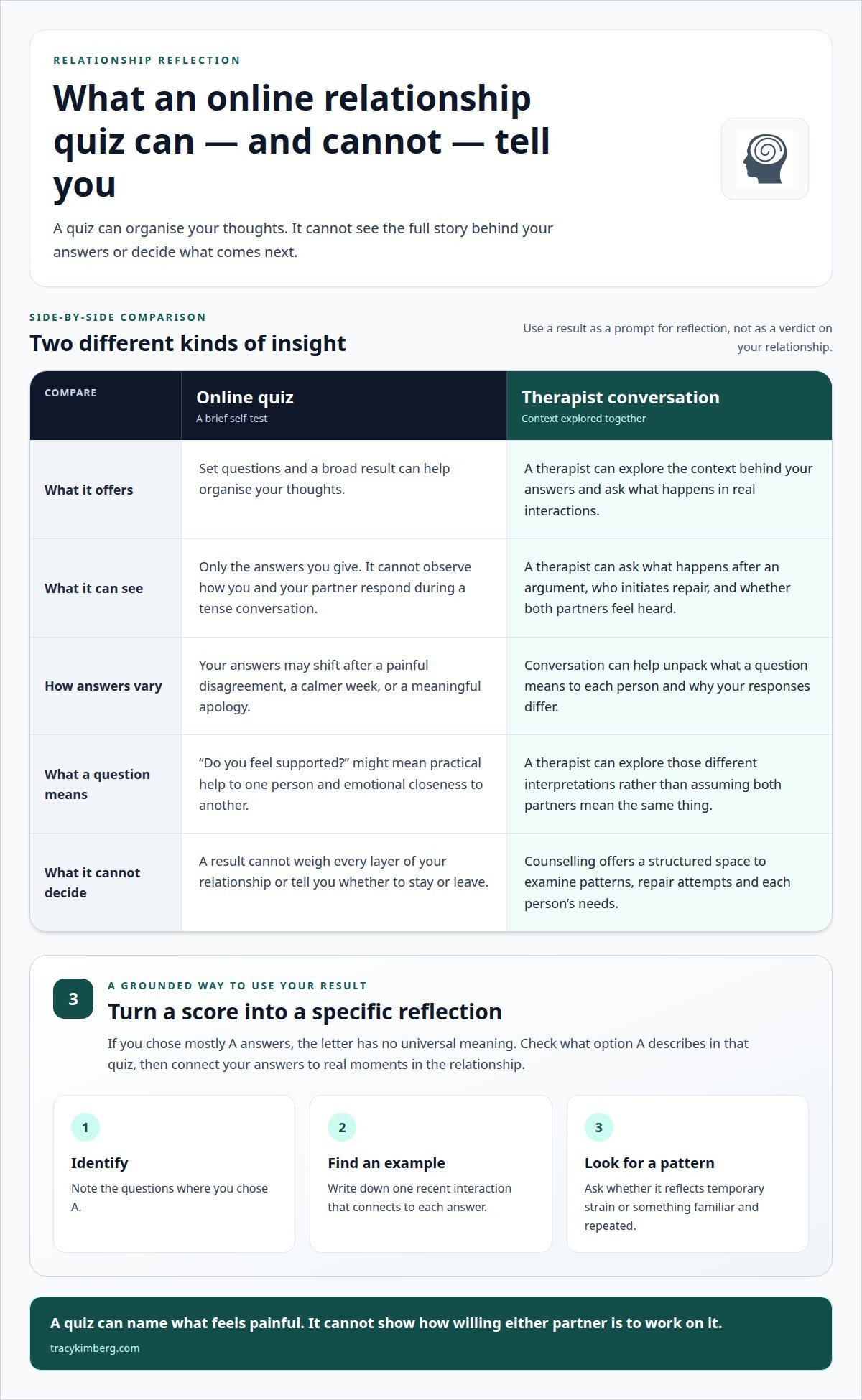
Use a three-step reflection after receiving your result. First, identify the questions where you chose A. Next, write down one recent example for each answer. Finally, ask whether that example reflects temporary strain or a familiar pattern. One difficult week, for instance, may not represent the wider relationship, while repeated withdrawal after every disagreement deserves closer attention.
Your feelings matter, but they’re not the only information to consider. Notice whether both partners can discuss the pattern, take responsibility, and make changes that last beyond one conversation. If only one person is trying, that imbalance matters too. A mostly A result can help name what feels painful, but it can’t show how willing either partner is to work on it.
If you’re using a should I stay or should I go relationship quiz, treat the result as a prompt, not a verdict. Ask, “Which part feels accurate, and which part doesn’t?” Then consider what you need to feel heard and understood. Making room for uncertainty can help you reflect on your relationship without forcing your experience into a single answer.
Limitations of Online Self-Tests
A five-minute online quiz can organise your thoughts, but it sees only the answers you give. It can’t observe how you and your partner respond during a tense conversation. For example, selecting “we communicate well” may conceal that one person avoids difficult subjects to prevent an argument.
A relationship quiz is a snapshot for reflection, not a diagnosis. Your answers may shift after a painful disagreement, a calmer week, or a meaningful apology. That change doesn’t make either result false; it shows how feelings and circumstances can colour your perspective at different times.
How do relationship quizzes compare with advice from a therapist? A quiz offers set questions and a broad result, while a therapist can explore the context behind your answers. They might ask what happens after an argument, who initiates repair, and whether both partners feel heard.
Self-tests also depend on how you interpret each question. “Do you feel supported?” could mean practical help with childcare to one person, but emotional closeness to another. If you and your partner answer separately, different interpretations may produce different responses, even when you’re describing the same event.
Use the result as a prompt, not a conclusion. Choose one answer that unsettles you and connect it to a specific interaction. Ask what happened, how each person responded, and what might need to change. If discussing the answer together leads to blame or shutting down, that reaction is useful context too. A quiz can prompt reflection, but it can’t weigh every layer of your relationship or decide what you should do.
Reflecting on the State of a Marriage or Long-Term Relationship
Assess a marriage through repeated patterns, not one difficult evening. Consider whether care, respect, and emotional connection are present in everyday routines. After a disagreement about household tasks, can both partners listen, repair, and adjust? That response offers more context than one affectionate weekend. Ask whether you can discuss important needs without ridicule, punishment, or fear.
Gottman research describes six relationship signs that can predict a breakup within the next four years with over 94% accuracy. Treat that figure as context, not a personal forecast. Persistent criticism matters most alongside its frequency, its impact and whether both partners take steps towards change.
A healthy relationship allows differences without making one person feel diminished. Partners may disagree about family visits, for example, yet respect each other’s boundaries and find a workable plan. An unhealthy dynamic may involve recurring contempt, fear, or one person’s needs being dismissed. Notice how you feel before, during, and after difficult conversations.
It may be time to consider leaving when harm continues, your boundaries are repeatedly ignored, or your partner refuses to address damaging behaviour. Promises to change carry little weight if the same hurtful actions continue. If you feel unsafe, prioritise your safety and seek support rather than facing the decision alone.
To decide whether to stay or leave, name what would need to change for the relationship to feel sustainable. A quiz can help clarify your questions, but it can’t weigh practical realities such as shared parenting or caregiving. Ask whether both partners are willing to act, not merely agree. Give yourself space to consider what you value, what you need, and what the relationship is showing you now.
How Tracy Kimberg Can Help
Tracy Kimberg offers a supportive next step when a quiz raises questions but leaves you unsure how to move forward. Through Relationship Counselling and Coaching for Couples, partners can explore recurring patterns, unmet needs, and difficult conversations. The aim is not to hand you a decision, but to help you understand what is happening and what each person is willing to work towards.
This support may help when you keep revisiting the same conflict, feel distant despite wanting closeness, or struggle to discuss whether the relationship can change. A couple might use sessions to understand how one partner’s withdrawal and the other’s pursuit reinforce each other. With the pattern in view, they can consider different responses and whether both are ready to practise them.
For couples seeking a more structured period of support, the 12-Week Relationship Recovery Process offers a defined programme to work on relationship dynamics. It may be relevant when both partners want to engage with the relationship rather than rely on a quiz result alone. If the decision also brings up individual anxiety, grief or confusion, Therapy for Adults can offer space to explore those feelings.
Therapy for Teenagers is available when a young person needs support with their emotional wellbeing. It is distinct from couples work and can address the teenager’s experience directly, rather than placing responsibility for adult relationship decisions on them.
You don’t need to arrive with a settled answer. You can begin by describing what feels hardest, what you hope might change, and what remains uncertain. If you’d like to explore support, contact Tracy Kimberg.
Frequently Asked Questions
Can a quiz really tell me whether to stay or leave?
No. A quiz can help you notice which concerns feel most pressing, but it can’t make a personal decision for you. A result might draw attention to loneliness, for example, while your reflection reveals that the deeper issue is feeling unable to speak openly. Use the questions to clarify what matters to you, then consider your circumstances and choices beyond the result.
How accurate is this quiz?
There isn’t a single accuracy figure that can establish whether a quiz predicts the right decision for you. Its result reflects your responses to its specific questions, which may be shaped by how you interpret them and how you feel at that moment. Treat the outcome as one perspective, not a forecast. If you repeat the quiz, compare what changed in your answers and what was happening in your life.
Is it normal to not know whether to stay or go?
Yes. You can feel affection and hope alongside disappointment, anger, or exhaustion, particularly after building a life together. Those feelings don’t have to resolve into one clear answer immediately. Try naming what you’re uncertain about, such as whether trust can return or your needs can be discussed. Separating these questions can make the decision feel less like one overwhelming choice.
Can couples therapy help decide whether to stay together?
Yes. Couples therapy can give partners a supportive setting to explore what is keeping them stuck, what each person wants, and whether they’re willing to work towards change. It isn’t a promise that you’ll remain together. Sessions may help clarify whether both partners want to rebuild intimacy or are leaning towards separation, while making space for each perspective.
What should I consider before ending a long-term relationship?
Consider what brought you to this point, what you’ve already tried, and what would need to change for staying to feel right. Reflect on shared responsibilities, such as parenting or caring for relatives, and the emotional support you may need during a transition. You might also clarify your personal values and practical priorities, so your decision reflects your future needs as well as your present distress.

Article by
Tracy Kimberg
Tracy Kimberg is a Relationship Expert, Couples Therapist and Coach with a dedicated focus on helping couples and individuals rebuild connection, trust and emotional safety in their relationships. Drawing on the research of John and Julie Gottman, the relational insights of Esther Perel, and years of hands-on therapeutic experience, Tracy offers a warm, non-judgemental and deeply compassionate approach to modern relationships.
Based in Dorset, Tracy works with couples navigating communication breakdowns, betrayal, intimacy challenges, separation, family dynamics and life transitions. Known for creating a safe and grounded therapeutic space, she combines practical tools with emotional depth to help clients move beyond survival patterns and towards meaningful, lasting change.
With a reputation for empathy, professionalism and dedication to her clients’ growth, Tracy is passionate about helping people feel seen, understood and empowered — both within their relationships and within themselves.
Disclaimer
Disclaimer:
The information shared in this article is intended for educational and informational purposes only and should not be considered a substitute for professional therapeutic, psychological, medical or legal advice. Every individual and relationship is unique, and the perspectives offered are based on general therapeutic principles, research and professional experience.
Reading this article does not establish a therapist-client relationship with Tracy Kimberg. If you are experiencing significant emotional distress, relationship crisis, trauma, or mental health concerns, it is important to seek support from a qualified professional appropriate to your individual circumstances.
All content remains the intellectual property of Tracy Kimberg and may not be reproduced or distributed without permission.