

Emotional distance can begin as a way of coping with early relationships in which care felt unavailable, inconsistent or difficult to rely on. Understanding avoidant attachment in partners means seeing how that protective response may continue into adult relationships, where closeness can feel overwhelming even when love is present. It’s a pattern, not proof that someone is incapable of connection.
If your partner withdraws during emotional conversations or seems to need more independence than you do, you may feel confused, lonely or unsure where you stand. Those feelings matter. Understanding the pattern doesn’t mean excusing hurtful behaviour or carrying the relationship alone.
This article explores how avoidant attachment may develop, the signs it can take in a partnership and why a partner might pull away. You’ll also learn how therapy can help couples understand their cycle, communicate more openly and make room for both closeness and independence.
Key Takeaways
- Notice whether emotional withdrawal, discomfort with reassurance or a strong need for independence is shaping your relationship, without treating any single sign as a diagnosis.
- Explore how early experiences may influence present-day responses, including hiding mistakes or becoming defensive when concerns are raised.
- Make room for personal space and clear boundaries while finding ways to stay connected and agree on how to reconnect after taking time apart.
- Therapy can help partners understand recurring patterns, express needs more safely and practise new ways of relating.
Signs of Avoidant Attachment – How to Tell if Someone Has Avoidant Attachment in Relationships?
Signs often emerge in everyday moments: a request for reassurance, a difficult conversation or time spent apart. Look for recurring responses rather than treating one quiet evening as proof of an attachment style.
Independence and Emotional Closeness
Independence can coexist with a desire for love, even when trust and reassurance feel exposing. Your partner might plan a weekend alone while still valuing shared routines, such as having breakfast together. Dismissive-avoidant patterns often favour distance and self-reliance. Fearful-avoidant patterns can involve wanting closeness while fearing rejection. These labels describe tendencies, not fixed identities. Recognising the distinction may help explain why one person consistently steps back, while another moves towards intimacy and then withdraws.
Emotional Intensity and Shutdown
Shutdown is a protective response: someone withdraws when emotional intensity feels overwhelming. During an argument about feeling neglected, your partner might become silent, change the subject or leave the room. This reaction can make connection difficult, but it doesn’t reveal their feelings on its own. Notice what happens before and after the withdrawal: does your partner return to the conversation, or avoid it altogether? That pattern offers more context than one tense exchange.
Identifying and Expressing Emotions
Emotional expression means identifying a feeling and communicating it clearly, rather than expecting a partner to guess. Start with a specific moment: “I felt anxious when we didn’t speak after our disagreement.” Your partner can practise naming their response too, such as, “I felt overwhelmed and needed quiet.” Small, direct disclosures can make openness feel more manageable. Reassurance can also be specific: “I care about us, and I’ll come back to this conversation.”
Avoidant Attachment and Emotional Unavailability
Avoidant attachment and lack of interest aren’t the same, but withdrawal alone can’t tell you which is present. An avoidant partner may struggle with closeness yet show care through practical support, shared plans or returning to a difficult conversation. Emotional unavailability describes difficulty engaging consistently, whatever the cause. Look at repeated actions: does your partner make room for your needs and try to reconnect? One cancelled date or quiet day cannot answer that; an ongoing lack of engagement matters more.
How Is the Avoidant Attachment Style Formed?
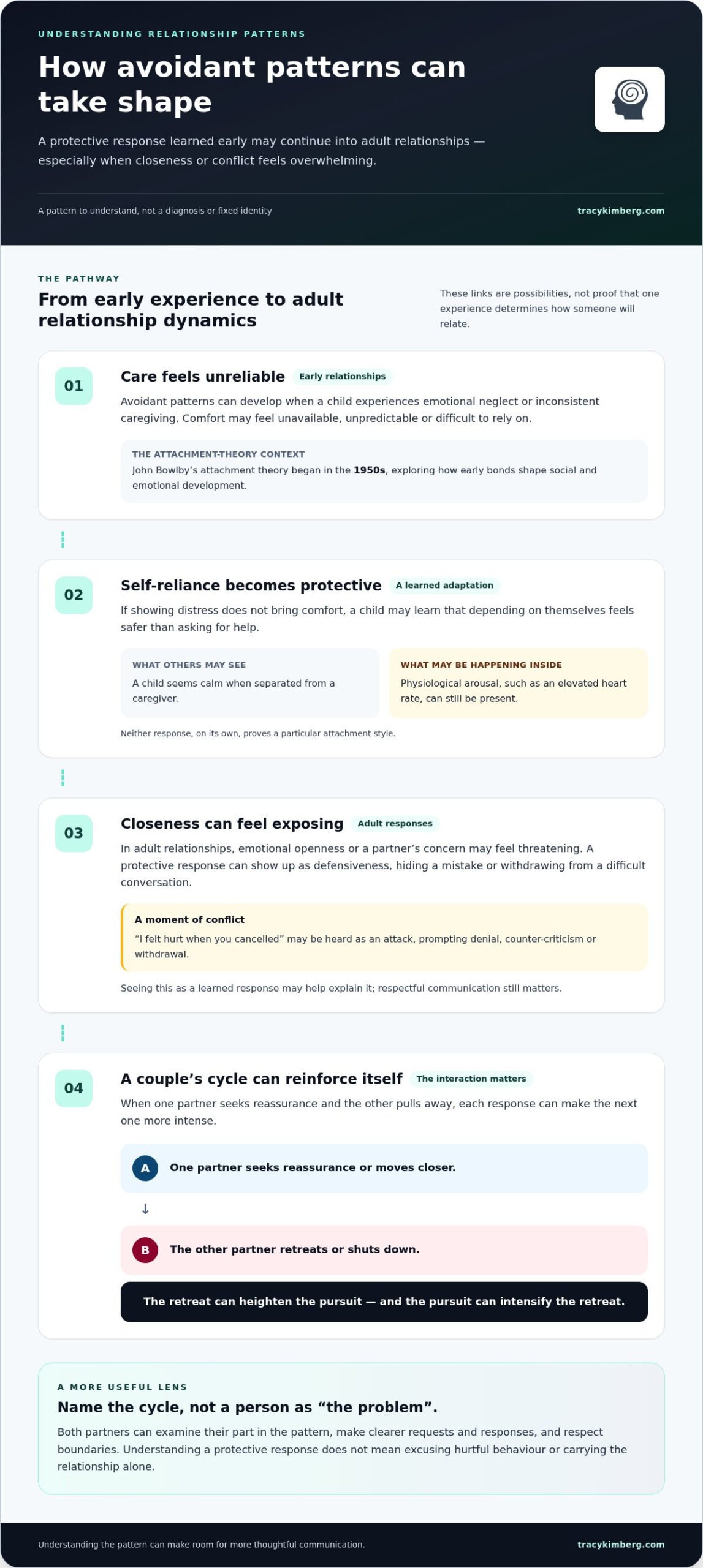
John Bowlby’s attachment theory began in the 1950s, focusing on how early bonds shape social and emotional development. Avoidant patterns can develop when a child experiences emotional neglect or inconsistent caregiving. A child may learn that showing distress doesn’t bring comfort, so self-reliance feels safer than seeking help. These early adaptations can later influence trust and intimacy in adult relationships.
Some children seem calm when separated from a caregiver yet experience internal physiological arousal, such as an elevated heart rate. Others grow up feeling pressured to be perfect while believing they can’t meet their caregivers’ standards. Neither response proves a particular attachment style. However, these experiences can help explain why an adult might hide a mistake or feel exposed when a partner asks for emotional openness.
In adult relationships, this protective response can look like defensiveness when a partner raises a concern. For example, “I felt hurt when you cancelled” may be heard as an attack, prompting denial, counter-criticism or withdrawal. Hiding a mistake can also feel safer than risking disapproval. Recognising this behaviour as a learned response may explain it, but respectful communication still matters.
Avoidant attachment can affect communication, conflict and intimacy by making emotional conversations feel threatening. One partner may seek reassurance while the other withdraws, leaving both feeling unheard and less connected.
This anxious-avoidant dynamic involves both partners: one person’s pursuit can intensify the other’s retreat, and that retreat can heighten the pursuit. Naming the cycle, rather than labelling someone as “the problem”, makes each person’s role easier to examine. Both can practise clearer requests and responses while respecting boundaries. Understanding the pattern doesn’t mean tolerating disrespect or staying in an unhappy relationship; either partner may choose to leave.
When the same conflict keeps returning or feels one-sided, couples therapy can help partners explore their communication and attachment dynamic. Sessions offer space to notice what happens before, during and after conflict, then practise more constructive responses. The aim isn’t to assign blame, but to understand how early protective behaviours affect the relationship now and what each partner wants to change.
Why Do Avoidant Partners Behave the Way They Do?
Space can help someone feel comfortable and regain emotional balance. To communicate without increasing distance, make a clear request, respect their boundary and agree when you’ll reconnect.
Independence, Personal Space and Boundaries
Independence, personal space and boundaries help each partner protect their autonomy while staying connected. This balance matters because couples can experience space differently: one person may feel calmer alone, while the other feels shut out. For example, agree that an evening apart is personal time, not a punishment. A boundary should also make room for both people’s needs, including respectful speech during disagreements.
Respecting a Partner’s Need for Space
Respecting a partner’s need for space means allowing time apart without forcing immediate disclosure. It doesn’t mean ignoring your own need for connection. Try saying, “I’ll give you space; can we talk after dinner?” This offers reassurance through a clear plan. Avoid sending repeated messages or pressing for answers in the moment, as these responses can intensify the pursuit-and-withdrawal pattern.
If a conversation escalates, either partner can suggest a pause of 20 minutes, then return to the issue. Make the reconnection specific, such as, “Let’s resume at 7:30 in the living room.” A clear time can reduce uncertainty whilst preserving space. During the pause, take a walk or settle your thoughts rather than rehearsing accusations.
When you reconnect, focus on one concern and describe its effect: “I felt alone when our plans changed without discussion.” Then ask what your partner experienced and listen before offering solutions. Small moments of vulnerability, such as admitting embarrassment after a mistake, can make emotional conversations feel less all-or-nothing.
Space doesn’t excuse disrespect. If a partner insults or intimidates you, state your boundary calmly and step away from the exchange. You can remain open to reconnecting when the conversation becomes respectful. Meanwhile, maintain your own friendships and routines: supporting a partner’s need for solitude shouldn’t mean abandoning your mental wellbeing.
Therapy for avoidant attachment
Therapy can offer a structured setting to examine how someone understands dependence, trust and commitment. Understanding avoidant attachment in partners isn’t about assigning a label; it’s about exploring whether a person’s expectations of relationships still serve them. A therapist may ask what “being close” means to each partner and what each fears could happen if they rely on someone.
This exploration can include family history, past partnerships and present circumstances. For example, someone who values privacy may need help distinguishing a personal preference from a rule they follow automatically, such as never asking for support. That distinction matters: therapy doesn’t need to treat independence as a problem. It can help someone decide which habits reflect their values and which restrict the relationship they want.
Couples may also use sessions to clarify what they’re working towards. One partner might want more shared decision-making, while the other wants room to make choices independently. A therapist can help them turn broad hopes into observable agreements, such as discussing major plans together while keeping individual hobbies. Clear goals give both partners a way to reflect on whether the work feels relevant and fair.
Therapy should also leave room for each person’s limits. Partners can explore whether their needs and expectations fit, rather than assuming every difference comes from attachment. If one person wants more closeness and the other wants more distance, they can discuss what each is willing to change and what they aren’t. This makes therapy a place to understand choices, not pressure someone into a particular outcome. Progress may mean a new agreement, a clearer boundary or greater honesty about what each partner wants from the relationship.
Tracy Kimberg: Relationship Counselling and Coaching for Couples
Tracy Kimberg offers Relationship Counselling and Coaching for Couples to help partners explore recurring patterns of distance, conflict and unmet needs. It may be a helpful next step when conversations keep returning to the same painful cycle or when both partners want support expressing themselves and understanding each other’s experiences.
In a supportive therapeutic setting, couples can work towards clearer communication, greater awareness of their relationship dynamic and ways to make room for both connection and independence. The structured 12-Week Relationship Recovery Process is another option for couples seeking focused support with their relationship.
You don’t need to have all the answers before beginning. If you’d like to explore support for your relationship, contact Tracy Kimberg.
Choose the Next Step Towards Greater Connection
A deeper understanding of avoidant attachment in partners can help you approach difficult moments with curiosity without dismissing your own needs. Ask yourself what you need to feel respected and emotionally present, then consider whether you can express that need clearly. Your partner’s response matters too. Building closeness is shared work, not a task for one person to carry alone.
You don’t have to decide the future of your relationship in one conversation. Start by noticing whether both of you are willing to listen, reflect and make room for change. If you’d like support exploring what comes next, contact Tracy Kimberg.
Small, honest steps can make space for a more connected way forward.
Frequently Asked Questions
How Do Avoidants Act When They Are in Love?
Someone with avoidant tendencies may express love through dependable actions rather than frequent declarations. They might remember how you take your tea, keep a shared plan or quietly help solve a problem. These gestures can show care, but no single action proves what someone feels. Notice whether their words and behaviour show consideration over time, and whether you feel able to discuss what affection means to each of you.
How can I heal and practice new things?
You can begin by noticing what happens inside you when closeness feels uncomfortable. After a conversation, write down the moment you wanted to withdraw, the feeling you noticed and what you needed. Then practise sharing one honest sentence with someone you trust, such as, “I’m finding this difficult, but I want to stay present.” Small, repeated acts of openness can make emotional expression feel more familiar.
How can therapy help with avoidant attachment?
Therapy can help you understand the personal meaning behind distance, conflict or discomfort with vulnerability. You might explore what you expect to happen when you rely on someone, then practise communicating that concern directly. Individual therapy can focus on your responses and needs; couples work can examine how both partners affect the interaction. The goal is greater choice in how you respond, rather than self-blame.
What is avoidant attachment in adults and how does it develop?
Avoidant attachment in adults is a relationship pattern in which relying on others or sharing emotional needs can feel uncomfortable. It may develop when early care felt emotionally unavailable or inconsistent, encouraging a child to depend heavily on themselves. That history can offer useful context, but it doesn’t determine someone’s future. Reflecting on what feels risky about asking for comfort can help connect past learning with present relationships.
What are common signs of avoidant attachment in a romantic partner?
Common signs can include strongly protecting independence, minimising emotional needs or feeling uneasy with conversations about commitment. For instance, a partner may readily discuss plans or practical tasks but struggle to talk about feeling hurt. These behaviours can have different explanations, so avoid diagnosing based on one moment. Consider the repeated pattern, how it affects you and whether your partner is willing to understand its impact.
What triggers an avoidant partner to withdraw, and how do they usually respond?
Emotional pressure can prompt withdrawal, particularly when someone feels criticised, rushed to disclose or expected to resolve conflict immediately. They may become quiet, focus on practical details, change the subject or ask to be alone. A pause doesn’t explain the whole situation on its own. What matters is whether both partners can return to the concern later and discuss what made the conversation difficult.

Article by
Tracy Kimberg
Tracy Kimberg is a Relationship Expert, Couples Therapist and Coach with a dedicated focus on helping couples and individuals rebuild connection, trust and emotional safety in their relationships. Drawing on the research of John and Julie Gottman, the relational insights of Esther Perel, and years of hands-on therapeutic experience, Tracy offers a warm, non-judgemental and deeply compassionate approach to modern relationships.
Based in Dorset, Tracy works with couples navigating communication breakdowns, betrayal, intimacy challenges, separation, family dynamics and life transitions. Known for creating a safe and grounded therapeutic space, she combines practical tools with emotional depth to help clients move beyond survival patterns and towards meaningful, lasting change.
With a reputation for empathy, professionalism and dedication to her clients’ growth, Tracy is passionate about helping people feel seen, understood and empowered — both within their relationships and within themselves.
Disclaimer
Disclaimer:
The information shared in this article is intended for educational and informational purposes only and should not be considered a substitute for professional therapeutic, psychological, medical or legal advice. Every individual and relationship is unique, and the perspectives offered are based on general therapeutic principles, research and professional experience.
Reading this article does not establish a therapist-client relationship with Tracy Kimberg. If you are experiencing significant emotional distress, relationship crisis, trauma, or mental health concerns, it is important to seek support from a qualified professional appropriate to your individual circumstances.
All content remains the intellectual property of Tracy Kimberg and may not be reproduced or distributed without permission.